
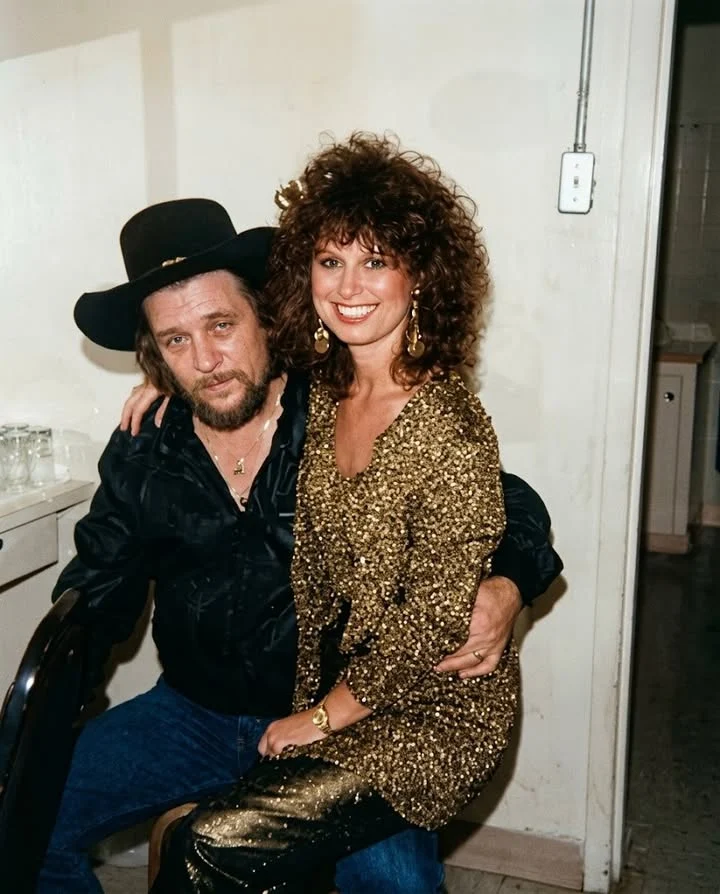
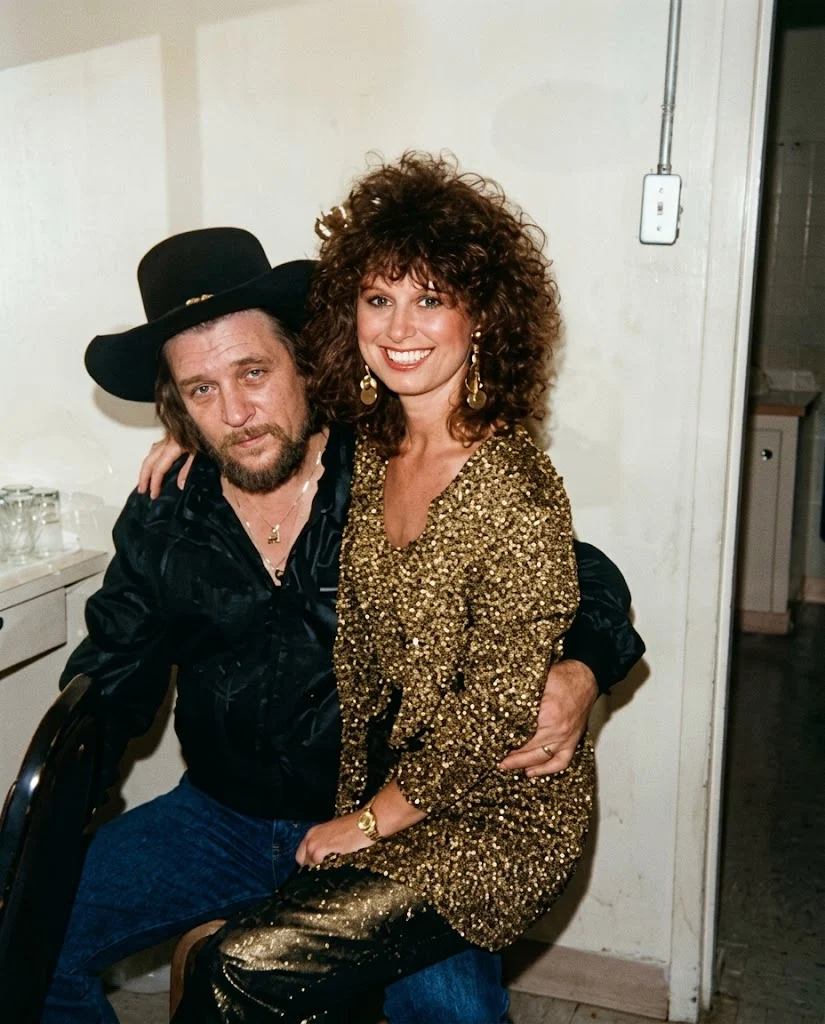
Long after the applause faded and the black leather jacket hung near the door, Waylon Jennings became the quiet force that held a family together.
He married Jessi Colter in 1969 and accepted her daughter Jennifer as his own. Jennifer came from Colter’s earlier marriage to rock guitarist Duane Eddy. For a man who spent years challenging the rigid machinery of Nashville, blood and paperwork never decided who belonged. Commitment did.
The world celebrated the defiant outlaw who demanded control of his own music. He pushed back against RCA Records, insisted on his own band, and helped reshape country sound during the 1970s. Inside the home, the same man spoke softly, listened closely, and made room for his children.
When Waylon Albright Shooter Jennings arrived in May 1979, the household found a deeper calm. Shooter grew beneath a famous name, surrounded by recordings, road stories, and the weight of a legacy that could have swallowed any young person. Waylon understood that danger clearly. He did not hand his son a torch to carry. He gave him a boundary instead.
Never copy anyone, especially your father.
That advice became a shield. Waylon knew his shadow was enormous, and he wanted Shooter to stand in his own light. The result was not a pale imitation of Outlaw country. It was a bond shaped by trust and creative freedom.
In the mid 1990s, when Shooter was a teenager steeped in rock and punk, Waylon did not dismiss the noisy sound. He entered a studio and recorded with his son’s young rock band. Those raw private sessions waited for more than a decade before Shooter finished them. The posthumous album Waylon Forever arrived in 2008.
The recordings revealed something the public rarely saw. A father willing to step into his child’s world. Instead of forcing Shooter to follow the outlaw blueprint, Waylon sat down with it, listened, and made music alongside him.
Shooter later built his own Grammy winning career as an artist and producer. He also became the careful guardian of his father’s private archives. In recent years he unearthed and mixed long lost tapes, helping bring previously unheard archival albums like Songbird and Diamonds to listeners. He treats those recordings as a producer preserving a titan’s fading blueprints, not as a son leaning on a famous last name.
That private devotion completes the public myth. The legend was loud. The father was patient. The outlaw who refused compromise in Nashville also refused to demand imitation at home. He wanted Jennifer and Shooter to find their own voices, then gave them the safety to do it.
Waylon Jennings spent a lifetime breaking the rules of country music. In his home, he raised no followers. He raised an independent family.