

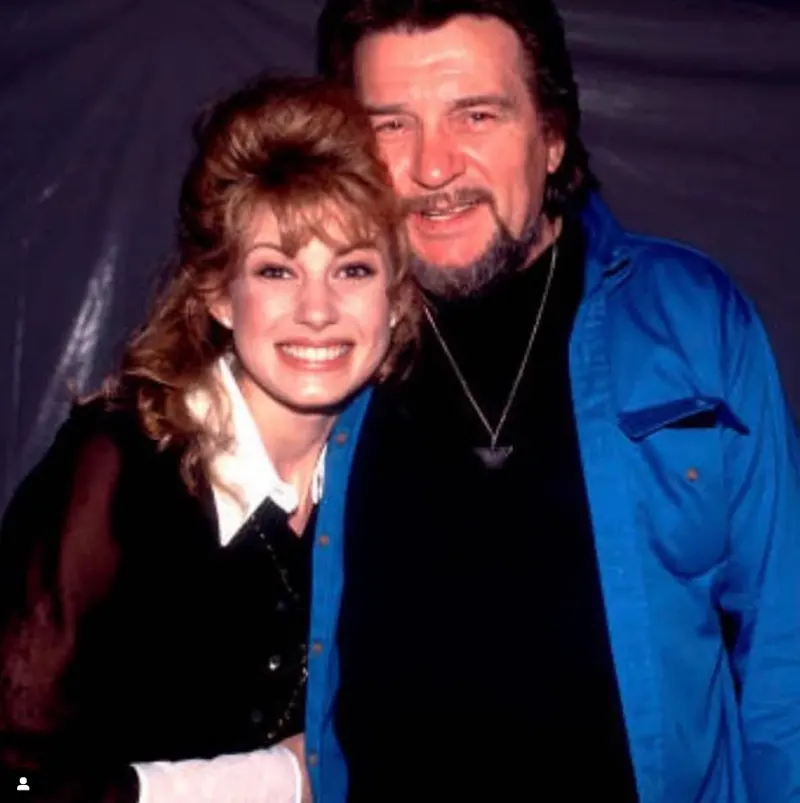
In the sprawling saga of country music, few voices echo with the raw, unapologetic power of Waylon Jennings. As a cornerstone of the Outlaw Country movement, Jennings redefined the genre with his gritty realism and soulful storytelling. But in 1987, he delivered something truly extraordinary—’Rose in Paradise,’ a song that transcends mere melody to become a chilling, cinematic mystery.
Co-written by Jim McBride and Stewart Harris, the track spins a dark and captivating tale of a wealthy Georgia banker who locks his beautiful young bride away behind the iron gates of his estate. As the story unfolds, suspicion and veiled threats linger in the air, leading to an ending that leaves listeners haunted—did Rose meet a tragic fate, or did she ingeniously escape? The song never answers, instead inviting us to imagine the rest ourselves. That narrative restraint, paired with vivid, evocative lyrics, is what makes ‘Rose in Paradise’ so timelessly enigmatic.
Musically, the song is a masterpiece of atmosphere. A steady, hypnotic beat and smooth bassline set a languid, sultry pace, while moody guitar licks and subtle keys weave a sense of foreboding. At the heart of it all is Jennings’ iconic baritone—warm, weathered, and commanding. His delivery is deliberate and knowing, perfectly suited to a story that lives in the spaces between words. You can almost smell the magnolia blossoms and feel the heavy Southern air as the tale unfolds.
This wasn’t just another hit—it became Jennings’ twelfth No. 1 on the Billboard Hot Country Singles chart, marking a late-career triumph. But more than its chart success, ‘Rose in Paradise’ taps into the very essence of country storytelling: a blend of romance, danger, and myth that feels both deeply Southern and universally compelling. For longtime fans, it’s a reminder of Jennings’ gift as a storyteller; for newcomers, it’s a gateway into the darker, more cinematic corners of the genre.
Decades later, the song still holds its hypnotic pull—a testament to Waylon Jennings’ unmatched ability to breathe life into the characters and tales that haunt the American South’s imagination.