
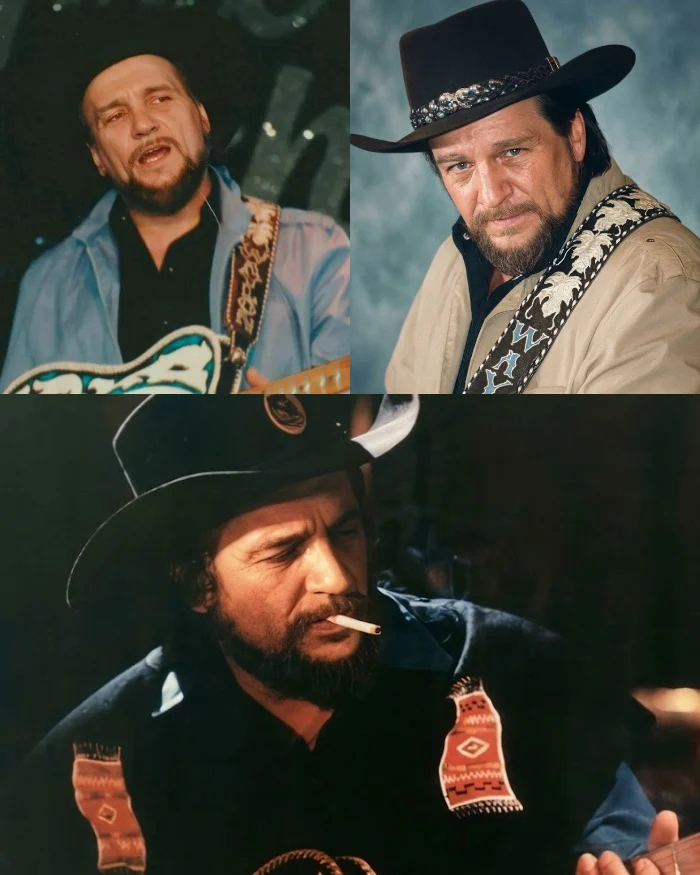
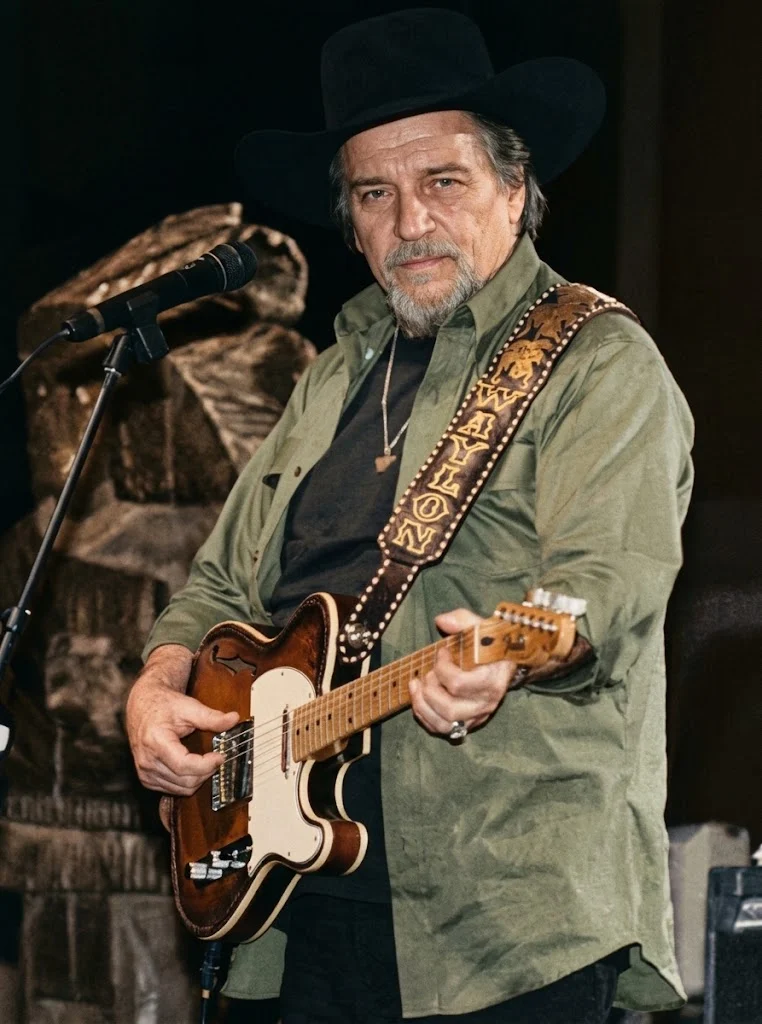
He was twenty-one when a careless joke followed him into a snow-covered Iowa field and nearly buried his gift forever.
On February 3, 1959, the Winter Dance Party tour had become a frozen punishment. Buddy Holly chartered a small plane to escape another brutal night on a broken bus. Waylon Jennings, then playing bass in Holly’s band, gave his seat to J.P. Richardson, known as The Big Bopper, who was sick with the flu.
At the Surf Ballroom in Clear Lake, Iowa, Holly teased Jennings about riding the freezing bus. Jennings answered with a line he would never outrun.
I hope your ol’ plane crashes
Hours later the aircraft went down in a snow-covered cornfield, killing Holly, Richardson, and Ritchie Valens. The crash took the music world’s brightest voices. It also took the young bass player’s confidence and left him carrying a weight no one else could see.
Instead of stepping into the spotlight created by tragedy, Jennings retreated. He returned to Texas and worked as a DJ in Lubbock. Later he moved to Kool Radio in Phoenix. The microphone became a barrier. He spun records in dark booths and hid behind glass and signal. He stopped playing bass. He stopped searching for a stage. The guilt of survival kept him in the shadows while the rest of the industry rushed forward.
Yet the music Holly had heard in him refused to die. By the early 1960s Jennings began creeping back toward the stage. He formed The Waylors and took a residency at J.D.’s, a sprawling two-story club in Phoenix. Under those lights he played for cowboys and college students and began blending traditional country with the raw drive of rock and roll. His grief became grit.
It was on that small stage that singer Bobby Bare heard the ache and authority in Jennings’ voice. Bare immediately called RCA Victor executive Chet Atkins. That call helped produce a 1965 record deal and brought Jennings to Nashville.
Nashville nearly broke his spirit a second time. The Nashville machine favored polished strings, background choirs, and session players. It did not want Waylon Jennings as he sounded in clubs. Studio bosses insisted on controlling his band, his phrasing, and his arrangements. He fought them behind closed doors. He stormed out of sessions. He refused to let a corporate formula smooth away the truth in his voice.
His defiance reached a breaking point. In 1972 Jennings negotiated a contract that gave him total creative control. He could use his own band. He could produce his own records. That victory shattered the assembly-line mold and helped birth Outlaw Country.
The fight was never only about sound. It was about honoring Buddy Holly. Holly had produced his own music and chased his own vision. Jennings believed the voice he had been spared to use owed a debt to the friend who did not survive the night.
He made sure the industry heard exactly what he had lived to say
Waylon Jennings did not simply survive The Day The Music Died. He turned survivor’s guilt into a revolution. He carried Holly’s memory into every studio battle, every contract dispute, and every roaring stadium stage, and he rewrote country music on his own terms.