
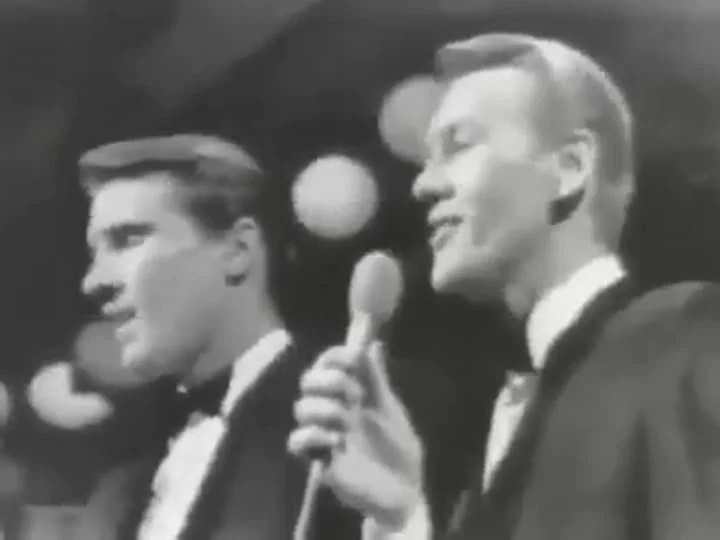
There is a particular ache inside the greatest love songs. It lives in the space between a breath and a desperate promise. For The Righteous Brothers, that ache became immortal in 1966 with a single question. “Without you, baby, what good am I?” The words spill out like a confession, fragile and huge at once. The song was “(You’re My) Soul and Inspiration,” and it still holds a place among the most tender moments in American pop.
By the time the record appeared, Bill Medley and Bobby Hatfield had already proven themselves. They had left the celebrated Philles Records and the larger-than-life production of Phil Spector. Their new home was Verve Records. The title track of their album Soul and Inspiration arrived with urgency. It announced that the duo were not simply satellites of a famous producer. They were architects of their own emotional universe.
The album did not surpass the commercial heights of Just Once in My Life. Yet in the broader story of their career, Soul and Inspiration matters deeply. It captured two artists finding their footing and refusing to fade. Every track carries a sense of personal ownership. None more than the lead single.
Medley stepped behind the production desk. He built a sound that felt both massive and intimate. The famous Wall of Sound may have been gone, but its spirit remained. The track unfolded with a cinematic sweep that competed with anything Spector had crafted.
The first notes announce a dramatic world. A rhythm guitar lays down a steady heartbeat. Piano chords rise with quiet urgency. Then the strings arrive, painting the sky in wide, warm strokes. Drums and bass hold the piece together, giving the emotion a spine. The result is a song that breathes. It builds, it breaks, and it finally erupts into a plea that feels impossible to ignore.
The true magic lives in the voices. Medley’s deep baritone carries the weight of experience. Hatfield’s tenor floats above, reaching for something brighter. Together they create a conversation between doubt and hope. The same dynamic that made Unchained Melody legendary returns here, but with a new urgency. This is blue-eyed soul at its most potent, a fusion of gospel fire and rock and roll drama.
On the charts, the song did exactly what the duo needed. It climbed to the top of the Billboard Hot 100. That No. 1 moment proved something important. The Righteous Brothers were more than a chapter in someone else’s story. They could move the hearts of a generation on their own terms.
The song’s message is simple. A man begs his partner not to leave. Without her, he has no direction. He has no reason to laugh or cry. “You’re my soul and my heart’s inspiration,” he sings. “You’re all I got to get me by.” Such raw dependence can feel uncomfortable today. Yet the sincerity in their delivery makes it transcendent. It speaks to the way love can anchor a life.
“I never had much going / But at least I had you / How can you walk out knowing / I ain’t got nothing left if you do, baby?”
That vulnerability is why the record endures. It is why the song still finds new listeners while old fans return with the same goosebumps.
For listeners drawn to this kind of emotional honesty, there are other recordings that live in the same neighborhood. Unchained Melody brings the same duo back to the forefront with a melody that feels almost otherworldly. When a Man Loves a Woman by Percy Sledge dives into devotion with a raw, church-like intensity. Can’t Help Falling in Love shows Elvis Presley at his most tender. Stand by Me by Ben E. King offers a gentle vow of loyalty set to one of the most recognizable basslines in history. Something by The Beatles captures love in a quiet, soulful way, with George Harrison‘s vocals carrying an elegant ache.
In the end, Soul and Inspiration is more than a record. It is a reminder that music can hold a human heart in full. The Righteous Brothers took a simple question and turned it into an anthem. More than five decades later, that question still lands with the force of a first love and the ache of a last goodbye. Whether you are discovering the album for the first time or returning to a familiar memory, the song never loses its power. It simply waits. Then it wraps itself around you again.