
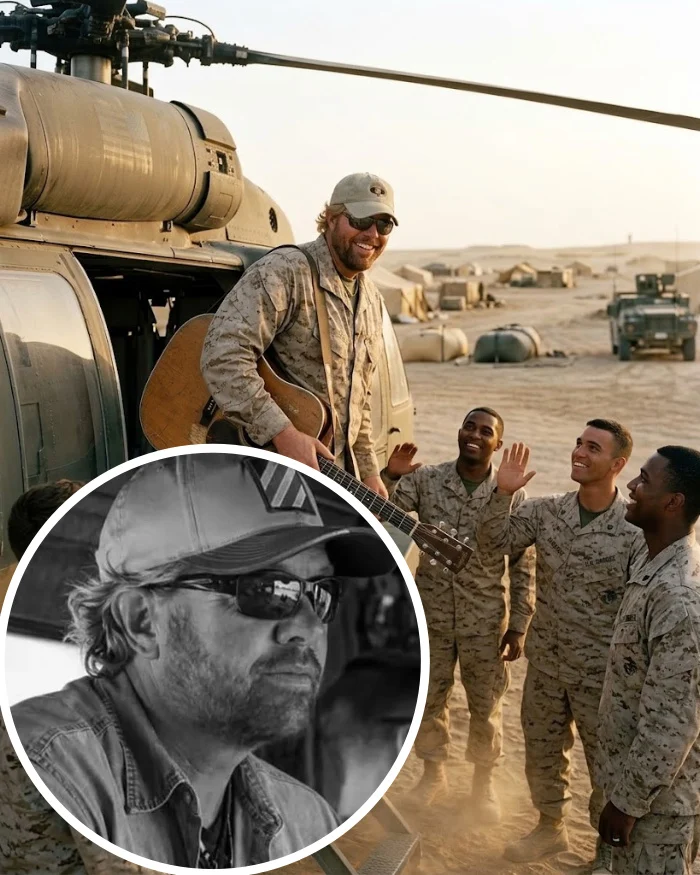
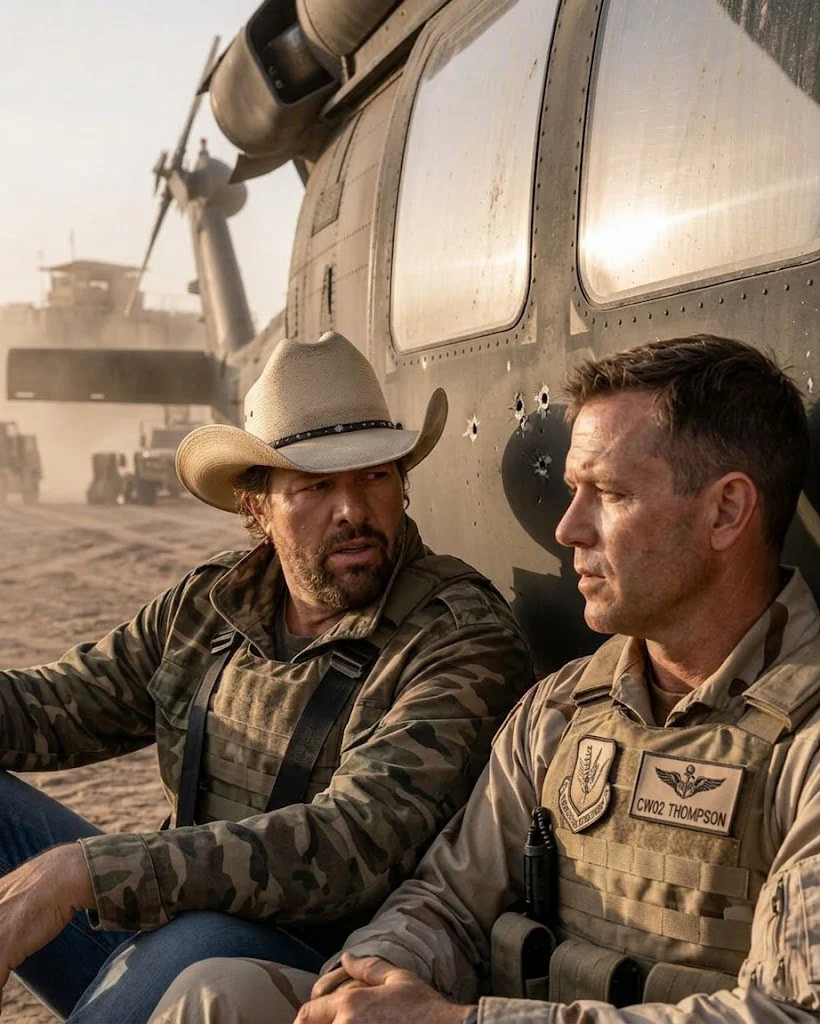
Over Mosul the helicopter banked at a sharp and unnatural angle and no one in the cabin made a sound. Toby Keith would not learn the truth until the dust rose around the landing skids.
He had done enough USO tours to know that war rarely announces itself. Sometimes danger arrives sideways. The pilot simply kept flying, silently doing whatever it took to get them out of the sky. No alarms blared. No one panicked. It was only after they were safe on the ground that Toby asked why the flight had felt so wrong. The answer was chilling. They had been taking small-arms fire from the ground.
He did not even know they were taking enemy fire until the helicopter finally touched down in the dust
By then Toby Keith was a towering figure in country music. He had sold millions of records and played packed arenas across the country. He had comfort waiting at home. He did not need to be in a war zone.
Most public figures are content to stand near the symbol of the military. They sing anthems under stadium lights and call it enough. Toby wanted to step closer to the reality. He kept going where the troops actually were.
That day in Mosul was not the only time danger got too close. There were mortar attacks interrupting concerts in Kandahar. There were rough and bone-rattling rides into remote and forgotten outposts. These were not safe and distant appearances designed to generate easy headlines back home. He was not standing in air-conditioned tents and borrowing the image of sacrifice from other people’s hard lives. He was willing to accept the discomfort, the uncertainty, and the very real risk.
Service members tend to know instantly when someone is there only for a photograph. They can spot a tourist in a combat zone from a mile away. Toby earned a different kind of reputation. He gave them his time. He gave them his undivided presence. He gave them respect that cannot be faked for cameras.
The deeper part of the story is not just that a country singer faced enemy fire. It is that he kept showing up, time after time, close enough to understand what those boots and uniforms were carrying. He saw the sheer exhaustion. He felt the heavy separation from family. He learned the random and unforgiving nature of who makes it back and who does not.
A strange angle in the air. A mortar round shaking the earth. Those raw experiences stripped away any romanticized version of war and shaped how he viewed the soldiers. He did not see them as political talking points or applause lines for a concert. He saw ordinary people living inside a level of risk most civilians would never comprehend.
His connection to the military meant something profound because it was never abstract. He went into the fire often enough to learn that true danger rarely introduces itself. Sometimes the pilot is already saving your life before you even realize the story has changed.
He did not just sing about their sacrifice from afar. He stood beside them in the dust and made sure they knew they were never walking alone