
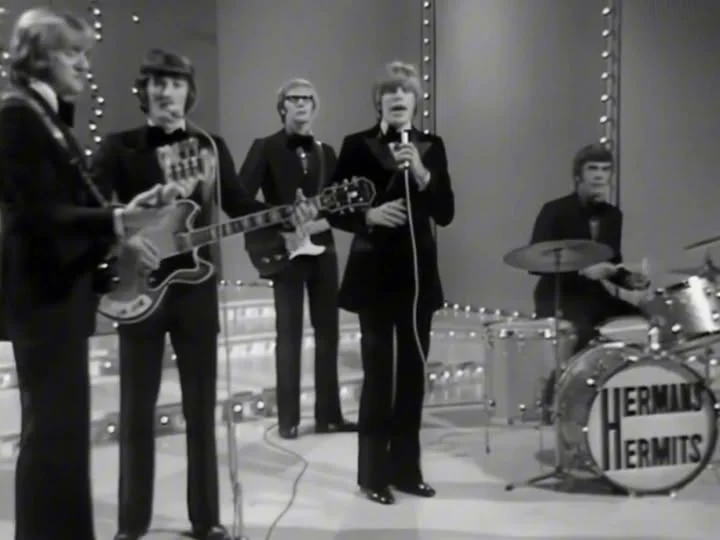
A backyard wedding took place in the golden hour of a summer evening. The guests were a mix of generations. They settled into their seats. A soft chatter filled the air. The DJ understood the assignment. He picked a song from the summer of 1967. It was “There is a Kind of Hush” by Herman’s Hermits. The first notes fell like a gentle announcement. The parents of the couple smiled. Aunts and uncles tilted their heads. A few hands found each other across the aisle. The song acted as a shared exhale. It did not demand attention. It earned it. This is the quiet power of a record built on confidence instead of noise.
By standing still and shining clearly, the record proves that quiet can be a form of confidence.
The year 1967 was a hinge point in music history. The airwaves crowded with psychedelic experiments and fierce lyrical ambition. Into this storm stepped a band that understood a different kind of strength. Herman’s Hermits were masters of the three minute single. They were never an albums band in the classic sense. Their strength was the tight package. Peter Noone possessed a voice of remarkable clarity. It was unfussy and melodic. It seemed to smile at the edges of the microphone. The team around him was equally sharp. Mickie Most produced the session. He had a native fluency for radio. He took the song written by Geoff Stephens and Les Reed. He polished it into a perfect postcard. It was released on EMI Columbia in the UK and MGM in the US.
Listen to the arrangement and you will hear a study in deliberate restraint. The rhythm section enters softly. A light bass pulse guides the way. The drums are brushed with delicacy. A tambourine sparkles without crowding the beat. It acts like light catching dust in a still room. Then the strings arrive. They glide in measured arcs. They offer a gentle lift on the chorus. They settle into a soft landing on the verses. Woodwinds trace a cheerful halo around the vocal. An acoustic guitar provides a tidy center. A keyboard line rounds out the harmony. Every instrument has a home. Nothing fights for the lead. The vocal is the focal point. It is not a blinding spotlight. It is a warm glow. The high end of the mix is polished but never brittle. The reverb is short and controlled. It implies a welcoming room. Noone’s consonants have clear definition. His vowels are rounded without being syrupy. You can hear the reverb tail tap the back wall of the studio and fall away.
The lyrics imagine a world that falls quiet because two people share a singular moment. The recording translates this into an actual acoustic space. The world hushes. The air carries only what matters. The performance strikes a perfect balance between private feeling and public song. It sounds like a secret you are welcome to overhear. The singer does not shout. He invites you into the whisper. This emotional posture makes the record unusually durable. It does not chase your attention. It creates a space around you.
The song has a way of weaving itself into small real world moments. I recall an evening train pulling out of a station. The windows were fogged from the winter air. A young student scrolled through a dense modern playlist. Then the student stopped on this track. The entire coach seemed to exhale. No one looked up. The atmosphere shifted. It felt like a theater when the house lights dim. Another memory surfaces. A late night drive in spring rain. The wipers traced an easy rhythm. The car radio pulled in the song. The cabin became a small intimate chamber. The ride cymbal sounded exactly like raindrops meeting glass. The city outside the window felt polished.
Many listeners dismissed songs like this as lightweight. It is a critique often aimed at mid decade British pop. Yet writing light without turning flimsy is one of the most difficult tricks in music. The craft here lies in selective emphasis. Every element earns its keep. There is no grand guitar solo. No orchestral swell steals the scene. The details serve the proportion. Even the bridge, a section often used for melodramatic escalation, chooses poise instead. For the musician or engineer the track offers a quiet lesson. The chord chart is unassuming. The drama lives in the arrangement. The vibrato is spare. The phrase endings taper off. The percussion sits deeply in the pocket. The frequency spectrum contains no waste.
Study the voice itself. Noone sounds like light grain oak. It is pale and smooth. The tone is strong enough to hold weight without darkening the room. The backing vocals act like brushed chrome. They are reflective but not harsh. The strings are satin. The edges are completely rounded. The studio approach was built around the song. Mickie Most did not encourage showboating. He wanted a clean picture. The result is a record that feels tailored. It is a well pressed shirt in late afternoon light.
Place the song in the band’s journey. The Hermits were skilled at finding songs that suited their frontman. They finished them with a gloss that read cleanly across AM radio dials. This song appears as pop was splitting into specialized lanes. It plants its flag in the literate middle. You could hear it after a Motown single and before a jangly West Coast track. It travels well. It still travels now.
If this world of sound appeals to you there are other cousins in the same library. The Association offered bright sunlit harmonies. The Hollies shared a tight storytelling touch. The Turtles balanced romance with radio clarity. Petula Clark delivered polished London pop. The Zombies built baroque sweetness. Gerry and the Pacemakers captured beautiful orchestral restraint. They all understood the value of a clean vocal line and a steady hand.
As the final chorus arrives the room around you might feel softer. The track fades slowly. The voices thin. The strings settle into silence. You might find you have leaned closer to the speaker than you intended. That is the spell it casts. It is not hypnosis. It is pure attention. The invitation remains open. Close the door. Reduce the light. Let that hush arrive one more time.
It is a modest request for a modest reward. This is often how love communicates best.