
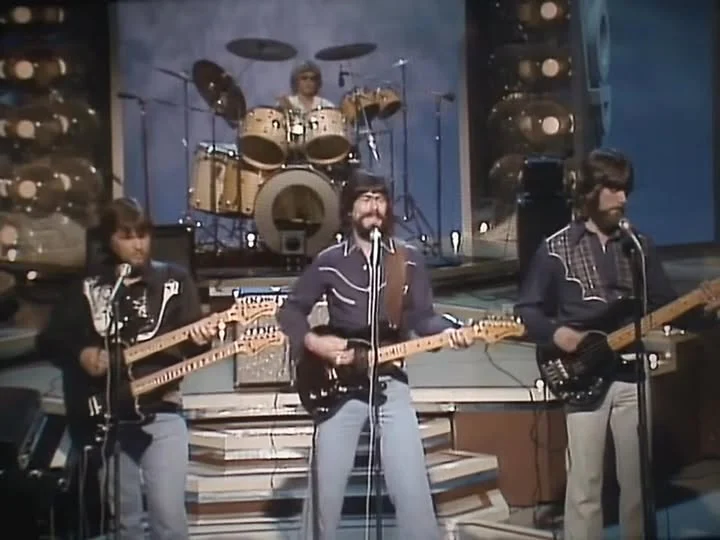
“Why lady why, can’t I leave you alone / I try, lady try, but the feeling’s too strong.” Those aching words, first heard in 1980, have never really faded. They belong to a tender ballad that helped define an era and a band: Alabama. More than four decades later, Why Lady Why remains a testament to the kind of emotional storytelling that turns a simple song into a lasting memory.
For the cousins from Fort Payne, Alabama—Randy Owen, Teddy Gentry, and Jeff Cook—this was more than a hit. It was the second single off their major-label debut My Home’s in Alabama, and it announced that a new force had arrived. The band’s signature blend of traditional country with pop-rock sensibilities—what would later be called “New Country”—found its first perfect expression in this quiet heartbreaker of a track.
“Why lady why, can’t I leave you alone / I try, lady try, but the feeling’s too strong.”
The narrative structure of Why Lady Why is deceptively simple. A man wrestles with the ghost of a woman who’s left him, unable to shake the longing. Owen and Gentry co-wrote the lyrics, drawing from the well of universal heartbreak. Yet the genius lay not just in the words but in the musical restraint. The song opens with a gentle acoustic guitar, then slowly swells with layers of electric guitar and bass, building a warm, introspective atmosphere. The harmonies—tight, layered, almost conversational—elevate the pain into something beautiful.
This emotional alchemy propelled the single to #1 on the Billboard Hot Country Songs chart in 1980, following the success of their debut smash Tennessee River. It became a staple of Alabama’s live shows and a fan favorite that still draws tears and cheers. But its influence stretched far beyond the stage.
Alabama had already spent years playing local clubs, honing a sound that mixed southern rock, country, and pop. When they signed with RCA in the late 1970s, they were ready. Why Lady Why proved that country music could be polished without losing its soul. The song’s crossover appeal—smooth production, an accessible melody, a theme that spoke to anyone who’d ever loved and lost—paved the way for later giants like Garth Brooks and Shania Twain. It was a blueprint for how to reach both purists and new listeners.
The legacy of this ballad is not just in charts or awards—though Alabama has sold over 75 million records and won countless Grammys and CMA awards. It lives in the way the song becomes a personal time capsule for each listener. For some, it’s a first love remembered. For others, it’s a balm during a difficult breakup. For many, it’s simply the sound of a band at the peak of its creativity, capturing something timeless.
Alabama went on to create even bigger hits—Mountain Music, Dixieland Delight, Feels So Right—but Why Lady Why remains a defining moment. It is the song where everything clicked: the heartbreak, the harmonies, the gentle push against genre boundaries. More than forty years after its release, it still asks that haunting question, and we still listen, waiting for an answer that never comes—but somehow feels exactly right.