
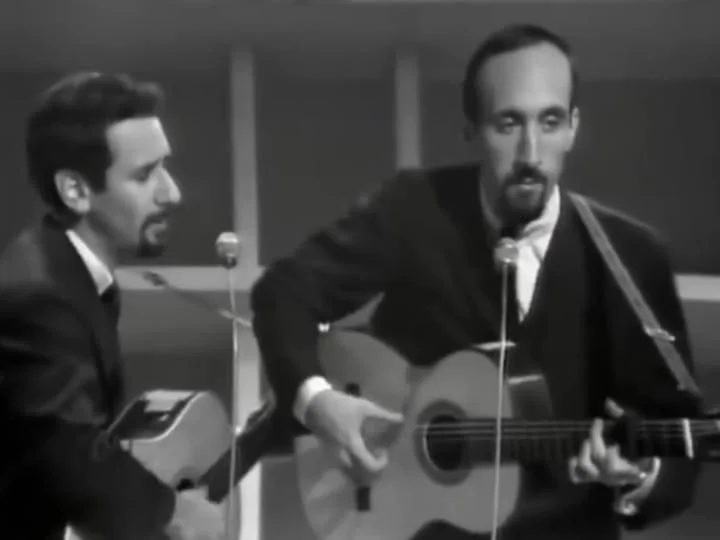
There is a moment in Peter, Paul & Mary’s 1965 rendition of “Early Morning Rain” where the ache of solitude becomes almost tangible. Mary Travers’ voice rises above the gentle strum of an acoustic guitar, weaving a tapestry of sound that feels both timeless and deeply personal. This is not just a song; it is a meditation on loneliness, a traveler’s prayer for connection, and a masterclass in the art of musical storytelling. Originally penned by the legendary Gordon Lightfoot, this track found its definitive voice through the trio’s lush harmonies, transforming it into an enduring classic on their album See What Tomorrow Brings.
Released during a year of cultural upheaval and hope, 1965, See What Tomorrow Brings stands as a testament to Peter, Paul & Mary’s ability to channel the emotional currents of the era. The album is a journey through political awareness, personal longing, and the simple beauty of acoustic soundscapes. “Early Morning Rain” serves as its emotional cornerstone, a piece that captures the ethos of looking forward while being deeply anchored in the melancholy of the present. Alongside tracks like the stirring “The Rising of the Moon” and the tender “Hush-A-Bye,” the album unfolds like a series of heartfelt letters, each one more resonant than the last.
The arrangement of ‘Early Morning Rain’ is a testament to the power of restraint. By stripping away all excess, the trio allows the raw emotion of the lyrics to shine through.
The instrumental landscape of the song is a masterful blend of simplicity and depth. The acoustic guitar acts as the steady heartbeat, with a rhythmic pattern that feels like the gentle patter of rain against a window. It is softer and more fluid than Lightfoot’s original, drawing the listener into an intimate space. Pianos enter like a whispered secret, adding a layer of melancholic resonance that underscores themes of loss and yearning. These two instruments dance together, creating a sonic texture that is both grounded and ethereal, perfectly mirroring the singer’s internal conflict.
But the true magic of this rendition lies in the vocal harmonies. Mary Travers, with her soaring and clear alto, blends seamlessly with Peter Yarrow and Paul Stookey, creating a three-part harmony that is as complex as it is beautiful. Their voices rise and fall with the narrative, capturing the ache of separation and the quiet flicker of hope for reunion. The way they breathe life into the story of a lonesome traveler, watching airplanes from afar, is nothing short of breathtaking. They transform words into a palpable feeling of solitude, making the listener feel the weight of the world alongside the protagonist.
The lyrics themselves are a vivid painting of isolation. The traveler watches a “big seven-o-seven set to go” while standing out on the grass “where the pavement never grows.” The recurring motif of rain symbolizes both cleansing and sorrow, a duality that Lightfoot captured perfectly and the trio amplified with their vocal dynamics. Each harmony, each pause, and each note becomes a brushstroke in a masterpiece of folk music. This is not just a performance; it is an invitation to reflect on one’s own experiences of loss and the unfulfilled longing for something just out of reach.
Decades later, the song’s enduring appeal lies in its universality. It evokes a sense of place and emotion that transcends time, allowing listeners to connect with the story on a deeply personal level. The simplicity of the arrangement—guitar, piano, and voice—proves that the most powerful music often comes from the most humble beginnings. It is a quintessential example of folk music’s ability to weave narrative and melody into a cohesive, moving whole.
For those who find themselves captivated by the spirit of “Early Morning Rain,” the journey does not have to end here. A world of similar heartfelt tunes awaits, each one a testament to the power of acoustic storytelling. Dive into Gordon Lightfoot’s own “If You Could Read My Mind,” a poetic exploration of love and loss. Let Bob Dylan’s “Blowin’ in the Wind” stir your soul with its reflective questions on freedom. Revisit Peter, Paul & Mary’s own “Where Have All the Flowers Gone,” an anti-war anthem that echoes with their signature harmonies. Tom Paxton’s “The Last Thing on My Mind” offers a ballad of regret and parting, while Leonard Cohen’s “Suzanne” provides a hauntingly beautiful journey through evocative lyrics.
In the end, “Early Morning Rain” is more than a song on an album. It is a shimmering example of how music can timelessly capture the human condition—our longing, our nostalgia, and our enduring hope. Whether you are discovering this classic for the first time or revisiting an old friend, let the harmonies wash over you. Let the guitar and piano carry you away to a place where rain falls gently and the heart finds its quietest voice.