
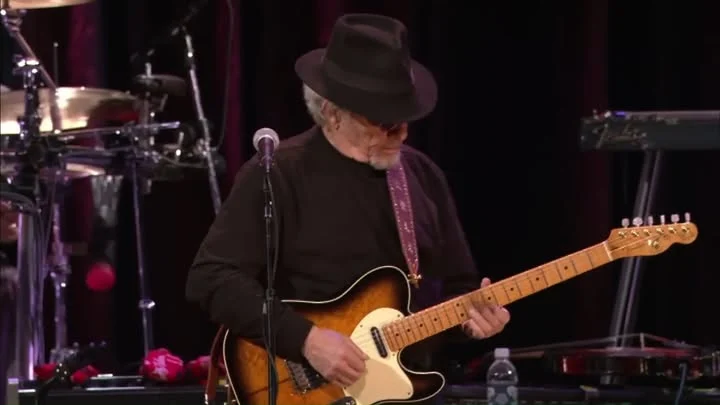

In the quiet, desperate hours before a condemned man’s final dawn, a single, familiar melody can become the ultimate act of mercy. That was the haunting premise behind Merle Haggard’s timeless 1967 masterpiece, “Sing Me Back Home.” This wasn’t just another country tune; it was a harrowing, quiet testament to the power of music to transcend even the cold walls of a death row cell.
The narrative, delivered with Haggard’s signature raw authenticity, centers on a prisoner’s last request. He doesn’t ask for a final meal or a reprieve. Instead, he begs a fellow inmate to sing a song from their childhood, a piece of music that could transport him back to a simpler, safer world. The narrator, bound by this solemn duty, raises his voice in the darkness, offering a fleeting moment of peace before the sentence is carried out.
The beauty of the song lies not in its complexity, but in its desperate simplicity. It is a story about how a single verse of a forgotten lullaby or a worn-out hymn can be the last bridge to everything good and lost in a man’s life.
Each line in the lyrics is a stark, vivid impression of longing. Listeners can almost see the damp, grey cell and feel the weight of an inevitable fate. Haggard’s own voice, weathered and world-weary, delivers the narrative with a profound gravity that transforms a simple request into a powerful exploration of redemption and grief. The melody itself mirrors the narrative—a steady, solemn stride that swells just enough to carry the emotional burden without ever breaking into melodrama.
More than just a story of an execution, “Sing Me Back Home” has become a universal anthem for anyone who has ever sought solace in a familiar tune during a time of crushing hardship. It is a testament to the human need for connection and memory when facing the end. For decades, the song has stood as one of Haggard’s most defining works, a powerful reminder of why he was considered the poet of the common man. He captured a moment of profound humanity in a place devoid of it, proving that sometimes, the most potent emotional resonance comes from the quietest, most desperate whisper for home.