
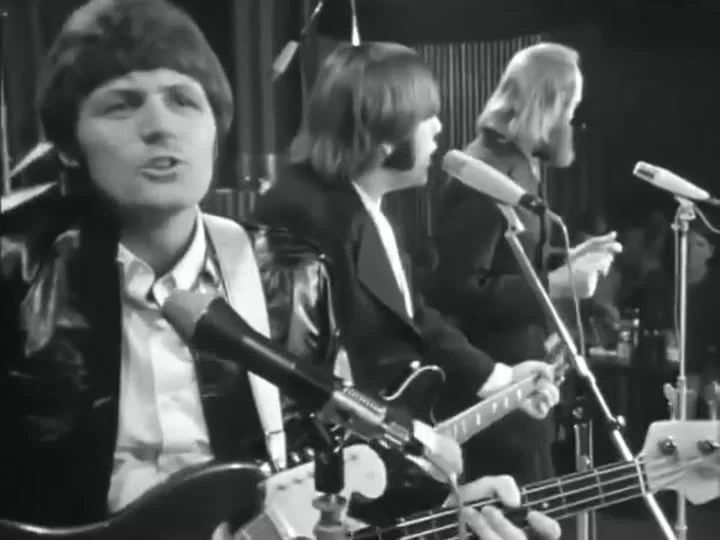
There are moments in music history when a single song becomes a crossroads. For The Beach Boys, that moment arrived in early 1969 with the release of “I Can Hear Music.” The late 1960s had left the band fractured, a once-unified creative force scattered by the receding brilliance of Brian Wilson’s guiding light. Their album 20/20 was a patchwork quilt of sessions and songwriters, less a cohesive statement than a testament to survival. Then Carl Wilson stepped behind the production board for the first time, and everything shifted.
Listening to this track through high-quality studio headphones reveals a crystalline world. The song is a cover of a Jeff Barry, Ellie Greenwich, and Phil Spector gem originally recorded by The Ronettes. But Carl did not simply replicate the Wall of Sound. He built something new—a shimmering cathedral of harmony that pointed the way forward for a band many thought was fading. The result is less an ending and more an evolution, a sound that bridges the lush psychedelia of the late 60s and the rock immediacy of Sunflower and Surf’s Up.
“Carl Wilson’s voice on this track is not just a lead instrument; it is the human heart of the entire glorious cacophony.”
The Arrangement: A Wall of Sound Built on Vocals
Carl Wilson’s production is a masterclass in contrast. The foundation is deceptively simple: a crisp, almost dry drum backbeat from Dennis Wilson that cuts cleanly through the mix, providing forward momentum. A strummed acoustic guitar—reportedly contributed by Brian Wilson himself, who wanted a “smooth and subliminal” instrumental track—offers a gentle, ringing sustain. Bruce Johnston’s Fender Rhodes electric piano weaves a watery, jazzy texture through the lower midrange, cushioning the entire piece.
But the real architecture lives in the voices. The trademark Beach Boys harmonies are stacked with meticulous precision, not as mere backing vocals but as instrumental textures. Mike Love, Al Jardine, and Johnston create dense, complex clusters that hit with the impact of a full string section. The entire piece of music feels less like a wall and more like a beautifully tessellated surface, where every note and voice interlocks with crystalline clarity.
Carl’s Catharsis: The Voice as Orchestra
Carl Wilson possessed a rich baritone-tenor capable of navigating both the hard rock crunch of “Good Vibrations” and the tender folk of “God Only Knows.” Here, he leans into the full emotional range. His opening line, “I can hear music in the air,” is delivered with a pure, soaring tone that feels utterly genuine. There is restraint in the first verse, but by the chorus his voice achieves controlled catharsis. The subtle vibrato on held notes, particularly in the upper register, is breathtaking.
The bridge elevates the track from a strong cover to a defining moment. Carl introduces a short, ecstatic guitar break—a perfect, fuzz-laced phrase played with concise energy that defined his six-string style. It acts as a moment of pure, unbridled rock emotion before the glorious, reverb-drenched return of the main vocal theme. This contrast between delicate harmony and muscular guitar captures the tension of the band at the close of the decade.
The Legacy of the Sound
Released as a single in early 1969 on Capitol Records, “I Can Hear Music” earned a moderate hit in the US but fared particularly well in Europe, reaching the UK Top 10. The track proved that the band could still produce brilliant, hit-worthy pop without the intense perfectionism of Brian’s direct leadership. For a young fan trying to absorb Beach Boys history, this recording offers a crucial roadmap for their post-Pet Sounds sound.
Ultimately, Carl Wilson’s masterful production transformed a girl-group favorite into an anthem of spiritual fulfillment. The song connects the personal, joyful experience of sound to the universal, almost mystical power of art. It is a compelling argument for the restorative power of music itself, a track that proves the enduring magic of those five voices finding their footing again.
For further listening, these songs share the same high-fidelity harmony and emotional pop sensibility:
The Ronettes “I Can Hear Music” (1966) remains essential for understanding the original Wall of Sound structure. The Beach Boys’ own “Darlin’” (1967) showcases Carl Wilson’s emotional command from the Wild Honey album. The Byrds “Goin’ Back” (1967) shares the baroque-pop sensibility and dense vocal harmonies. Badfinger’s “No Matter What” (1970) features the powerful vocal delivery Carl perfected. The Rascals “Groovin’” (1967) captures sunlit emotional contentment with soulful vocals. Finally, Todd Rundgren’s “I Saw the Light” (1972) channels the intimate, multi-layered production techniques that Carl Wilson mastered here.