
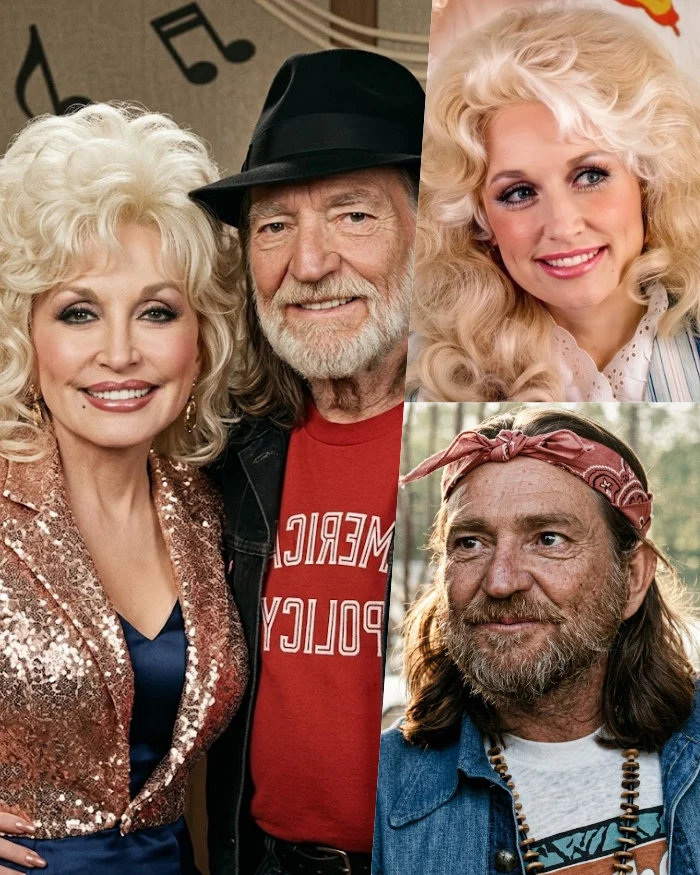
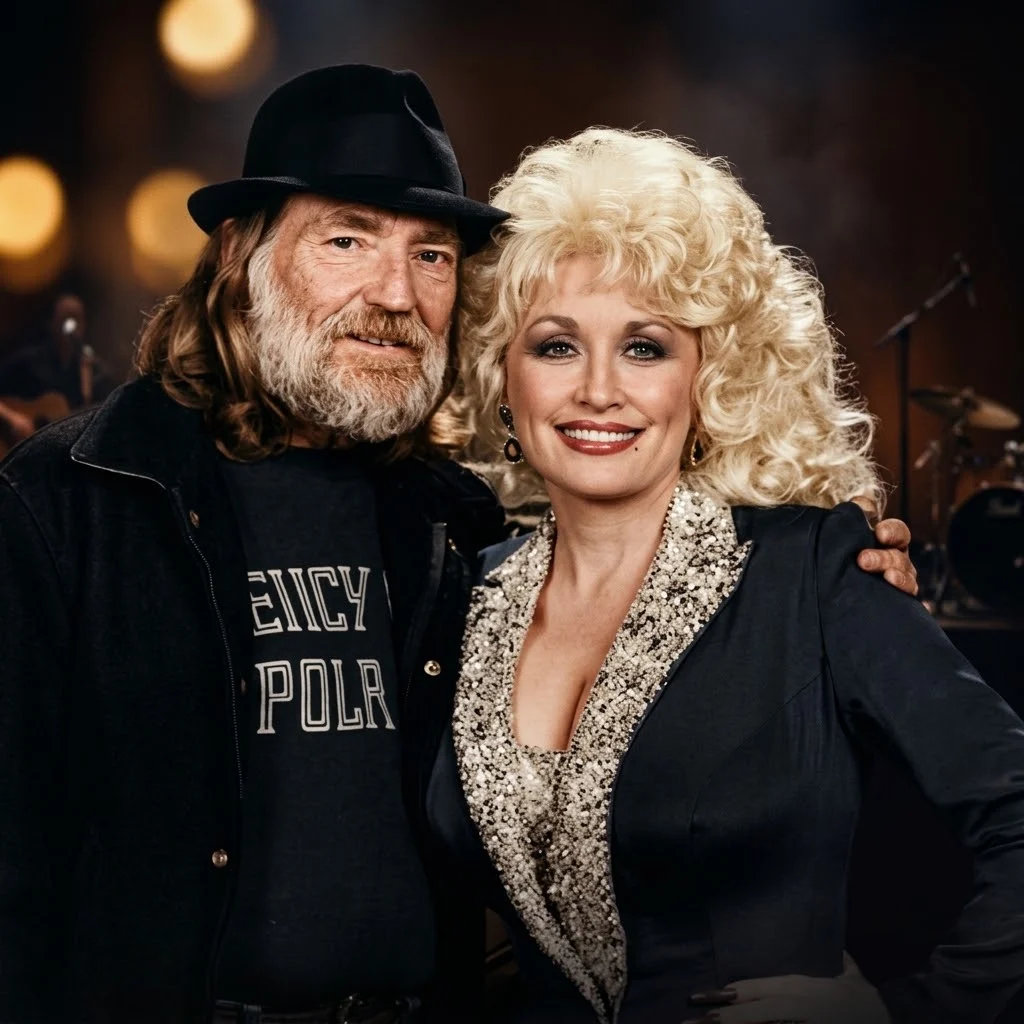
When Willie Nelson sang his line in the studio, Dolly Parton felt something break open inside her, and tears followed.
That moment was not simply about a duet. It was the sound of two Nashville survivors recognizing each other after decades of being pushed aside by the very town that later celebrated them.
Willie Nelson and Dolly Parton built a six-decade friendship on that shared pain. On stage, they looked like opposites. Willie was the rugged outlaw with a battered guitar named Trigger, while Dolly was the glittering queen of country style. Off stage, though, they carried a quieter truth. Both had arrived in Music City as young songwriters trying to survive by turning private heartbreak into lyrics for other people.
In the 1960s, Nashville executives often treated their work as useful inventory. They took Willie’s songs, including Crazy and Hello Walls, and handed them to other performers. They also doubted his own voice, calling its jazz-like phrasing too unusual for country radio.
Dolly met the same kind of pressure. Early in her career, industry men tried to smooth away her East Tennessee vibrato and suggested she should write for male stars instead of standing at the center of the stage herself.
That repeated rejection created a bond deeper than glamour or outlaw myth. They knew what it felt like to have their own words dismissed while those words made other people famous.
Years later, that shared history became audible. For the 2013 album To All the Girls…, Willie reached toward his oldest musical friendships. The project brought Dolly’s song From Here to the Moon and Back into a new emotional space.
Dolly had originally written the song for Joyful Noise. When the chance to record it with Willie appeared, she wanted his weathered voice on the track. She understood that his phrasing could change the song from a sweet love lyric into something more honest.
Willie preferred feeling over technical polish, often trusting a single take. Dolly, known for exacting craft, met him in that open space. The result was not just a duet. It was a conversation between two people who had outlasted the industry that once tried to silence them.
“His weathered voice gave the melody a different kind of gravity.”
When Willie delivered his lines, Dolly began to cry. The song became a raw reflection of friendship, survival, and respect. It stands as a permanent record of two artists who turned early loneliness into a shared golden moment.