
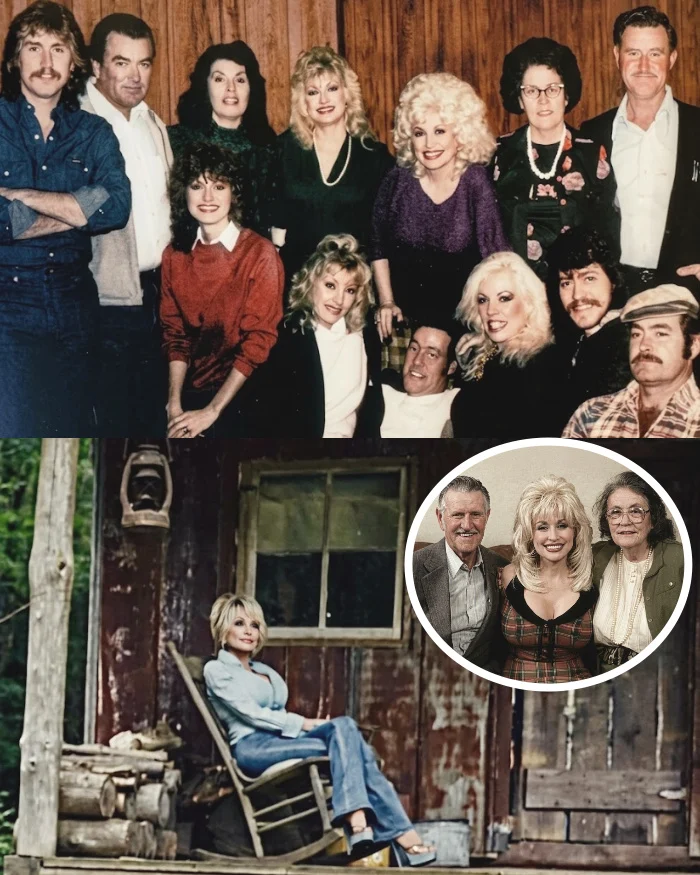
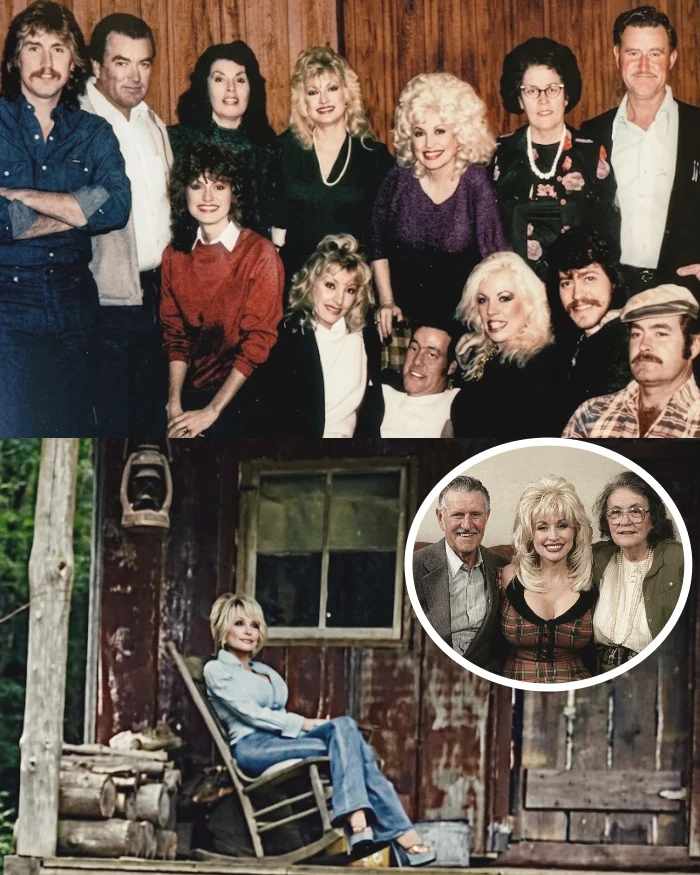
The coldest nights in Dolly Parton’s childhood were not just memories. They were promises.
On Locust Ridge in Sevier County, Tennessee, sub-zero winds pressed against a rustic one-room cabin while young Dolly lay awake. Yellowed newspapers pasted over rough timber cracks did little to stop the gale. The tin roof roared in mountain rainstorms, and wide floorboards let winter drafts whistle up from the dirt below. The Partons raised twelve children there without electricity or running water, and their world measured less than four hundred square feet along the Little Pigeon River fork beneath the Great Smoky Mountains.
When Dr. Robert F. Thomas delivered Dolly in January 1946, her father Robert Lee Parton paid the physician with a sack of cornmeal. That trade captured the harsh mountain economy near Mount LeConte, where cash rarely changed hands and families coaxed tobacco, corn, and greens from rocky acreage.
Bedtime became a survival ritual. Children stacked onto crude mattresses stuffed with dried corn shucks, straw, and stiff chicken feathers. They rotated through the night so whoever froze on the drafty edge could move into the center and absorb the shared warmth of the others. On snow-covered nights, they huddled packed tight like small birds.
The chill in her bones forged a quiet, stubborn ambition. Her drive to sing grew from an urgent promise to build a sturdy home that would keep the mountain cold away from her parents and siblings forever. That ambition hardened long before she strummed a guitar on a Nashville stage.
The little girl who once traded spots on a straw bed grew into an artist who sheltered her entire family.
Years later, that impoverished cabin became the wellspring of her enduring compassion. She carried the lessons of those newspaper-lined walls into a lifetime of lifting others into the light.
The hollow also became her first musical conservatory. Uncle Bill Owens recognized her ear early, helped string an old guitar, and secured her first regional appearances. By age ten, Dolly rode a bus over winding two-lane roads to Knoxville and sang on Cas Walker’s Farm and Home Hour on WIVK radio and WBIR-TV before Appalachian factory hands and farmers.
After graduating from Sevier County High School in 1964, she packed clothes into cardboard luggage and left for Nashville the very next morning. Executives tried to push her toward bubblegum pop. She refused. She anchored her songwriting in the unadorned realities of Locust Ridge, shaping In the Good Old Days (When Times Were Bad) and My Tennessee Mountain Home from the isolation of her youth.
As national success and international tours brought unprecedented wealth, she directed her fortune back to the soil where she was raised. In the late 1980s, after the original Locust Ridge property had passed into other hands, Dolly bought back the cabin and surrounding woods. She enlisted her brother Bobby to restore the timber frame and tin roof, keeping the gates closed as a private family sanctuary.
Her investment in East Tennessee went far beyond old wood. When economic shifts closed local timber operations and left Sevier County families struggling with seasonal poverty, she established Dollywood in Pigeon Forge in 1986. The park created thousands of regional jobs and became an economic anchor for year-round employment. Inside it, she commissioned an exact replica of the Locust Ridge cabin, showing millions of visitors the rough planks and kerosene lamps of her childhood.
In 1995, remembering that her father had lived his entire life unable to read or write, she launched the Imagination Library from Sevier County. The program mailed free books monthly to local preschool children to break rural illiteracy. It later expanded across multiple countries, delivered hundreds of millions of books worldwide, and kept its operational headquarters anchored in East Tennessee.
The global fame, movie roles, and stadium tours never erased the discipline learned on a shuck mattress beside the Little Pigeon River.
Decades after leaving the mountain hollow, Dolly’s life remains tied to the ridge where she first watched cold seep through papered walls. The tin roofed cabin in the woods still stands, quiet proof of roots that carried a mountain girl from the backwoods into history.