
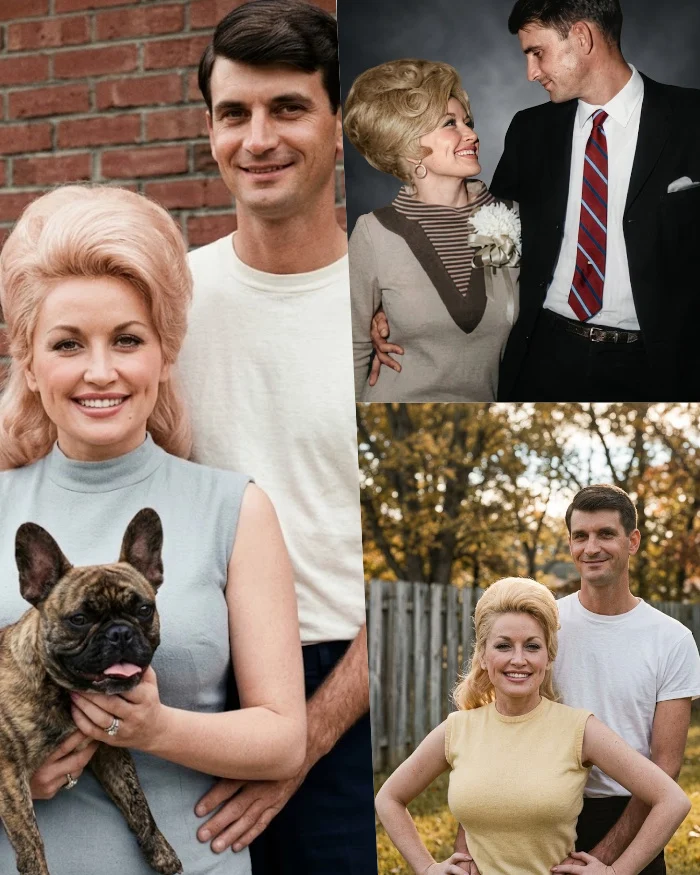
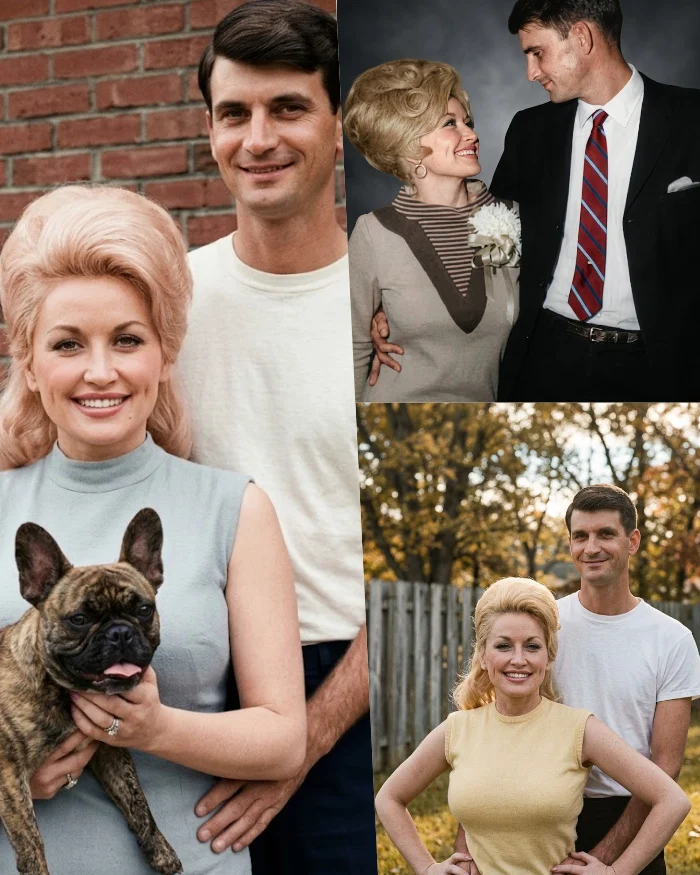
Long before the world knew Dolly Parton as a glittering icon, a quiet Brentwood kitchen held the deepest truth of her life. There she learned that love could be measured in warm buttermilk biscuits, steady hands, and a man who chose privacy over applause far from elaborate wigs and stage makeup.
For nearly sixty years, Dolly and Carl Dean built a marriage that stood apart from the machinery of fame. Dolly belonged to stages and studios, while Carl ran an asphalt paving business in Middle Tennessee. He had no hunger for red carpets or flashbulbs. In 1972, as her superstardom rose, the couple bought roughly seventy acres south of Nashville and later created the sprawling twenty-three-room home called Willow Lake Plantation. It became their shield.
Their story began on a hot Nashville day in 1964. Dolly stepped outside the Wishy Washy Laundromat on 16th Avenue South with a basket of laundry. Carl passed in a white Chevrolet, stopped, and warned the eighteen-year-old girl she would get sunburned in the afternoon heat. Two years later, on May 30, 1966, they crossed into Ringgold, Georgia, where a local Baptist preacher joined them in marriage with only Dolly’s mother Avie Lee sitting in the pews.
Her record label feared a husband might weaken her commercial appeal and urged her not to marry. Dolly refused to bend to that fear. Carl believed in her ambition, yet he set a boundary early. After one industry banquet in 1966, he removed his suit jacket in the car and made a vow that shaped their private world.
He loved her and would support whatever she wanted to do but he never intended to attend another awards dinner
Dolly honored that promise for the rest of his life. Behind the tall trees of Willow Lake Plantation, Carl lived the role he understood best. While tour buses searched Tennessee backroads for a glimpse of the superstar, he often drove a tractor, cut grass, maintained machinery, and tended the grounds. When reporters or fans drifted too close, Carl would lean on a tool and tell them he was simply the gardener.
He told them he was simply the gardener
Their rituals stayed humble. They did not chase vacations on chartered jets. They traveled across the country in a modest camper van, with Carl building roadside campfires and Dolly cooking on small burners. At home, Dolly prepared Southern biscuits and gravy before driving into town for production meetings. The kitchen became a place where fame softened into ordinary devotion.
When illness and age touched Carl in his seventies and eighties, the Brentwood home changed. The man who had once worked with heavy tools grew frail, and Dolly stepped back from extensive touring to remain close to him. A good morning became one where Carl had an appetite. Her sister Stella Parton later spoke of the weight carried behind closed doors, describing the exhaustion Dolly faced while watching her strongest pillar slowly fade.
Carl Dean died in Nashville in March 2025 at the age of eighty-two. Only immediate family attended the private ceremony. The public may remember Dolly for bright melodies and dazzling stages. Yet the man who first saw her outside a laundromat before the world knew her name gave her something rarer. Across a quiet kitchen table in Brentwood, their bond lived for sixty years, needing no audience and asking only for bread, patience, and love.