
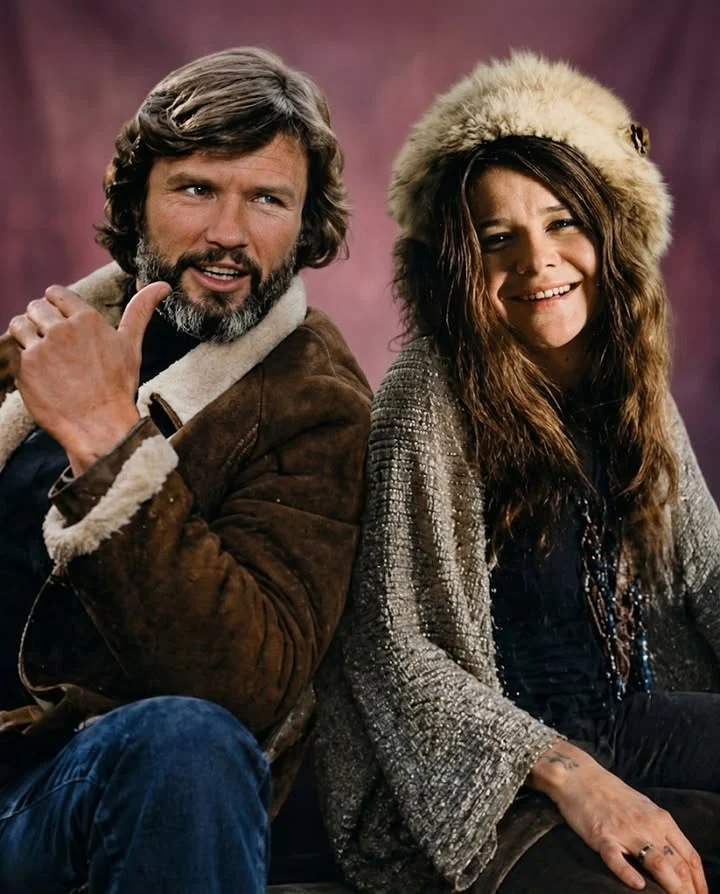
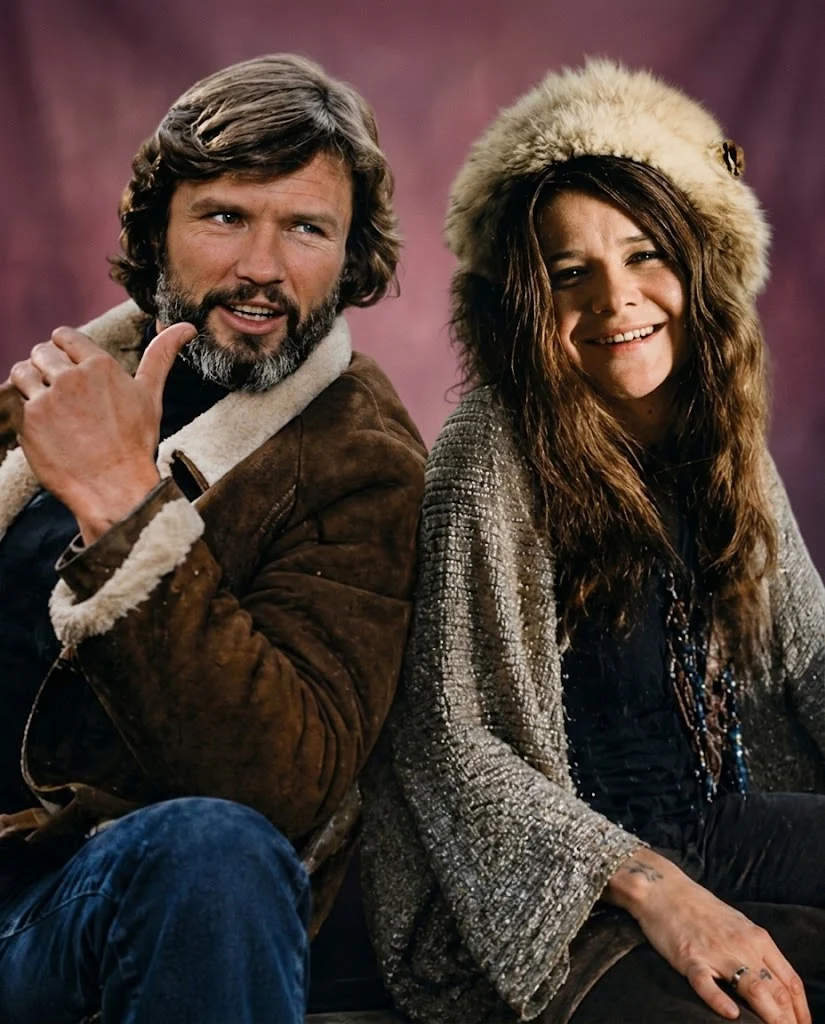
The control room at Sunset Sound Recorders held a silence that felt too large for the space. A tape machine began to roll. The voice of Janis Joplin filled the room days after her funeral.
Kris Kristofferson sat there and heard the woman he cared for singing his words with a fire that seemed impossible for someone who had just been laid to rest.
In early October 1970 she stepped to the microphone at age 27 while finishing what would become her final studio album, Pearl. Among the songs she chose was Me and Bobby McGee, a road song about a train, a wanderer, and a love slipping away.
Kristofferson had written the song years before. He and Joplin moved through the same music circles and respected each other deeply. That week, he had no idea she was cutting his song.
On October 4, Joplin was found dead in her Hollywood hotel room. The music world lost a voice that had seemed unbreakable.
The day after her funeral, producer Paul Rothchild asked Kristofferson to come to the studio. There was no ceremony. He threaded the tape and pressed play.
The room filled with a raw, ragged, fiercely alive vocal. Joplin poured the last ounces of her life into the microphone. Kristofferson listened to joy, grief, and release all tangled together.
The band had to build the record around a voice that refused to obey a rigid beat. Joplin did not sing to a strict click track. She sang to the emotion of the lyric.
The Full Tilt Boogie Band had to breathe with her recorded voice. They followed her shifting tempo and let her acoustic strumming shape when the piano and drums would swell or pull back.
That careful response made the track feel like a living performance rather than a polished studio cut.
Freedom’s just another word for nothin’ left to lose.
After Joplin died, that line became a cultural anthem and a haunting epitaph.
When the song was released posthumously in 1971, it shot to No. 1 on the Billboard Hot 100. It became her only chart-topping hit.
The triumph also cemented Kristofferson as one of the era’s definitive songwriters. Yet his victory carried a quiet paradox.
His greatest professional moment arrived through the voice of a woman he cared for, singing her final farewell in his own words.
The studio lights eventually faded. The players packed away their instruments. The tape never stopped rolling.
For Kristofferson, the song became one last conversation with a voice that refused to fade.