
The laughter in the bar was cruel and thin and it hid a man who was slowly drowning while his wife searched for a way to save him.
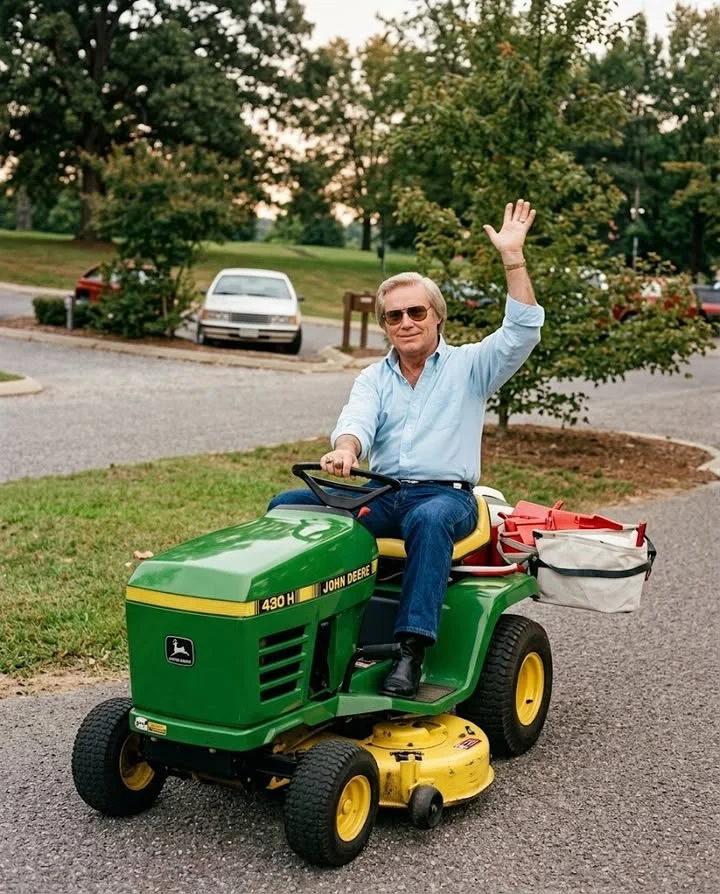
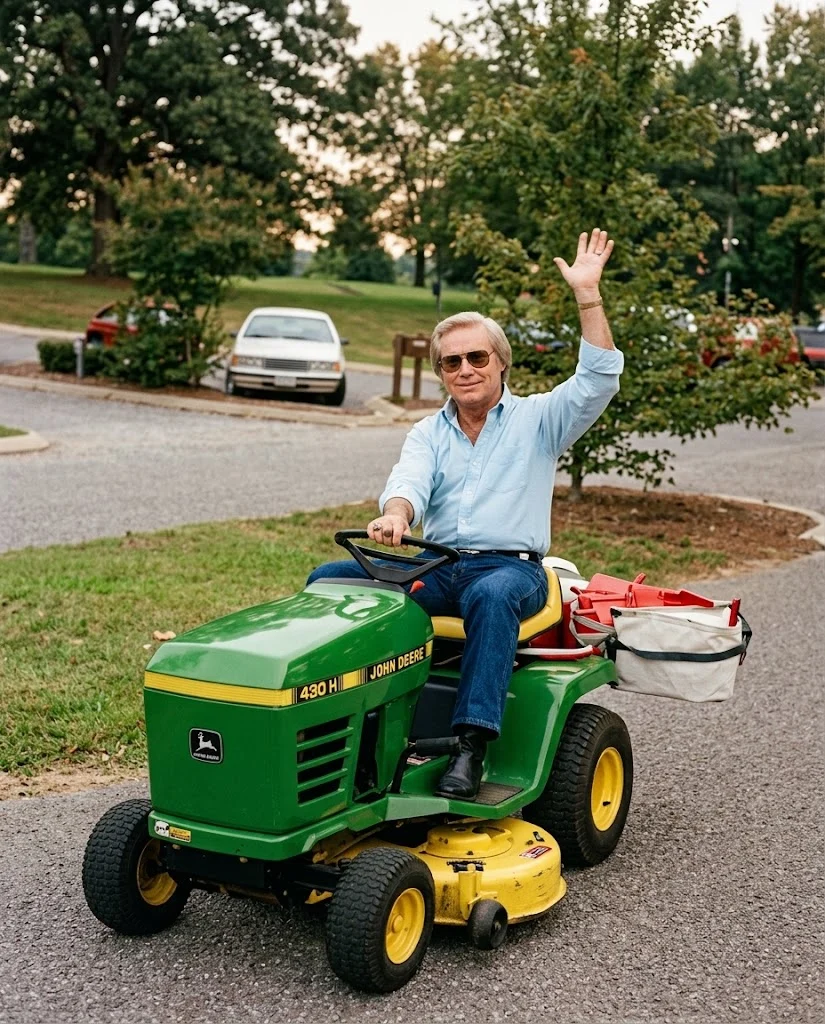
For decades fans retold the image of George Jones riding a lawnmower down a dark road toward a liquor store as one of country music’s sharpest punchlines. The story happened not once but twice, first with Shirley Corley and most famously during his marriage to Tammy Wynette. Behind the myth sat a desperate woman who had hidden every car key because she feared the man she loved would destroy himself.
That night, the grip of addiction was stronger than pride. Unable to find keys, Jones went to the garage, climbed onto an eight-horsepower riding mower, and moved toward a local bar at a crawling five miles per hour. When he arrived, he joked that his wife would soon come looking for him. The line was not confidence. It was the armor of a broken man.
“The joke was the shield, and the shield was covering a family that was falling apart.”
Tammy Wynette was carrying the weight of global fame and the exhausting burden of protecting a husband who could not stop drinking. The mower ride was only the visible crack in a marriage already strained beyond repair. It pushed her toward filing for divorce in 1975.
Yet the deepest paradox came inside the recording studio. Even as their home collapsed, Jones and Wynette stood together under producer Billy Sherrill at Columbia’s Studio B in Nashville. Their pain became a living document. Some days the silence between takes felt heavy and hostile. Then the red light came on and their voices locked into one another with heartbreaking precision.
“They were not merely singing about love ending. They were singing their own ending into existence.”
Those sessions produced classics like “We’re Gonna Hold On” and the devastating “Golden Ring”. The latter tells of a wedding band bought in love and surrendered to a pawn shop. It was recorded in 1976, months after their divorce had already been finalized. The song was not fiction dressed in rhinestone. It was grief captured while the wound was still open.
Wynette’s hidden keys were not a punchline setup. They were an act of fierce love from a woman who wanted her husband to survive his demons. She could not save the marriage, but she never abandoned the person inside the legend.
Jones eventually found sobriety decades later, and the two legends built a quiet and respectful friendship in their final years. The famous mower ride was never comedy. It was a tragic chapter in a love story that could not survive off the stage. The years of chaos cost them their marriage, but the heartbreak they left inside that vocal booth remains permanently etched in vinyl.