
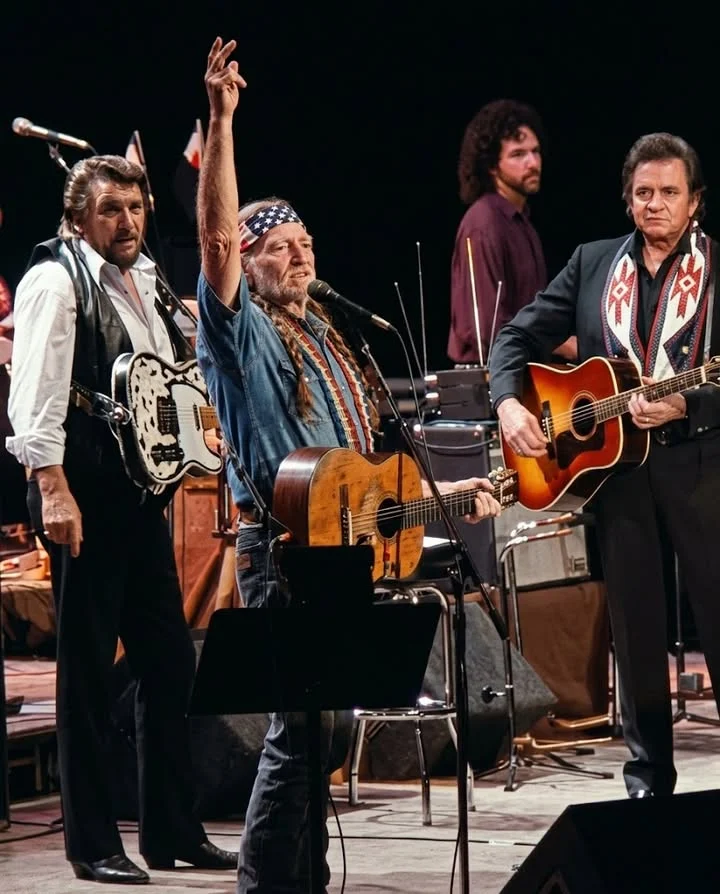
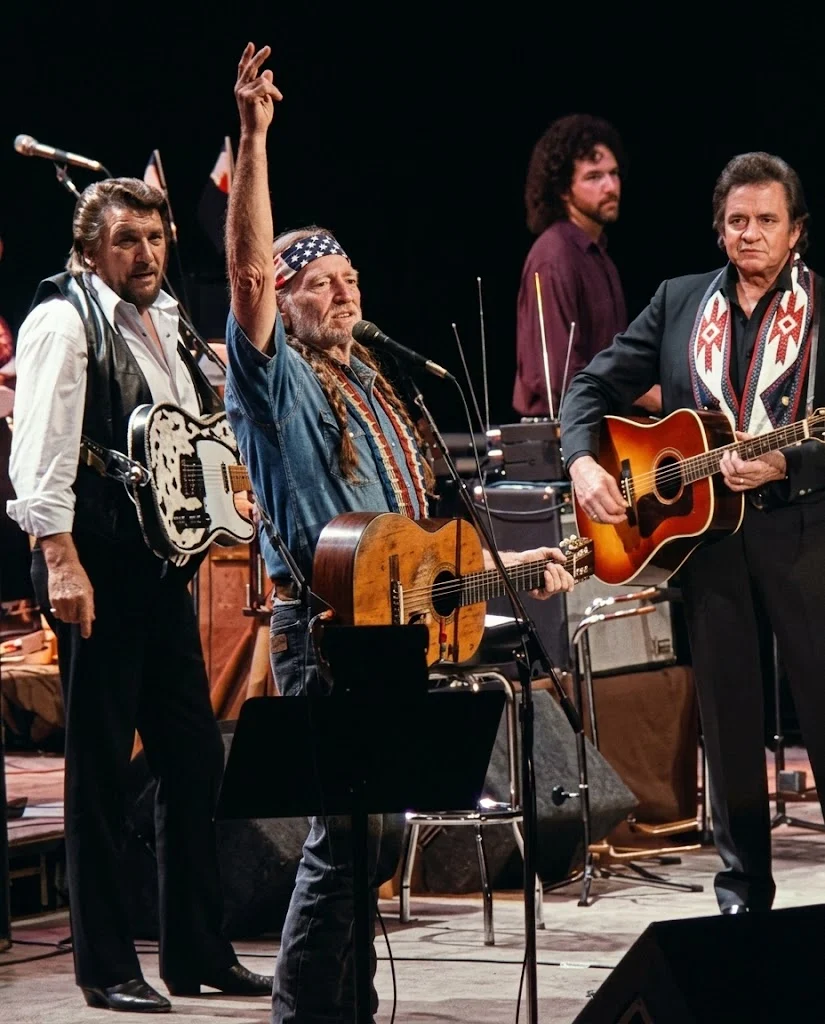
The night the arena became a church for four broken and brilliant rebels. On March 14, 1990, thousands filled Nassau Coliseum in Uniondale, New York, and stood together as Johnny Cash, Waylon Jennings, Willie Nelson, and Kris Kristofferson turned one microphone stand into a shared altar of outlaw country.
They came to New York behind Highwayman 2, and the packed house heard four legends who had spent decades bending Nashville to their own will.
Johnny Cash brought a thunderous baritone that felt carved from stone.
Waylon Jennings drove the rhythm with his leather wrapped 1953 Fender Telecaster.
Willie Nelson floated across the beat with Trigger and a sweet acoustic phrasing that made pain sound graceful.
Kris Kristofferson grounded every verse with weathered songwriting conviction.
What struck hardest was not competition but courtesy. When one man moved to the center mic, three others stepped back. They watched his fingers, traded harmonies, and nodded with the silent respect of men who had survived the same storms.
Their brotherhood began long before the Highwaymen name. During the 1960s, Cash and Jennings shared a Nashville apartment and leaned on each other through volatile personal struggles. In the 1970s, Nelson and Jennings helped ignite the Outlaw movement from Austin, while Kristofferson gave their songs a literate emotional vocabulary.
By 1984, the four men met in Switzerland to record their debut collaborative album. Their bond was rooted in survival, not sales. In 1985, their recording of Jimmy Webb Highwayman topped the Billboard country charts and showed their collective power was larger than any one legend alone.
Building an arena tour for four solo headliners required separate booking agencies, conflicting schedules, and distinct management teams. The artists demanded equal billing, even stage time, and private buses so they could gather backstage without industry interference.
At Nassau Coliseum, that independence became visible in every song. Mammas Don’t Let Your Babies Grow Up to Be Cowboys, Big River, and Me and Bobby McGee moved from solo showcase to roaring four part declaration.
Between verses, their laughter was spontaneous and warm. The deep lines around their eyes told of addiction battles, financial setbacks, and radio trends that had called them obsolete. Yet the crowd in suburban New York heard something vital and modern.
When the arena rose during their unified choruses, four rebels stood shoulder to shoulder under the spotlights. They had redefined American music not by chasing trends but by trusting one another enough to share a single stage.
They came to New York not to prove individual greatness, but to celebrate a brotherhood Nashville boardrooms could never manufacture.
The filmed concert remains an enduring document of four American originals at their peak. The quiet backbone of that historic 1990 tour was not fame. It was loyalty carried through late night bus rides, backstage negotiations, and decades of road weariness.