
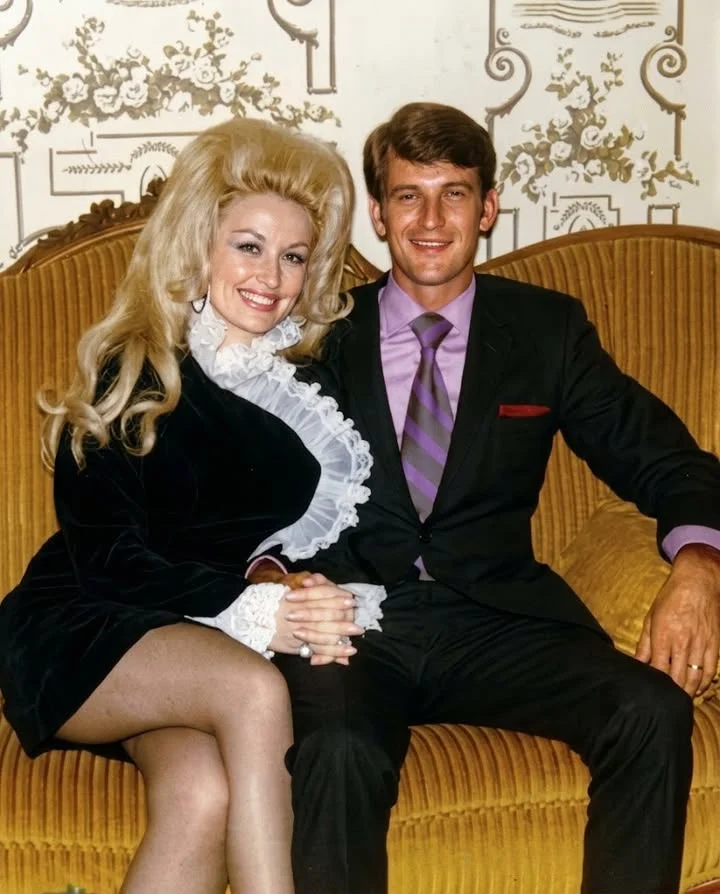
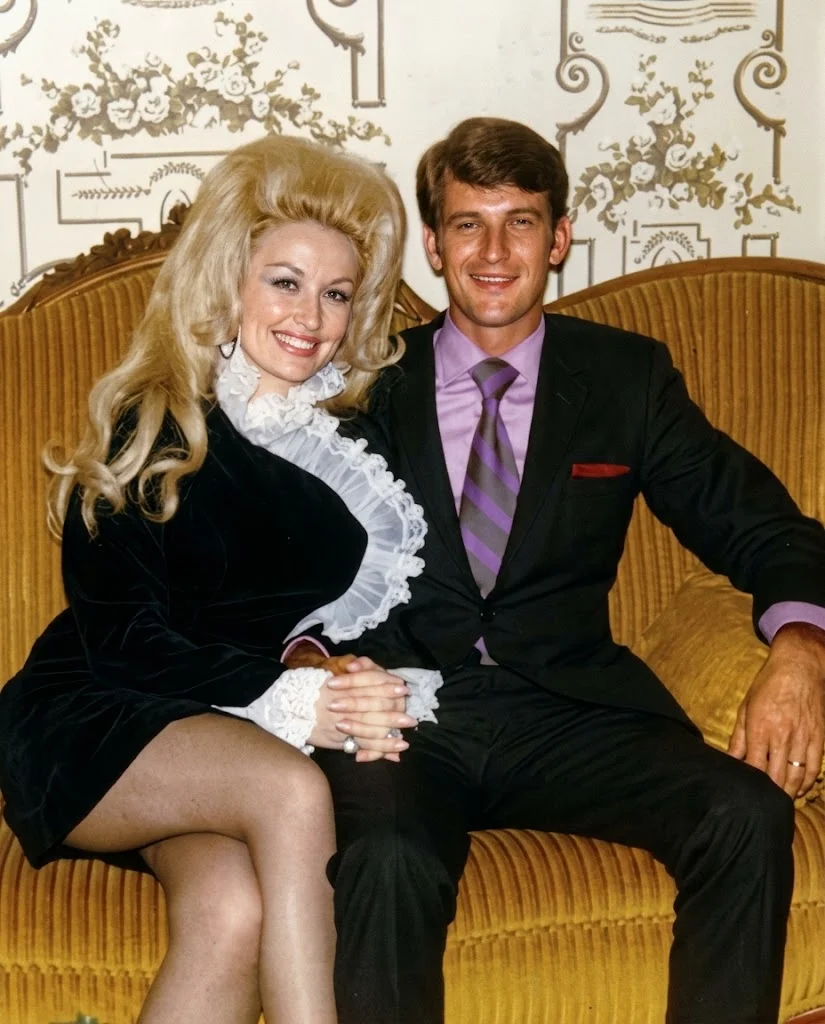
The most important wedding in Dolly Parton’s life began as a quiet act of rebellion.
She was twenty years old in the spring of 1966, and Nashville had just opened a door for her. Monument Records had signed her, radio play was growing, and the label wanted to guard the rising country singer with a fierce plan.
When Dolly told the executives she intended to marry Carl Dean, they did not celebrate. They warned her that a wedding could damage her appeal to fans and demanded she wait at least one year.
Carl had already given her a plain and urgent choice after two years of dating. She needed to move closer to the city so they could see each other, or they needed to marry.
Dolly chose Carl. She chose a small white dress, a borrowed car, and a road across the state line.
On May 30, 1966, she and Carl quietly drove to Ringgold, Georgia, because the town sat outside the Tennessee spotlight. They wanted no marriage license story in local newspapers, no cameras, no celebrity guests, and no grand reception. They also wanted no industry interference.
They wanted only a local Baptist church, a brief ceremony, and the four people who mattered most. The ceremony had only four witnesses, and the pastor, Don Duvall, his wife, and Avie Lee Parton stood there. Avie Lee had traveled from the Smoky Mountains to stand beside her daughter.
Dolly did not wear a designer gown. Her mother had made a simple short white dress for her. She held a small bouquet and a Bible as she stood before the altar.
Carl wore an ordinary suit. He did not see a future global icon. He saw the ambitious girl from Sevier County whom he had fallen in love with, and he saw the woman he wanted to build a quiet life beside.
Their secret marriage was more than romance. It was the first clear sign that Dolly would protect the life she loved before she protected the fame others wanted for her.
That boundary grew stronger after the wedding. Early in her career, Carl attended a BMI industry dinner in Nashville to support Dolly as she received an award. After the crowded banquet, he told her something simple and lasting.
He loved her and wanted her to have every dream, but he never wanted another red carpet or music event again.
Their marriage became built on a strict and unspoken agreement. Dolly would fiercely guard Carl’s privacy, and Carl would never be forced into the glare of her fame.
While Dolly traveled the world in rhinestones and commanded stadium stages, Carl stayed in the quiet. He ran an asphalt-paving business, tended their farm in Brentwood, and lived as an ordinary Tennessee man.
He rarely watched her perform live. He avoided photographers. He never gave interviews. He did not care about chart-topping records or Hollywood movies.
When Dolly came home through the gates of their property, she was not the Queen of Country Music. She was simply his wife.
That absolute boundary became the secret to their longevity. In an entertainment industry where high-profile marriages often crumble under public scrutiny, their separation of worlds kept their foundation intact.
She gave the public her voice, her image, and her larger-than-life persona. She gave Carl the one thing she kept hidden from everyone else. A quiet ordinary life.
The record label executives had warned the young singer that a marriage might cost her career. Instead, it gave her the anchor she needed to survive it.