
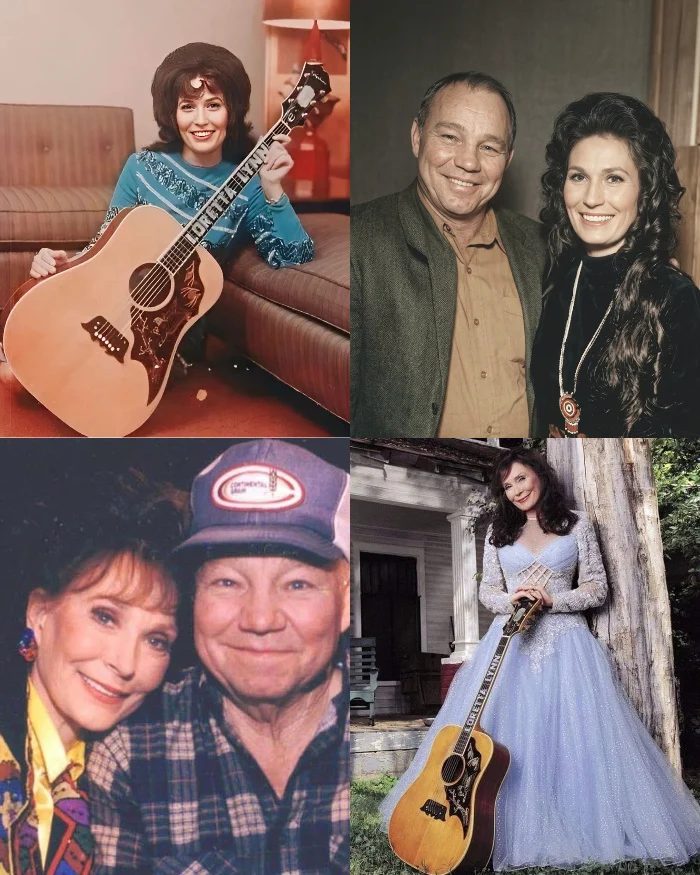
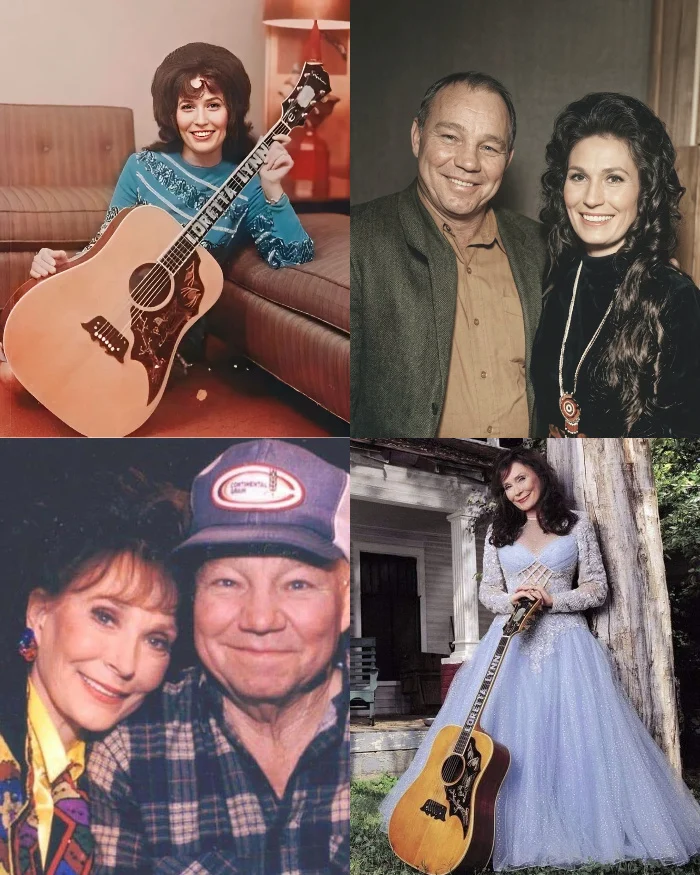
A shattered green bean jar became the loudest sound in the small Washington logging camp kitchen, and Loretta Lynn learned to pick up the broken glass with bare hands while her children hid in the corners.
That moment captured the fear she carried long before the Grand Ole Opry lights and before millions knew her as the fearless voice of working-class women.
In 1948, the fifteen-year-old from Butcher Holler, Kentucky, left her familiar mountains for a remote logging camp in Custer, Washington, with her husband Oliver “Doolittle” Lynn and the heavy responsibilities of teenage motherhood.
The Pacific Northwest rain surrounded her, and the nearest family was nearly three thousand miles away. She cooked for dozens of logging hands, scrubbed clothes on a board, raised young children, and waited for nightfall in rooms that could turn dangerous when cheap alcohol entered the air.
Her home life did not always arrive with dramatic warnings. A burst of jealousy, a sour smell of food, or a sharp tone could make an ordinary evening feel like a test. She learned to swallow panic, bite her lip, and keep the kitchen quiet so her children would not watch their mother break.
Yet Doolittle also handed her the first key to escape. In 1953, he bought a $17 Harmony guitar from a Sears catalog after hearing her sing while working. He had the same hard-driving force that made their marriage unpredictable.
He pushed her onto local stages, first at the Delta Grange hall and then at Bill’s Tavern in nearby Blaine, Washington. He helped form Loretta and the Trailblazers, bought her western shirts, drove her to venues, and silenced dismissive bar patrons with intimidation.
Under dim tavern lights, she transformed into a smiling, radiant performer. Offstage, she still tiptoed through a home where a laugh or a misstep might ignite rage.
She refused to let abuse bury her. Appalachian resilience became her songwriting fuel. She wrote “I’m a Honky Tonk Girl” while leaning against bathroom plumbing and watching her babies.
When the record was ready, Doolittle packed the family into a 1955 Ford, and they spent three months driving across the country, sleeping in the car, and handing the record to radio disc jockeys.
Those broken kitchen moments became country music history. Loretta stopped hiding her truth and began telling it, giving courage to women who had been taught to endure private pain alone.
The kitchen where she once hid her tears became the place she found the courage to speak.
Her voice carried far beyond a logging camp, changing country music by naming what many women had survived without words.