
When the stage lights dimmed and the silence grew unbearable, Dolly Parton faced a grief that no chart success could soften.
In 1984, the country and pop icon was 38 and living under a bright public glow while a painful private crisis pressed close. Severe endometriosis had taken a heavy toll, and doctors performed a partial hysterectomy to treat the condition. The surgery helped her body, yet it also closed the door on her ability to carry children.
For a woman raised in a large and loving family in the Smoky Mountains, motherhood had felt like a quiet certainty. Its sudden loss pushed her into deep depression, and the darkness threatened to eclipse the career she had built with relentless work.
Carl Thomas Dean, her husband of nearly two decades, became the steady presence behind the curtain. He held her through the grief, offered calm devotion in their Nashville home, and helped her hear her own worth when the applause felt distant.
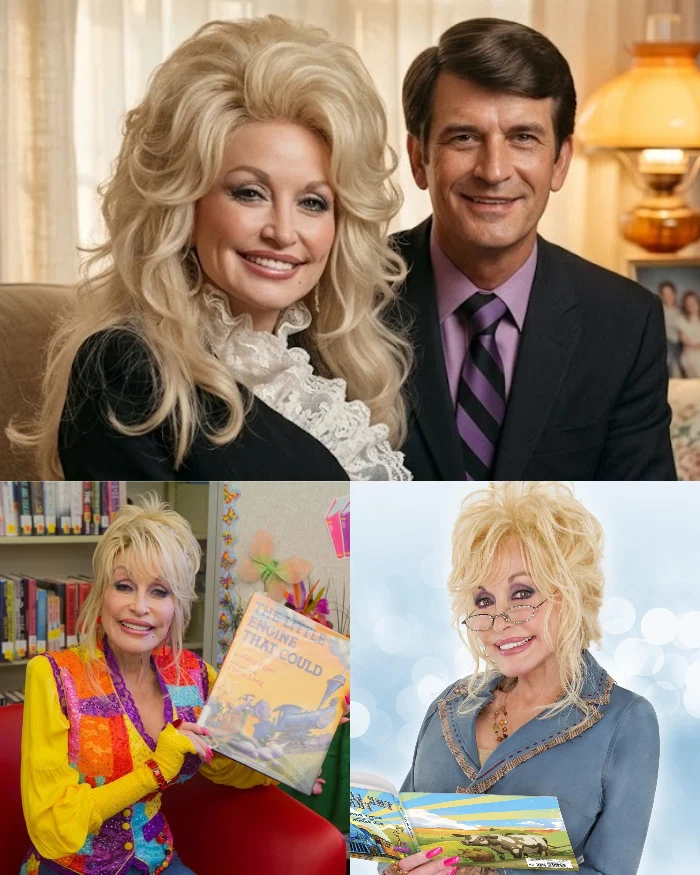
Instead of letting the wound define her future, Dolly turned her maternal love outward. In 1995, she launched the Imagination Library in Sevier County, Tennessee, her birthplace, and mailed free high quality books to children from birth through age five, no matter what their families earned.
The project grew from a tender tribute to her father, Robert Lee Parton, a hardworking man who never learned to read or write. Before he died, he told his daughter that the library made him prouder than anything she had ever done.
“The library made him prouder than anything she had ever done.”
What began as one county’s gift soon crossed state lines and oceans. The program went national in 2000, then reached Canada, the United Kingdom, Australia, and the Republic of Ireland. In 2018, Dolly stood at the Library of Congress and marked the delivery of the one hundred millionth book. Today, the Imagination Library sends out more than two million books each month and has gifted well over two hundred million worldwide.
She never heard her own children racing through her home. Still, millions of young readers came to know her as the Book Lady, a gentle face on the back of their monthly package.
“I was kept from having my own children so I could become a mother to everyone else’s.”
That belief became the emotional core of a legacy born from loss. The medical crisis took away one version of family, yet the love she poured into children everywhere gave her a family larger than anyone could have imagined.