
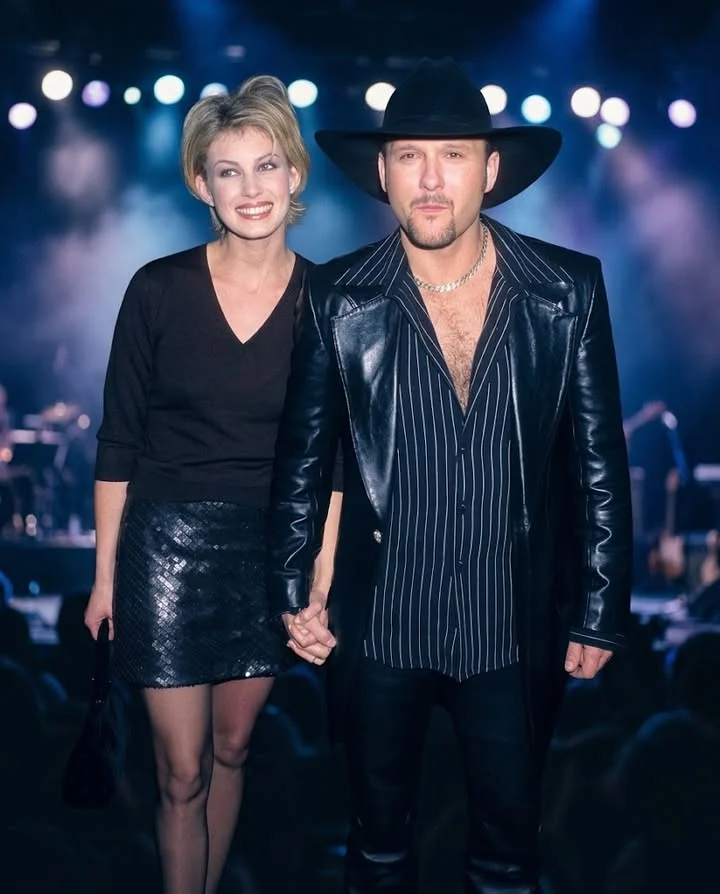
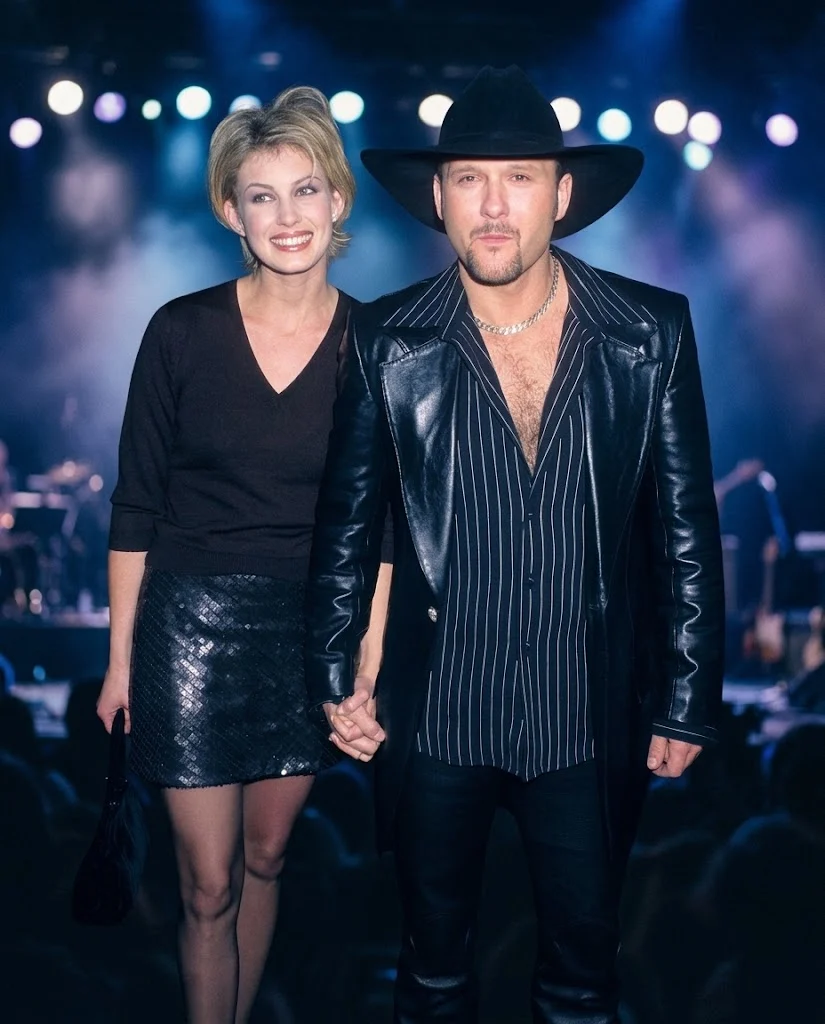
Faith Hill stood at the edge of two lives in spring 1996. She was engaged to Scott Hendricks, a powerful music producer who had helped build her Nashville career. Then she joined Tim McGraw on his “Spontaneous Combustion” tour as the opening act, and the road began pulling her toward a future she had never planned.
Every night brought a new fear and a new truth. The chemistry between Hill and McGraw was impossible to ignore, and it turned a grueling tour into a turning point. Hill was forced to choose between a safe path and a sudden connection that felt real beyond reputation, contract, or career strategy.
When the wedding date approached, she called off her engagement to Hendricks. The backlash arrived fast. Critics painted her decision as reckless betrayal, and many dismissed her romance with McGraw as a passing industry fling. She had risked a carefully guarded reputation by following an instinct she could no longer silence.
She chose the uncertain love over the expected marriage, and Nashville judged her for it.
Instead of retreating, Hill and McGraw moved forward. They married in October 1996 under an oak tree in McGraw’s hometown of Rayville, Louisiana. The ceremony was small, private, and defiant. It became the foundation for a partnership that would reshape country music.
Less than four years later, they launched their inaugural Soul2Soul tour. The show proved their bond was not a scandal but the core of a rising empire. Their individual careers exploded through the late 1990s, yet behind the lights they built strict boundaries to protect their family.
They welcomed Gracie in 1997, followed by Maggie and Audrey. Determined not to let touring fracture their home, they adopted a strict “three-day rule.” No matter where they were touring, filming, or recording, they refused to be separated for more than three consecutive days.
That promise required sacrifice. In the early 2000s, Hill reached massive pop-crossover success with multi-platinum albums like Breathe and Cry. At the height of her commercial dominance, she deliberately stepped back from relentless solo touring. She anchored their home in Tennessee and prioritized school drop-offs and family dinners over a permanent life on the road.
Success was never allowed to become an excuse for absence.
When they did tour, they merged their enormous fan bases to keep the family together. In 2006, they launched Soul2Soul II. The sprawling co-headlining event grossed over $88 million, played to more than a million fans, and became the highest-grossing country music tour in history at the time. They commanded arenas as a unified front, with a chemistry that had only deepened since their first tour a decade earlier.
Behind the record-breaking ticket sales, the marriage faced private strain. By 2008, McGraw’s long-standing reliance on alcohol had reached a critical breaking point. Faced with the reality of losing his family, he approached Hill and admitted he needed a permanent change.
That moment tested everything they had promised each other. Hill stood with him, and the couple chose repair over pride. Their story did not become a fairy tale without struggle. It became stronger because they faced the struggle together.
Decades later, the decision Hill made in 1996 still defines her public image. What critics once condemned as reckless betrayal grew into one of the most resilient and enduring marriages in country music history. Faith Hill and Tim McGraw did not simply survive the scandal. They built a life, a career, and a legacy on the choice they made under pressure.