

The Strange, Soulful Genius of Johnny Cash’s “A Boy Named Sue”
There are very few plot twists in American music that land with the same gut-wrenching, soul-shaking impact as the final verse of Johnny Cash’s “A Boy Named Sue.” It starts as a rambling, rowdy barroom anthem, a laugh at the expense of a poor kid cursed with an impossible name. But by the time the last notes fade, it has become a profound meditation on fatherhood, sacrifice, and the strange ways love can wear a mask of cruelty.
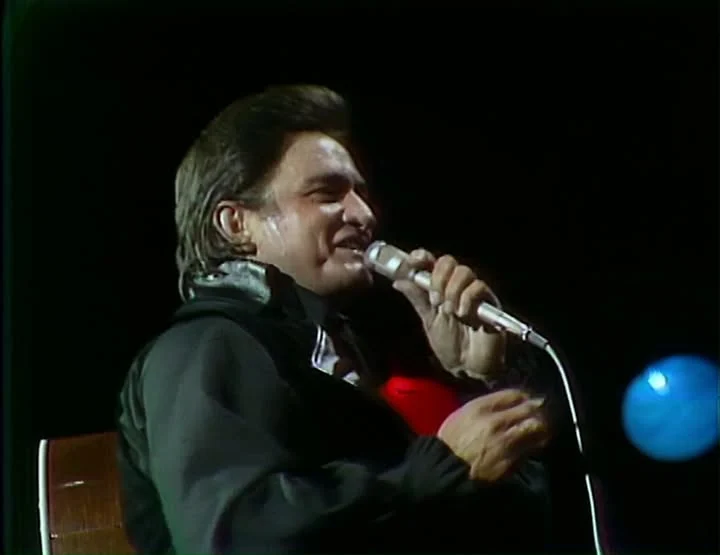
The magic of the song is deeply tied to its birthplace. San Quentin State Prison in 1969 was a powder keg of raw emotion. When Cash performed this song for an audience of inmates, he wasn’t just entertaining. He was speaking their language. The laughter and cheers that erupt from the crowd are not just for the joke. They are the sound of recognition. These were men who had lived the kind of rough, unforgiving life that Cash described, men who understood the complicated logic of a father who abandons a son to make him strong.
What makes the story even richer is its origin. The song was the brainchild of Shel Silverstein, the beloved children’s author of The Giving Tree. Silverstein possessed a rare ability to find the profound in the ridiculous. The tale of a boy named Sue was a perfect vessel for his unique brand of dark, humanist humor. Cash did not just inherit the song. He transformed it. He infused it with his own gravelly experience, his own understanding of struggle and redemption.
The narrative follows a boy from a broken home. His father leaves him with a guitar, a bottle of booze, and the name “Sue.” It is a curse that forces him to fight his entire life, turning him into a hardened drifter. He spends his youth searching for the man who wronged him, fueled by a thirst for revenge. The famous showdown in Gatlinburg is a masterpiece of gritty storytelling. The fight spills from a saloon into the street, a brutal ballet of kicks and gouges in the mud.
Yet the punchline of the story is where the song achieves greatness. The father, bloodied and beaten, reveals his twisted motive. He gave his son the name because he knew he would not be there. He needed his son to be tough. He needed him to be hard. The words are a gut punch of brutal logic.
“Son, this world is rough and if a man’s gonna make it, he’s gotta be tough and I knew I wouldn’t be there to help ya along. So I give ya that name and I said goodbye. I knew you’d have to get tough or die and it’s the name that helped to make you strong.”
This is the emotional core of the piece. It is a lesson in resilience that is almost too harsh to bear. Sue is forced to choose between the hatred that has defined him and a forgiveness that feels like an act of surrender. He throws down his gun. He calls the man his father. In that moment, the song ceases to be about a joke. It becomes about the transformative power of understanding. Our deepest wounds, the song argues, are often the tools of our own salvation.
Upon its release, “A Boy Named Sue” became a massive crossover hit, climbing all the way to number two on the Billboard Hot 100. It proved that a country song could tackle absurd premises and still deliver emotional truth. It expanded the very definition of what a story in a song could look like. Its influence can be heard in generations of songwriters who followed, artists unafraid to mix the silly with the sacred.
Today, more than half a century later, the song remains a perfect artifact of Americana. It is a testament to the genius of both Shel Silverstein and Johnny Cash, two men who understood that the best stories make you laugh while breaking your heart. The song speaks to the fighter in all of us. It speaks to the complicated love we hold for our families, even the ones who hurt us. It remains a timeless reminder that our greatest trials are not just obstacles. They are the very things that carve us into who we are meant to become.
Whether you are hearing it for the first time or the hundredth, the song never loses its power. It is a cry from the gut. It is a hard-won peace. And it is a masterpiece of narrative songwriting that will never be duplicated.