
“The roses are still blooming but they don’t smell as sweet as they did when we were together.”
That line, sung with aching precision, captures the quiet devastation of a love that has faded into memory. In 1994, two generations of country royalty met inside the hallowed halls of The Bradley Barn Sessions to breathe new life into a classic meditation on heartache. The result was “A Good Year For The Roses”, a duet that transcends its era and remains a masterclass in emotional storytelling.
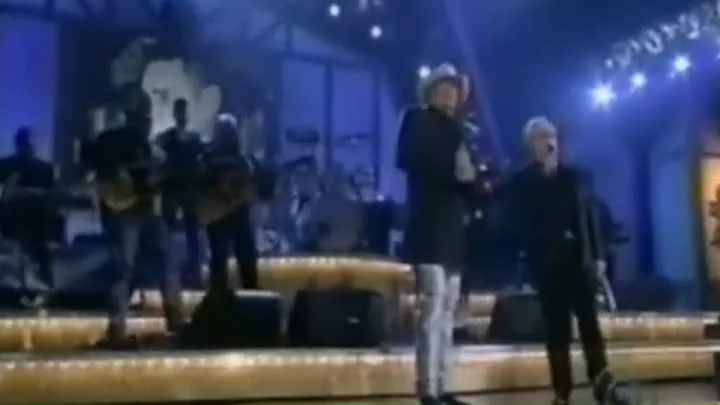
The pairing was nothing short of inspired. George Jones, known affectionately as “The Possum,” possessed a voice that could crack the veneer of even the most stoic listener. By 1994, he had spent decades chronicling the wreckage of broken homes and hard living. His phrasing, a unique blend of fragility and defiance, turned every line into a confession. Across from him stood Alan Jackson, a traditionalist with a smooth baritone and a deep reverence for country’s roots. Jackson was not just a rising star but a torchbearer, one who understood that the genre’s power lay in its honesty. Together, they formed a bridge between the weathered past and a hopeful future.
The song itself, penned by Jerry Chesnut, is a masterwork of understated grief. It does not rage or assign blame. Instead, it lingers on quiet details—a withering garden, a house that feels too large, the strange comfort of routine after loss. The roses, once a symbol of thriving love, now stand as monuments to what was. There is no dramatic climax, only the slow recognition that some things cannot be revived. “A Good Year For The Roses” finds its power in that acceptance.
What elevates the duet beyond a mere recording is the conversation between the two voices. Jones, with his weathered weariness, anchors each verse in lived experience. When he sings of the roses, you feel the weight of years behind every syllable. Jackson responds on the chorus with a lighter, almost hopeful tone—a reminder that even in decay, there is a cycle of renewal. This interplay creates a nuanced emotional landscape. It is not about one man’s pain but about a shared understanding that love, like nature, has seasons. The listener is left not with sorrow alone but with a strange, beautiful peace.
Though it never dominated the charts in a conventional sense, “A Good Year For The Roses” carved itself into the DNA of modern country music. The collaboration between George Jones and Alan Jackson was a deliberate act of continuity—a passing of the torch that reminded audiences of the genre’s unbreakable connection to raw human emotion. Fans of both traditional and contemporary sounds found common ground in this song. It endures not because of flash or novelty but because of its quiet truth: some losses cannot be explained, only felt. And sometimes, the best way to honor a memory is to let it bloom again in a song.