
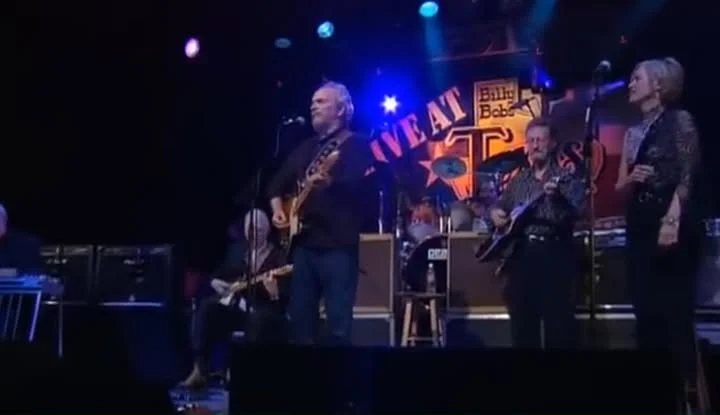
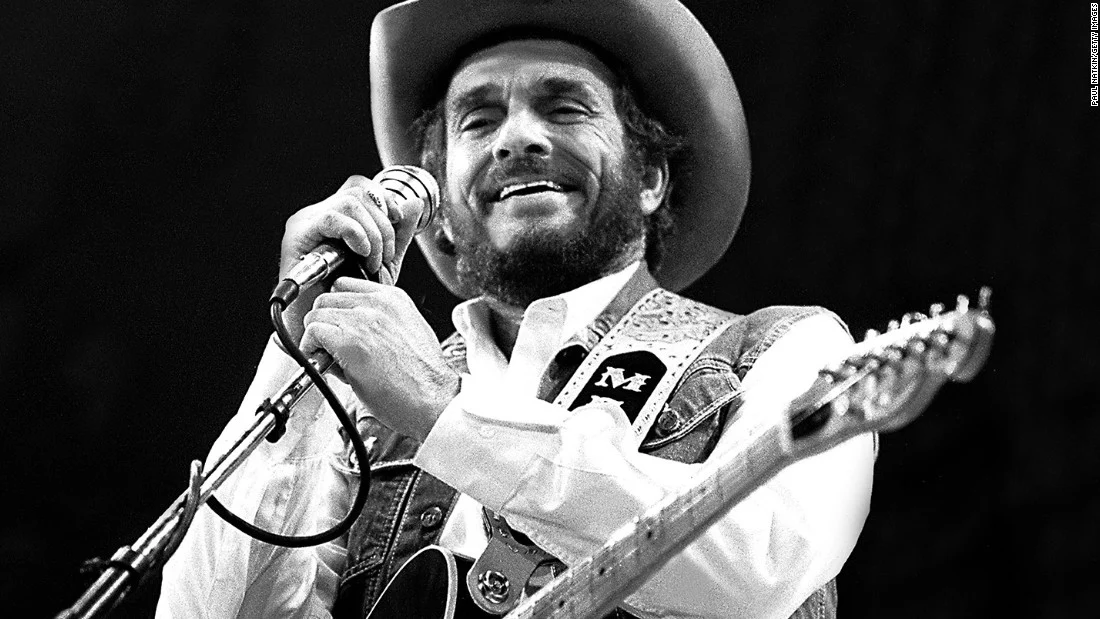
Merle Haggard had a voice that could cradle a broken heart and still find room for hope. When he recorded When My Blue Moon Turns To Gold Again in 1977, he took a song that had been passed around for decades and made it feel brand new. The song did not begin with grand ambition. It began in 1940 with two songwriters facing a blank page and a ticking clock.
Wiley Walker and Gene Sullivan needed original material for an upcoming recording session. They had only a single day to come up with something fresh. Sullivan found his spark during a late-night drive when the moon caught his eye. That glowing orb in the dark sky became the heart of a song about loss and renewal. A blue moon symbolizes sorrow, but gold signals joy. The image stuck, and the song came together quickly.
Their creation, When My Blue Moon Turns To Gold Again, struck an immediate chord. Released in 1941, it became a hit for the duo. Audiences responded to its honest lyrics about love lost and the promise of brighter days. The song spoke to anyone who had ever felt stuck in a dark place but refused to give up.
Over the next few decades, the song found new life through other artists. Elvis Presley, Eddy Arnold, and Jim Reeves each put their own spin on it. But it was Haggard’s interpretation that truly cemented its place in country music history. His signature Bakersfield sound, driven by twangy Telecaster guitars and a steady rhythm section, gave the track a raw, authentic energy. His voice carried a world-weary sincerity that made every word hit harder.
When my blue moon turns to gold again
That single line captures everything the song stands for. It is a promise that pain will not last forever. Haggard understood that sentiment deeply, having lived through his own share of struggles. His 1977 album Ramblin’ Fever provided the perfect home for this reflection on resilience.
Haggard’s version remains a favorite because it balances heartache with optimism. The song reminds us that even when life feels shrouded in blue, a shift is always possible. Walker and Sullivan could never have known that a rushed night in 1940 would produce something so enduring. But great songs have a way of outliving their origins. And thanks to Haggard, this one continues to shine its golden light for every generation that needs it.