
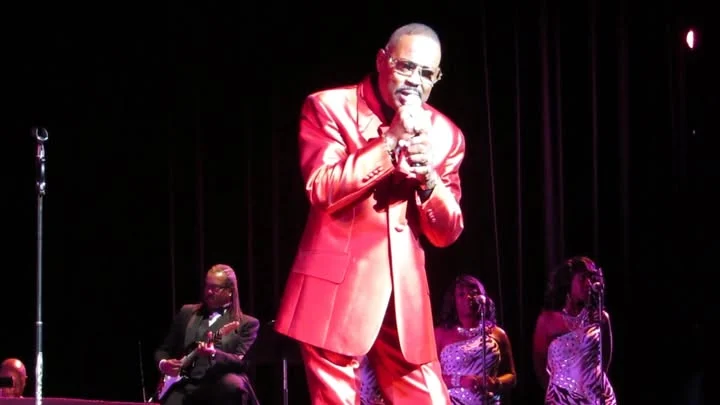
There are songs that simply exist, and then there are songs that live inside you. Eddie Holman’s “Hey There Lonely Girl” belongs to the second category. It begins not with a bang, but with a slow, blooming string section that feels like a sigh made audible. The piano arpeggiates softly, a bass line walks with quiet dignity, and then Holman’s voice enters—a pure, ringing falsetto that seems to float above the music like a ghost searching for a home. It is the sound of vulnerability dressed in the finest orchestral silk the end of the 1960s could offer.
The first time I truly heard it, I was sitting alone in a cold rented room in an unfamiliar city. The radio was tuned to an oldies station that lived permanently at the perfect intersection of two eras. The strings didn’t crash in; they just began to unfold, like a slow-motion cinematic swell pushing the listener forward into an inevitable emotional reckoning. In that moment, the song ceased being a golden-era soul track and became an architectural marvel of feeling.
Holman’s version, released in late 1969 on the ABC label, was a pivotal moment in his career. The original 1963 version, “Hey There Lonely Boy,” had been a modest hit for Ruby and the Romantics, written by Leon Carr and Earl S. Shuman. Holman flipped the gender and took that core melodic genius and dressed it in the most luxurious, heartbreaking sonic tapestry the end of the decade could muster. It wasn’t just a cover; it was a transmutation.
The orchestration on ‘Hey There Lonely Girl’ is an arrangement built for tears, not for dancing.
While many associate “Philadelphia Soul” with the sophisticated, driving grooves of the early 1970s—the Sound of Philadelphia machine engineered by Gamble and Huff—Holman’s recording is a vital precursor. Recorded at Virtue Studios in Philadelphia, the production, credited to Peter De Angelis, has the polish and emotional breadth that would soon define the city’s sound. Yet it retains an intimacy that precedes the slicker disco-adjacent sheen of later years.
The rhythm section never rushes, establishing a deliberate, mournful tempo. The guitar, often relegated to a quick strum in contemporary soul, is used here for sparse, carefully placed decorative touches—a gentle high-register lick that surfaces only occasionally, like a faint shaft of light cutting through gloom before receding back into the sonic fog. It is an exercise in restraint, every instrument waiting its turn to serve the narrative.
But you cannot talk about this piece without talking about the voice. Eddie Holman’s vocal performance is breathtaking. His range is famously high, a pure falsetto that sails into the stratosphere without ever cracking. The key to the song’s enduring power is not just the height of his register, but the immense emotional weight he carries with it. His delivery is disconsolate, yet overwhelmingly compassionate. He is singing directly to the lonely girl across the way, a stranger whose sadness he perceives and mirrors. His voice quivers with a shared vulnerability, especially on the sustained upper-register notes of the word “lonely” in the chorus.
This masterful control of timbre and dynamic transforms a simple ballad into high drama. The reverb on his vocal is generous but tastefully applied, giving his voice a halo of space—a sense of being both intimately close and impossibly distant, floating above the heavy strings and soft drum pulse.
Holman’s earlier work, such as the 1966 hit “This Can’t Be True,” already showcased his brilliance, but “Hey There Lonely Girl” cemented his place in soul history. Released as a single, it became the defining track of his 1969 album I Love You. It peaked near the top of the U.S. Billboard Hot 100 chart in early 1970 and found huge success later on the UK Singles Chart, demonstrating its timeless appeal.
The longevity of this song is no accident. It taps into a universally understood feeling: the ache of seeing someone else’s profound sadness and recognizing your own reflection in it. It is the soundtrack to every lonely late-night drive where headlights cut through the rain and the dashboard clock reads a time no one should be awake. A college friend of mine used to listen to this on repeat while studying late, using the song’s contained sorrow as a kind of emotional focus. Its melancholy provided an unexpected comfort, proving that the best sad songs don’t deepen your despair; they simply acknowledge it.
Holman’s talent was multifaceted, stretching from R&B to gospel later in his career. But this ballad, this empathetic snapshot of connection across a chasm of solitude, remains his signature. It is a moment of pure, cinematic soul glamour juxtaposed against the grit of a genuinely felt, universal human emotion. In three minutes, it moves from observation to heartfelt connection to the quiet, open-ended promise of future solidarity. It is a stunning display of production, vocal mastery, and melodic purity—and it deserves to be listened to not as an oldie, but as a living, breathing testament to the enduring power of classic soul.
Listening Recommendations
The Delfonics – “La-La (Means I Love You)” (1968): Shares the lush, sweet Philadelphia string arrangement and emotional directness.
The Stylistics – “Betcha by Golly, Wow” (1972): Another example of soaring falsetto lead over a deeply romantic, orchestrated backdrop.
Jerry Butler – “Only the Strong Survive” (1969): Features a similarly rich, soul-orchestral arrangement, capturing the drama of late-60s Chicago/Philly soul.
Ruby and the Romantics – “Hey There Lonely Boy” (1963): The original version, providing an interesting contrast in vocal style and arrangement approach.
Percy Sledge – “When a Man Loves a Woman” (1966): Possesses the same kind of deep, heartfelt sincerity and gradual, emotional build via orchestration.
Gene Chandler – “Duke of Earl” (1962): Demonstrates another iconic use of the high-register male vocal with a classic R&B arrangement that focuses heavily on narrative.