
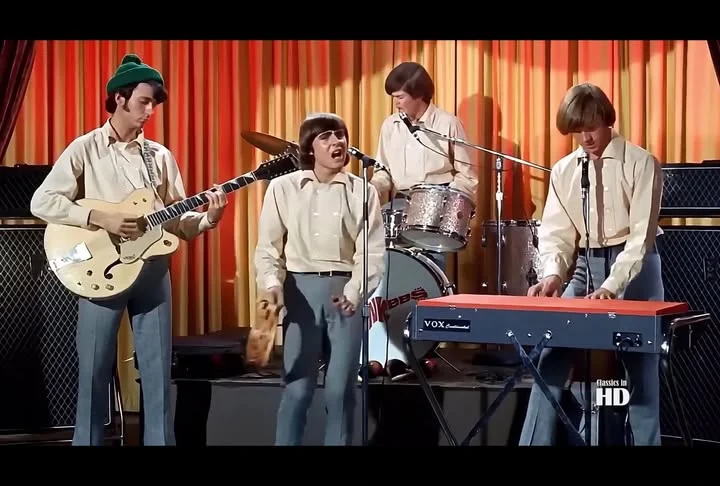
Then I saw her face, now I’m a believer
A single line of melody, sung with unabashed joy, has the power to transport millions back to a moment of pure optimism. For generations, that line has been the heartbeat of a song that refuses to fade — “I’m a Believer” by The Monkees. More than a chart-topping hit, it became a cultural shorthand for the euphoria of falling in love, a feeling so universal that it leapt from 1960s transistor radios into the animated finale of a 21st‑century ogre. But behind every timeless anthem lies a story of unexpected origins, creative alchemy, and a band that defied its own fiction.
The Monkees began as a television invention — four young actors cast to play a struggling rock group in a sitcom of the same name, which premiered in 1966. What started as a fictional concept soon turned into a real‑world phenomenon. Behind the cameras, a stable of Brill Building songwriters — including Neil Diamond, Carole King, and Gerry Goffin — crafted hits for the group. For their second single, Diamond originally wrote “I’m a Believer” for his own repertoire, but The Monkees’ producer recognized its explosive potential and handed it to the band. Sung with infectious conviction by drummer Micky Dolenz, the song shot to the top of the Billboard Hot 100, where it stayed for seven weeks. It became one of the best‑selling tracks of 1967, solidifying the Monkees’ place in pop history.
At a time when social boundaries were being pushed and a generation embraced new freedoms, “I’m a Believer” captured the era’s carefree spirit. Its lyrics told a simple story of a skeptic transformed by love — “I thought love was only true in fairy tales / Meant for someone else but not for me.” That shift from doubt to delight resonated across demographics. The song’s upbeat tempo and sing‑along chorus made it an instant anthem, played on radios, at dance halls, and on the television sets of millions of viewers who watched the Monkees’ weekly adventures. Critics may have dismissed the band as “actors playing musicians,” but the energy and optimism of the music spoke directly to the heart of the 1960s.
Musically, the track is a masterclass in pop construction. A driving guitar riff, a lively beat, and a chorus that delivers a euphoric release — the verses build anticipation, the chorus pays off. Dolenz’s passionate vocal delivery conveys the exhilaration of discovering love without irony or pretense. The result is a sound that feels both of its time and utterly timeless, connecting with listeners across decades. Even in an era of complex production, the song’s straightforward celebration of happiness remains refreshingly pure.
Yet The Monkees’ impact goes beyond a single hit. Their television show pioneered music‑video‑style segments, setting the stage for MTV and the modern visual pop era. In 1967, their combined album and single sales outpaced The Beatles and The Rolling Stones — a stunning feat for a band born on a soundstage. “I’m a Believer” was the engine driving that success, proving that great pop could transcend its manufactured origins.
The song’s second life began in 2001, when Shrek featured a buoyant cover by Smash Mouth during the film’s wedding‑scene climax. That placement introduced “I’m a Believer” to a new generation, turning it into a staple of karaoke nights and children’s playlists. Countless covers have followed, each adding its own twist while respecting the original’s joy. The song’s appearance in commercials, movies, and television proves its ability to adapt — a testament to the power of a melody that refuses to be forgotten.
Today, “I’m a Believer” stands as one of pop music’s enduring treasures. In a digital age where listeners can instantly access any song from any era, this 1966 classic continues to find new fans. Its message is as simple now as it was then: love can change everything, and sometimes the most straightforward songs carry the deepest emotional weight. More than fifty years after its release, it remains a symbol of the joy that well‑crafted pop can inspire — a legacy that proves the greatest anthems are often the ones that make you believe.
I thought love was only true in fairy tales
Meant for someone else but not for me.
Love was out to get me
That’s the way it seemed.
Disappointment haunted all my dreams.Then I saw her face, now I’m a believer
Not a trace of doubt in my mind.
I’m in love, I’m a believer!
I couldn’t leave her if I tried.I thought love was more or less a givin’ thing,
Seems the more I gave the less I got.
What’s the use in tryin’?
All you get is pain.
When I needed sunshine I got rain.Then I saw her face, now I’m a believer
Not a trace of doubt in my mind.
I’m in love, I’m a believer!
I couldn’t leave her if I tried.Love was out to get me
Now, that’s the way it seemed
Disappointment haunted all my dreamsOh, then I saw her face, now I’m a believer
Not a trace of doubt in my mind.
I’m in love, I’m a believer!
I couldn’t leave her if I tried.Yes, I saw her face, now I’m a believer
And not a trace of doubt in my mind.
Said I’m a believer
I’m a believer
I’m a believer
Said I’m a believer
I’m a believer
I said I’m a believer
I’m a believer