
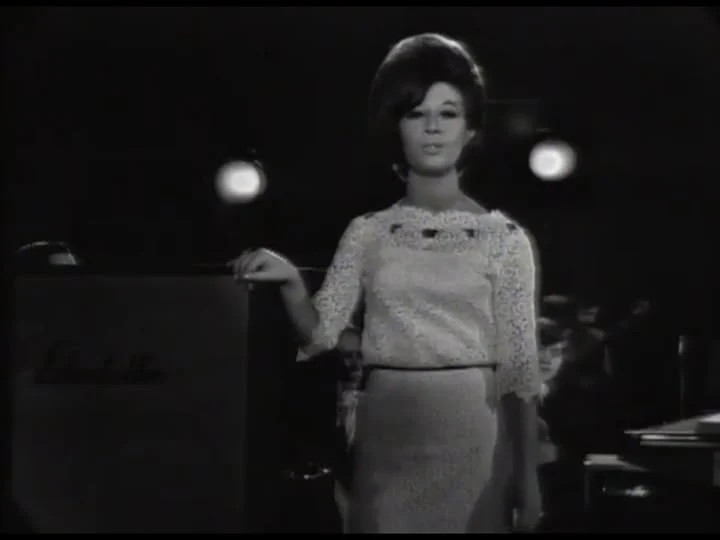
It Might As Well Rain Until September is not just a song about heartbreak. It is the sound of someone who has stopped fighting the storm.
There are afternoons that feel less like weather and more like a permanent state of mind. One such afternoon, rain softening the city into watercolors, found me hiding in a small café with a cup growing cold. The world outside had turned to grey. And then, through worn speakers, came a voice.
It was deep and rich and impossibly grown-up. It belonged to Helen Shapiro.
The track was her 1964 reading of Carole King and Gerry Goffin‘s “It Might as Well Rain Until September.” Although later compilations sometimes date the song to 1966, the real magic lands squarely in the turbulent year of 1964. By then, Shapiro the teenage prodigy—the girl whose contralto had ruled the British charts and who once toured with The Beatles as her opening act—faced a hard road. The British Invasion was shaking everything. The careful orchestral pop of her early hits could have become a quaint memory. But she did not vanish. She pivoted, and this song became a turning point.
The Anatomy of a Downpour
Carole King’s original burst with defiance wrapped in pop brightness. Shapiro’s version tears down that bright wallpaper. It is slower. The mood turns sepia. The arrangement, built in EMI‘s studios, treats every note like a secret.
A soft rhythm section opens the piece. The drums tap a reluctant march. The bass line, woody and warm, walks steadily beneath it all. Then the piano steps in—not as a soloist, but as quiet support. It holds mid-range chords, simple and sorrowful. A clean guitar picks out a fragile melody, like a memory you almost catch. The space between these instruments becomes the real story. This is not the famous Wall of Sound. It is something quieter. More deliberate.
The Voice in the Verandah
Where her early hits had shown power, this song shows nuance. Shapiro’s contralto is no longer shouting joy. It is confessing exhaustion. When she sings “I’m going to spend my summer with a new love,” her voice carries no excitement. Only finality.
The production lets her lower register dominate. Reverb creates a sense of empty space—a summer house closed for the season, a train station after the last departure. This version makes the act of accepting heartbreak sound like an adult choice. She does not fight the rain. She wraps herself in it. The moment the strings swell with the line “I’m just going to stay here and cry,” the song reaches its emotional climax. It is catharsis, perfectly timed.
Helen Shapiro turns a heartbroken summer distraction into a sophisticated, year-round state of grace.
For listeners discovering this period—perhaps seeking their first piano lessons to decode the harmonic language of mid-century pop—this track is a masterclass. It shows how arrangement can transform a song’s entire meaning. It is the most cinematic reading a Goffin-King lyric ever received.
Echoes in the Grey
The true staying power of this track is not found on dusty charts. It lives in the quiet recognition that heartbreak has no expiration date. When you hear this version today, it does not sound dated. It sounds classic. It captures that universal moment when you finally stop resisting a difficult truth and surrender to it. It is the feeling of walking away from something, knowing the next weeks will be about nothing but survival.
Shapiro’s career, though overshadowed by Beatlemania, moved into this more sophisticated territory with grace. Her album tracks from this period—especially this one—remain extraordinarily high quality. She shed her teenage image by simply singing with the authority of someone who had truly lived the song’s sadness. This piece of music stands as an important bridge, showing how a British pop star could take an American songwriting tradition and fill it with a uniquely British melancholy.
This is not background music. This track demands a quiet room, good speakers, and a willingness to sit in the rain.
If You Loved This, Listen To:
- Cilla Black – “Anyone Who Had a Heart” (1964): Another British vocalist delivering orchestral depth to a Bacharach-David classic.
- Lulu – “Here Comes the Night” (1964): Brooding intensity wrapped in a sophisticated arrangement.
- Dusty Springfield – “I Just Don’t Know What to Do with Myself” (1964): Heartbreak disguised by polished pop veneer, much like Shapiro’s measured delivery.
- Carole King – “It Might as Well Rain Until September” (1962): The original, brighter and more defiant, for contrast.
- Lesley Gore – “You Don’t Own Me” (1963): A strong, deep female voice expressing mature emotional stance.
- P.J. Proby – “Hold Me” (1964): A full-throated dramatic performance in the same mid-sixties UK pop style.