
“`
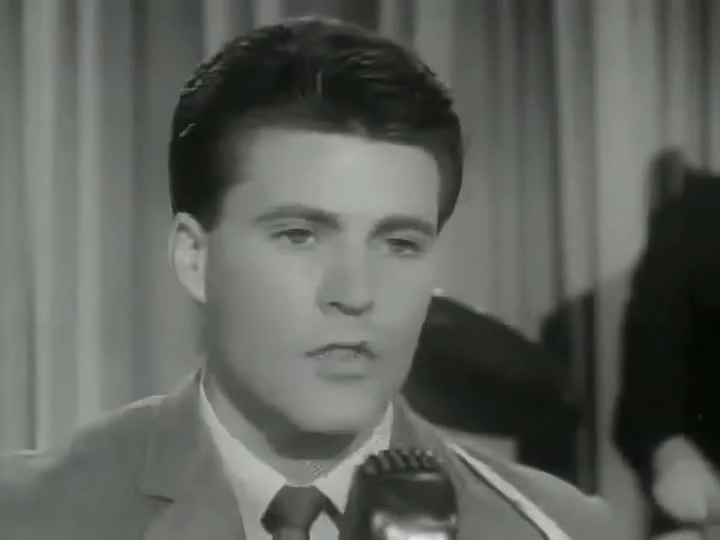
There is a specific kind of heartbreak that thrives in the shadows. It does not scream for attention. It waits quietly in the wings, hoping to be chosen. Rick Nelson understood this ache perfectly. In the spring of 1963, just as he was remaking himself as an artist, he released a single that captured this precise feeling of being an emotional standby. “String Along” is a quiet masterpiece of vulnerability.
“String along, that’s all I am, just your string along. Someone that you just seem to bring along whenever you are all alone.”
These words open a window into a soul that knows its value is conditional. They form the emotional core of a record that stands as a fascinating pivot point in pop history.
By 1963, the man born Eric Hilliard Nelson was navigating a treacherous passage. He had shed the “Ricky” of his teen idol years, a symbolic severing of his television persona on The Adventures of Ozzie and Harriet. He had also left the Imperial Records fold, the label that captured his rockabilly fire with guitarist James Burton. His new home was Decca Records. This was a gamble for long term relevance. Charles “Bud” Dant took the producer’s chair.
The Decca debut album For Your Sweet Love introduced a new sonic palette. Dant wrapped Nelson’s famously cool tenor in strings. The raw energy of the Imperial years was replaced with a sophisticated sheen. On “String Along”, the arrangement is built on cascading violins and cellos. They rise and fall like a sigh. The piano provides a bright, clear anchor. James Burton’s once dominant guitar now serves the melody, its tremulous tones reined in to support the mood. This is pop music designed for the hi-fi stereo, not the transistor radio.
Released in May 1963, the single performed respectably. It reached the top 20 on the Cash Box chart and charted on the Billboard Hot 100. Some viewed this as a sign of slowing momentum. In truth, it was a sign of maturing ambition. The rock and roll machine of Elvis and the early idols was about to be completely dismantled by the British Invasion. Nelson sensed the shift. “String Along” was his bid for a different kind of longevity. It was not music for a frantic dance floor. It was music for the quiet, introspective moments.
The song came from the pens of Jimmy Duncan and Bobby Doyle. It tells a simple story with devastating clarity. The narrator is a placeholder, a comfort option. Nelson’s vocal delivery is the key. His restraint is often mistaken for woodenness. Here, it reads as a heroic effort to maintain dignity while confessing your deepest insecurity. He is too proud to break down. The sadness is held beneath the surface.
Imagine driving along the California coast as the sun sets. The radio glows in the dark dashboard. This song drifts through the speakers. It is the soundtrack for a specific kind of ache. It is the feeling of knowing you are the second choice. The cinematic strings amplify this internal drama. “String Along” validates that quiet pain.
Why does this record endure? It stands at a unique intersection. It contains the melodic structure of classic rock and roll but introduces the lush arrangements that would soon define the work of Burt Bacharach. It is a perfect artifact of a moment in time. “String Along” is the sound of an artist willingly surrendering his crown as a teen idol to find a deeper, more truthful artistic voice. It is an exquisite document of elegant, sophisticated pop.
The greatest artists often find their most profound moments not in triumph, but in the exquisite articulation of surrender.
This record is precisely that. It is a subtle triumph of craft. The careful production of Bud Dant, the restrained genius of the session musicians, and the controlled maturity of Nelson’s vocal all combine to create something timeless.
For those drawn to this intersection of pop and vulnerability, a few companions to “String Along” offer a deeper dive into the era. “Fools Rush In” by Rick Nelson provides the same lush Decca production. “Cathy’s Clown” by the Everly Brothers shares the theme of romantic exploitation with minor key sophistication. “Only the Lonely” by Roy Orbison matches the dramatic strings. “He’ll Have to Go” by Jim Reeves captures the smooth vocal pop. “Wichita Lineman” by Glen Campbell later perfected the blend of folk, country, and orchestrated pop. For a direct contrast to the subdued elegance of “String Along”, the raw energy of “Travelin’ Man” by Ricky Nelson (1961) showcases the high voltage sound he left behind.
“`