
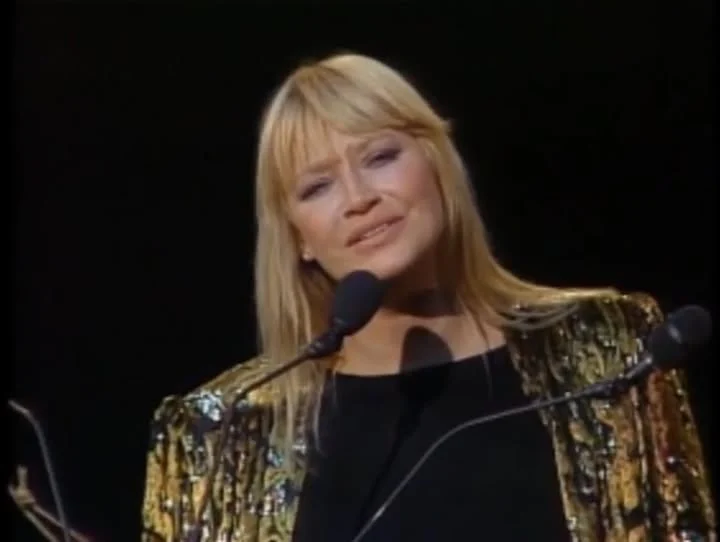

The Lasting Echo of Peter, Paul and Mary’s “Blowin’ in the Wind”
Some songs are written. A few are recorded. And a rare few take on a life of their own. Peter, Paul and Mary took a Bob Dylan composition and placed it at the center of the 1960s folk revival. Their version came from the album In the Wind, released in 1963. Decades later, it still sounds urgent.
The song helped bridge the gap between traditional folk and the civil rights movement. It appeared on an album that also carried “All My Trials” and “Tell It on the Mountain.” Yet it is “Blowin’ in the Wind” that continues to carry the deepest echo. The album captures the mood of its time without ever becoming trapped there.
On the surface, the arrangement feels almost too simple. An acoustic guitar moves with a steady, unhurried rhythm. A muted bass line enters, steady and understated. There are no string sections, no piano swells, no studio tricks. The restraint creates space for the voices to matter. That is the heart of folk music, a reminder that a song does not need volume to be heard.
The words came from Bob Dylan, but Peter, Paul and Mary made them feel like a group conversation. Each verse begins with a question and leaves the answer open. How many roads must a man walk down. How many seas must a white dove sail. Those questions cross generations and borders. They speak to human freedom, basic justice, and shared dignity. The trio’s harmonies give the words a living breath. Their voices make the listener part of a larger “we.”
Behind the scenes, Albert Grossman and Milt Okun shaped the album’s warm and honest sound. Grossman also managed Bob Dylan, and he understood that the message had to stay visible. The song became a standard at civil rights rallies. Marchers carried it in their mouths and in their hearts. Films have used it to recall a complicated decade. New artists keep covering it. The cultural weight has only grown with time.
Listeners who connect with this song will find kindred spirits in these songs. “The Times They Are A-Changin'” by Bob Dylan is another protest classic that dares the listener to move forward. “If I Had a Hammer” by Peter, Paul and Mary carries the same spirit of hope and solidarity. “Where Have All the Flowers Gone” by Pete Seeger turns a simple question into a devastating meditation on peace. “Turn! Turn! Turn!” by The Byrds takes words from Ecclesiastes and makes them a folk-rock prayer. “Puff, the Magic Dragon” by Peter, Paul and Mary shows a lighter side of the same group, proof that their storytelling could be playful as well as serious.
In an era of noise, “Blowin’ in the Wind” remains a quiet kind of defiance. It asks a simple question and leaves the answer in the wind. The power is not in certainty but in listening. The answers we seek may already be inside us, waiting for the courage to act. The song asks us to pay attention, to feel the weight of the question, and to be brave enough to follow the wind.
Let’s sing along with the lyrics
How many roads must a man walk down
Before they call him a man?
How many seas must a white dove sail
Before she sleeps in the sand?
How many times must the cannon balls fly
Before they’re forever banned?The answer, my friend, is blowin’ in the wind
The answer is blowin’ in the wind.How many years must a mountain exist
Before it is washed to the sea?
How many years can some people exist
Before they’re allowed to be free?
How many times can a man turn his head
And pretend that he just doesn’t see?The answer, my friend, is blowin’ in the wind
The answer is blowin’ in the wind.How many times must a man look up
Before he can see the sky?
How many ears must one man have
Before he can hear people cry?
How many deaths will it take ’til he knows
That too many people have died?The answer, my friend, is blowin’ in the wind
The answer is blowin’ in the wind.
The answer is blowin’ in the wind.