
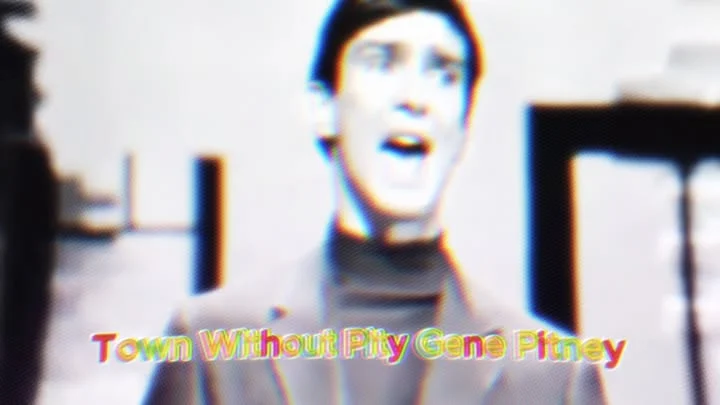
There are songs that simply play in the background and then there are songs that grab you by the heart and refuse to let go. Gene Pitney’s Town Without Pity is the latter. From its opening guitar riff to its final, aching note, this 1961 masterpiece captures the raw, suffocating pain of love under siege from a judgmental world. It is a ballad that feels like a whispered confession and a desperate cry all at once, a piece of music that transcends its era to speak directly to anyone who has ever felt trapped by the whispers of a small minded community.
The song began its life as the title track for a film of the same name, directed by Gottfried Reinhardt. But while the movie itself slipped into relative obscurity, Pitney’s recording shot straight into the cultural bloodstream. It earned a Golden Globe for Best Original Song and became the cornerstone of his album, a collection that showcased his incredible range and emotional depth. The album itself is a testament to Pitney’s artistry, blending pop structures with orchestral sophistication, but it is Town Without Pity that remains the undeniable centerpiece.
The orchestral arrangement, crafted by the legendary Burt Bacharach, is a study in emotional precision. The song opens with a reverb drenched guitar, its melancholic tones immediately setting a somber mood. From there, the arrangement builds with lush strings and a mournful brass section, each element adding a layer of drama and despair. The piano provides a gentle, anchoring heartbeat while the percussion marches forward with an almost militaristic inevitability. Together, these instruments weave a sonic tapestry that mirrors the song’s narrative of love caught in a trap.
At the heart of it all is Gene Pitney‘s voice. Classically trained, he brings an operatic intensity to the performance, moving seamlessly from tender vulnerability to soaring desperation. When he sings How can we keep love alive, the question carries the weight of a generation. His phrasing is precise, his dynamic control impeccable, and his ability to convey anguish is unmatched. It is no exaggeration to say that Pitney’s vocal performance elevates Town Without Pity from a mere pop song to a timeless work of art.
The lyrics, penned by Hal David and Dimitri Tiomkin, are a lament for love that dares to exist in a hostile environment. Lines like It isn’t very pretty what a town without pity can do evoke a visceral sense of claustrophobia and hopelessness. The song speaks to the universal experience of being judged and ostracized, of having your most private feelings scrutinized by outsiders. It is a theme that remains painfully relevant in any age.
What a Town Without Pity can do..
When these little minds tear you in two..
Over six decades later, Town Without Pity endures as a benchmark for emotionally charged pop music. It has been covered by numerous artists, each paying homage to its raw power. For Pitney, it was a launching pad for a career filled with hits like Only Love Can Break a Heart and The Man Who Shot Liberty Valance. Yet this song remains his crowning achievement, a piece of music that continues to inspire new generations of listeners and musicians alike.
For those who find themselves moved by the orchestral grandeur and heartbreaking intensity of Town Without Pity, several other classics offer a similar emotional journey. Roy Orbison‘s Only the Lonely and Crying share that same blend of vocal pyrotechnics and lush arrangements. Elvis Presley‘s Can’t Help Falling in Love captures a softer vulnerability, while Connie Francis‘s Where the Boys Are provides a female perspective on longing and love. And of course, the Righteous Brothers‘ Unchained Melody remains the ultimate companion piece, with its soaring strings and aching plea for connection.
In the end, Town Without Pity is more than a song. It is a time capsule of emotion, a testament to the power of music to articulate the inarticulable. Gene Pitney gave us a gift with this recording, and it continues to reward every listen with new depths of feeling. Whether you are a longtime fan or hearing it for the first time, this is a track that demands to be experienced, a piece of history that still feels alive and urgent.