
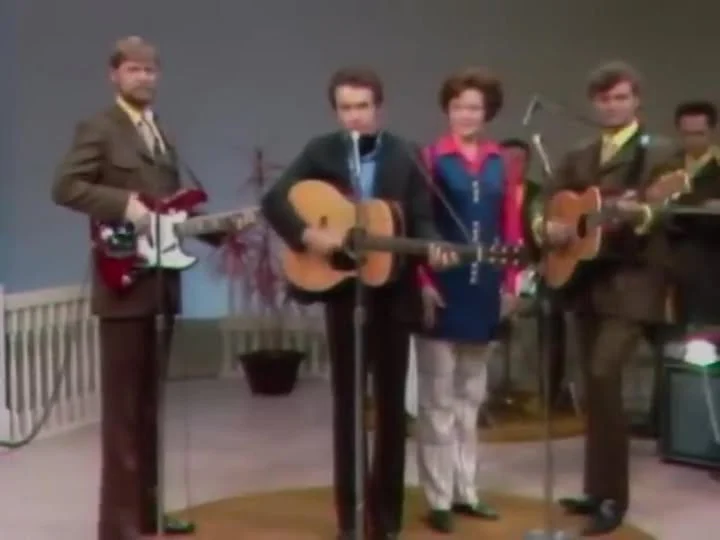
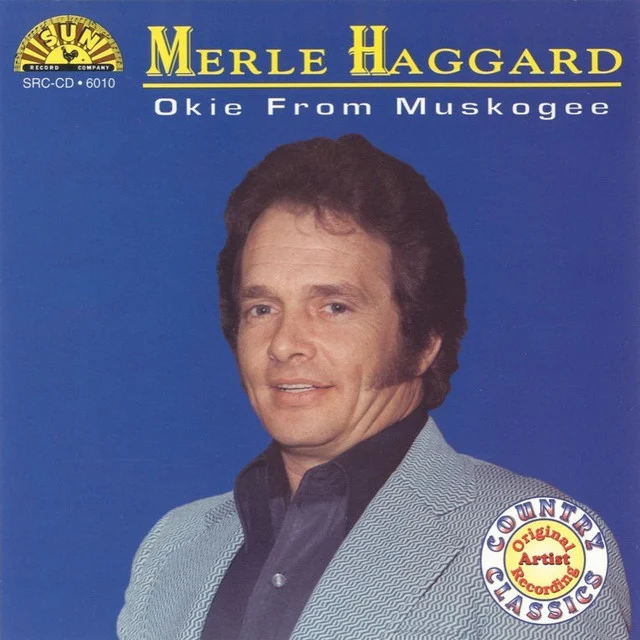
There are songs that you hear, and then there are songs that you feel deep in your bones. Merle Haggard‘s “Okie from Muskogee” is one of those rare, visceral anthems that doesn’t just tell a story—it invites you into a world where the porch lights are always on and the coffee is always hot. But before we step into that world, let’s pause on a quiet evening in 1969, when a nation was tearing itself apart over war, freedom, and identity, and a truck driver from Oklahoma picked up a guitar to defend a way of life that felt like it was slipping away.
The song wasn’t born in a Nashville boardroom. It was sparked by a joke on a tour bus, a laugh that faded into a moment of profound clarity. Haggard, a man who had spent time in San Quentin and knew the sting of rebellion firsthand, looked out at the long hair and burning draft cards and decided to sing for the folks who still believed in apple pie and Sunday morning. The result was a cultural lightning rod, a tune that sold millions and made Muskogee, Oklahoma, a household name.
But “Okie from Muskogee” is far more than a political statement. Close your eyes, if you will, and let the steel guitar carry you down that dusty road. You can almost smell the honeysuckle and hear the screen door slam. Haggard paints a picture not of a perfect town, but of a community grounded in simple, sturdy truths: fly fishing in the creek, holding hands at the drive-in, the quiet pride of a job well done. He sings of a place where leather boots are still in style and football is the roughest thing on campus. It is a declaration of home, sung by a man who never forgot where he came from.
Of course, the world was watching. The 1960s were a whirlwind of change, and Haggard’s lyrics didn’t shy away from the tension. He acknowledges the “hippies out in San Francisco,” the long-haired strangers, the voices raised in dissent. But his answer isn’t anger. It’s a quiet, unshakeable pride.
“And I’m proud to be an Okie from Muskogee, a place where even squares can have a ball.”
This isn’t a battle cry; it’s a gentle hand on the shoulder, a reminder that there is value in tradition, in waving Old Glory down at the courthouse, in finding the biggest thrill of all in a jar of white lightnin’.
What makes the song truly timeless is not its politics, but its heart. Haggard weaves a tapestry of everyday America—a land of working hands and faithful hearts. He speaks to a generation caught between the values of their parents and the call of a new world. The song resonated then, and it resonates now, because everyone, at some point, has felt like the square in a room full of hippies. Everyone has wanted to go home.
So, whether you’re a lifelong fan or a first-time listener, let yourself be transported. Let the twang of that guitar remind you of a time that was simpler, yet just as complicated as our own. Listen to the wisdom of an Okie from Muskogee, and you might just find a piece of your own story—a story of pride, of place, and of the quiet, unyielding love for a town called home.