
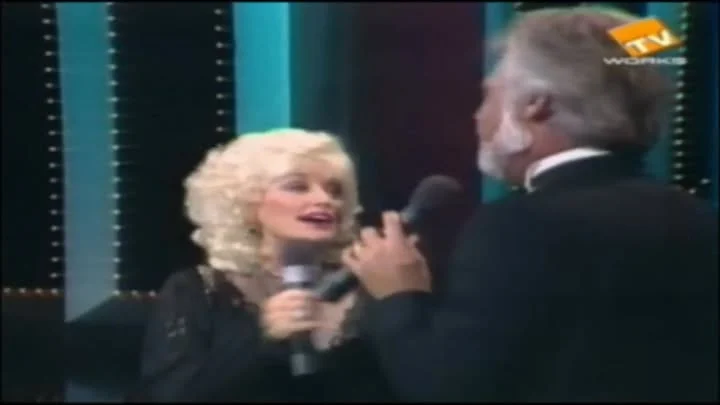
There is a moment in every great song that defies explanation. It lives not in the notes or the rhythm but in the space between two voices. Years ago, on a foggy coastal highway, I stumbled into a small bar where two strangers, arms draped around each other, belted out a familiar chorus with off-key sincerity. Islands In The Stream filled the room like a secondhand miracle. That night, it was not a pop relic from 1983. It was a living, breathing conversation between two people who had never met until that chorus united them.
What those strangers did not know was that the song itself was born from a similar kind of rescue. In a Miami studio, four days into recording, Kenny Rogers was ready to throw in the towel. The track written by Barry Gibb was supposed to be the anchor of the album Eyes That See in the Dark. Instead, it felt stuck. Rogers, a country legend with a voice like worn leather, could not find the current. The rhythm would not cohere. It was a magnificent ship dragging on sand.
Then salvation arrived. It came in the form of a five-foot-tall supernova named Dolly Parton. She was in the same Los Angeles complex, and Gibb called her up in a panic. Parton walked into the room, opened her mouth, and the song was never the same. Rogers himself admitted it. The track transformed from a competent soft‑rock groove into a dynamic duet that sounded like two islands discovering they shared the same ocean.
“It’s not just a duet; it’s a masterclass in finding communal joy in a solitary artistic struggle.”
The architecture of the song is as clever as its backstory. Gibb, alongside producers Albhy Galuten and Karl Richardson, built a foundation of pure early‑eighties pop. A bright keyboard riff launches the intro, followed by a clean electric guitar that dances between the vocal lines. The bass line pulses forward, tight and insistent, while strings sweep in with cinematic romance. It is a sound that bridges the Bee Gees’ disco roots and the sleek polish of the Reagan era.
Rogers begins with that iconic line about peace unknown. His voice is gravelly and warm, a steady anchor. Then Parton enters on the second verse, her voice soaring like light on water. The contrast is electric. Where he is depth, she is brilliance. They trade lines in the verses and lock into perfect unison for the chorus. It is the sound of two performers who know how to share a spotlight without dimming each other’s glow.
Released in August 1983, Islands In The Stream became a seismic event. It hit number one on the Billboard Hot 100, topped the Country charts, and dominated Adult Contemporary. That triple crown was rare. It proved that a song written by a pop architect like Gibb, originally conceived as an R&B track for Marvin Gaye, could become a universal love anthem when sung by two country titans. Gibb’s instinct to call Parton was the hinge upon which the entire record swung.
Today, new listeners discover the song through streaming playlists. They may not know its country roots or the Bee Gees’ fingerprints. What they hear is an effortless classic. The simple chord progression and clear melodic line make it inviting for amateur musicians. But its real staying power comes from the authentic friendship between Rogers and Parton. Their playful energy never fades. They sing as equals, two separate landmasses whose waters clearly connect.
The Bee Gees had originally imagined the song for Marvin Gaye, a thought that sparks alternate histories. But the track was always destined for two voices. It needed the grounded realism of Rogers and the sparkle of Parton. The lyrical theme is simple but profound: reliance. “We rely on each other” is an oath set to an infectious beat. It sounds like two people finding peace not in solitude but in their shared current.
Listening Recommendations
For those who want to travel deeper into this sonic world, a few companions deserve mention. Kenny Rogers “Lady” (1980) shares the same Barry Gibb production, a sophisticated soft‑rock ballad. Dolly Parton “9 to 5” (1980) shows her pop crossover prowess with a distinctive keyboard arrangement. Lionel Richie and Diana Ross “Endless Love” (1981) is the quintessential early‑80s adult contemporary duet. Crystal Gayle and Eddie Rabbitt “You and I” (1982) captures the yearning of country‑pop crossover. Barry Gibb with Barbra Streisand “Guilty” (1980) demonstrates Gibb’s gift for intimate high‑gloss duets. And The Pointer Sisters “Automatic” (1983) showcases the same bright synth‑forward production that marks Islands In The Stream.
To hear this song today is to witness a perfect confluence of talent, timing, and unplanned magic. It flows through decades like a tide that never recedes. Two islands, one stream, and a moment of pure musical grace.