
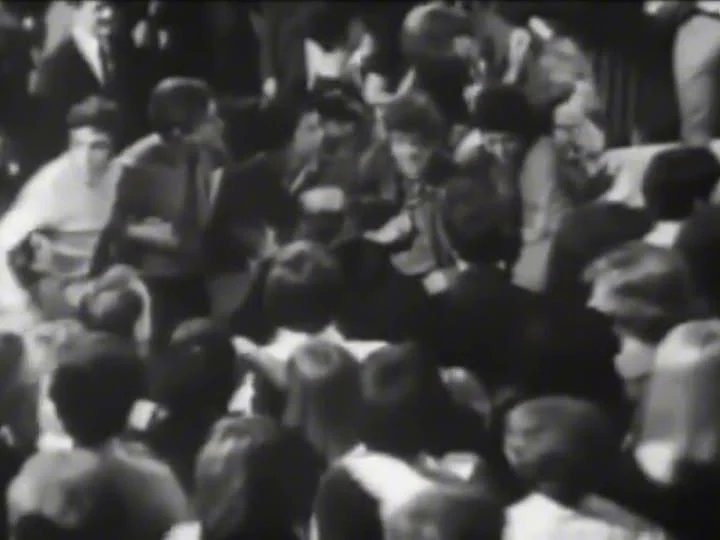
On a cold December night in 1969, at the Altamont Speedway in California, the Rolling Stones tore into “Under My Thumb” and chaos erupted. The violence that followed would forever link this song to one of rock’s darkest moments. Yet to truly understand the weight of that performance, you must travel back three years to a London recording studio where a band was on the verge of reinventing itself.
The year was 1966. The Rolling Stones, no longer content to reinterpret the blues standards of their heroes, were asserting their own creative voice. Their fourth UK album, Aftermath, served as a declaration of independence for the Jagger/Richards songwriting partnership, a sprawling collection of original work that was by turns cynical, psychedelic, and dripping with attitude. Buried within its grooves was “Under My Thumb,” a song that never charted as a single in the band’s primary markets yet would become one of the most debated pieces of music in their entire catalog.
I remember the first time I heard it. I was young, sitting on the floor of a friend’s cramped apartment, wearing a pair of battered headphones that had seen better days. The song opened with that strange, wooden percussion, and I felt something shift inside me. This was not the swaggering rock and roll I had expected. This was a coiled snake, taut with icy control and barely suppressed violence. It was a cinematic, cold-blooded vignette that signaled a darker and more sophisticated era for the band.
The Anatomy of a Darker Sound
What makes “Under My Thumb” so compelling is the tension between its musical arrangement and its lyrical menace. Producer Andrew Loog Oldham, working alongside the band, crafted a sound that was less gut-punch rhythm and blues and more slinking, exotic pop. The entire track operates on a remarkable groove, anchored by the unshakeable foundation of Charlie Watts on drums and Bill Wyman on bass.
Watts delivered a masterclass in controlled dynamics. His beat was not explosive but a tight, fast, almost relentless shuffle that drove the song forward with mechanical precision. Wyman’s bass was equally crucial, featuring a subtle fuzz effect that gave the low end a menacing texture. Together, they created a low, constant threat beneath the shimmering surface of the track.
The true star of the show, however, was Brian Jones. During this phase of the Stones’ career, Jones was transforming from a traditional guitarist into a sonic polymath, an embellisher of extraordinary color. For “Under My Thumb,” he picked up the marimba, an instrument rarely heard in rock music, and created a riff that would become the song’s defining characteristic.
The marimba riff is not just a hook. It is the sound of quiet dominance, a delicate and dangerous melody that glides above the rhythmic storm.
The marimba’s wooden, clacking timbre provided a jarring contrast to the rock rhythm section and Mick Jagger‘s sneering vocal. Its bright, rapid notes cut through the dense mix without adding weight, giving the song a chilling, almost detached quality. This exoticism, paired with Jones’s sitar work on the contemporaneous single “Paint It Black,” was key to the Stones’ mid-sixties musical expansion.
Keith Richards‘ guitar work was functional and propulsive, blending acoustic strumming with electric lead fills, but it was deliberately subservient to Jones’s main hook. The piano, played by either Ian Stewart or Jack Nitzsche, was largely textural, a ghostly presence providing harmonic color in the background. This was a band operating as a sonic laboratory, a perfect example of how to evolve from simple blues exercises to complex texture work. For anyone considering guitar lessons, this song is a lesson in the crucial role of rhythm and texture over showy lead work.
The Lyrical Storm
Mick Jagger’s lyrics are the elephant in the room. The song describes the narrator’s triumph over a formerly dominant partner, explicitly comparing the woman to a “squirming dog” and a “pet.” In 1966, this chauvinistic declaration landed with sharp impact, fitting the band’s carefully cultivated bad-boy image. Jagger later dismissed it as a “caricature” written in response to a “pushy woman,” but the vitriol in his delivery is undeniable.
This controversy is essential to understanding the song’s power and its complex legacy. While other bands preached peace and love, the Stones explored the ugly reality of personal power struggles. Their willingness to embody the anti-hero, the villain, cemented their contrast with their peers and made them feel genuinely dangerous.
That danger reached its tragic peak at the infamous Altamont Free Concert in 1969. As the band performed “Under My Thumb,” violence escalated in the crowd, a grim historical footnote that permanently darkened the song’s aura. From that moment on, it was not just a track but a cultural artifact, a snapshot of rock music grappling with its own shadow.
I sometimes play this song for younger listeners, those who only know the clean lines of contemporary pop. They recoil at the lyrics, but they are drawn back by the irresistible, sinuous groove. Its complexity is what allows it to endure. It is an uncomfortable work that refuses to be simply enjoyed, forcing a conversation about rock’s relationship with power and gender.
The Inescapable Groove
“Under My Thumb” marks the moment the Rolling Stones mastered the studio as an instrument. By blending Chuck Berry rhythm with the exotic timbres of the marimba, Jagger and Richards cemented their dominance as songwriters capable of crafting pop hits from emotionally unsettling source material. It is a piece of art that demands we look past our comfort levels to appreciate the masterful interplay of its contrasting elements.
Listening Recommendations
The Doors – “Riders on the Storm” (1971) shares the slinking, hypnotic, mid-tempo mood with an emphasis on unusual keyboard textures replacing the central guitar riff.
Love – “7 and 7 Is” (1966) features a similarly aggressive, high-energy rock pulse from the same period, with a raw, confrontational edge.
The Velvet Underground – “Venus in Furs” (1967) explores dark, transgressive themes using unique instrumentation, including the electric viola, to create a similarly exotic and menacing atmosphere.
Cream – “Sunshine of Your Love” (1967) is built on a slow, heavy, repetitive guitar riff and a deep pocket rhythm section, creating a hypnotic rock groove.
The Yardbirds – “Over Under Sideways Down” (1966) captures another British Invasion band exploring a more psychedelic and exotic sound, driven by a sharp, slightly chaotic riff.
The Small Faces – “Itchycoo Park” (1967) features innovative use of studio effects, including phasing and flanging, to create a distinct and atmospheric pop sound.