
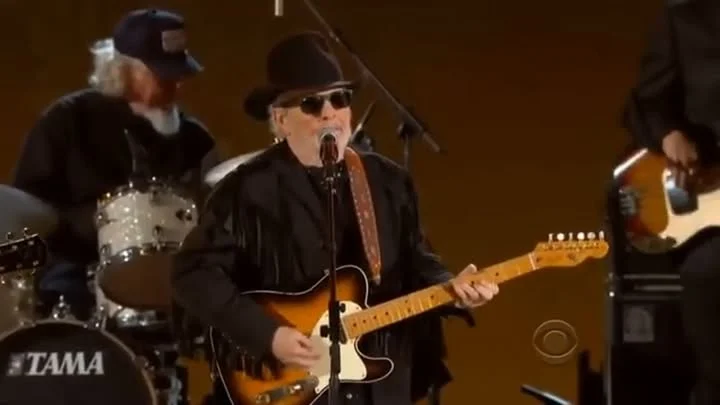
It is a sound that cuts through decades of noise — a steel guitar twang and Merle Haggard’s gritty voice declaring,
“If you don’t love it, leave it / Let this song I’m singin’ be a warnin’.”
That line, from his 1970 anthem “The Fightin’ Side of Me,” still stirs deep emotions. It is a rallying cry that captures a fractured America and the unapologetic pride of the working class. For many, this song defines the very soul of traditional country music — bold, honest, and impossible to ignore.
Recorded live at the Civic Center in Philadelphia, the album “The Fightin’ Side of Me” became a time capsule of a nation at war with itself. The Vietnam conflict raged overseas and protests divided the home front. Haggard stepped onto that stage and offered a raw, unflinching declaration of loyalty. The album’s track list also features classics like “Okie from Muskogee” and “Silver Wings,” showcasing a rare versatility — from defiant anthems to heartfelt ballads. That night in Philadelphia, the audience’s energy was electric, and Haggard’s voice carried the weight of an entire generation.
The song’s instrumental palette is rich and unmistakably country. It opens with a commanding electric guitar riff that sets a confident tone. A steady rhythm section of bass and drums follows, anchoring the track. But the true heart of the sound lies in the steel guitar — its warm, twangy notes evoke rolling plains and small-town resilience. Haggard’s vocal delivery, equal parts grit and grace, rides above these layers with unwavering conviction. Every note feels deliberate, every phrase a testament to his artistry.
Lyrically, “The Fightin’ Side of Me” leaves no room for doubt. It is a direct challenge to those who criticize America while enjoying its freedoms. The message resonated deeply with supporters, who saw it as a fearless love letter to the nation. Detractors called it controversial in an era of anti-war sentiment. Yet more than five decades later, the song remains culturally significant — a mirror reflecting not just Haggard’s values but the enduring divide in American identity.
For listeners drawn to this spirit of resilience and patriotism, several songs echo its power. “Okie from Muskogee” by Merle Haggard celebrates small-town life with wit and warmth. “God Bless the USA” by Lee Greenwood is a timeless anthem of national pride. “A Country Boy Can Survive” by Hank Williams Jr. champions self-reliance and tradition. “The Ballad of the Green Berets” by Staff Sgt. Barry Sadler pays tribute to American soldiers. And “Where the Stars and Stripes and the Eagle Fly” by Aaron Tippin delivers a modern take on patriotic fervor.
The enduring appeal of “The Fightin’ Side of Me” lies in its honesty. Haggard never flinched from his beliefs, and that authenticity cuts through the noise. The interplay of guitar, steel guitar, and vocals ensures the song continues to resonate with new generations. It is more than a piece of music — it is a living testament to the power of country music to capture a moment in history and a people’s spirit. Decades after its release, it stands as a cornerstone of Merle Haggard’s legacy and an enduring symbol of the genre’s ability to move, inspire, and provoke thought.