
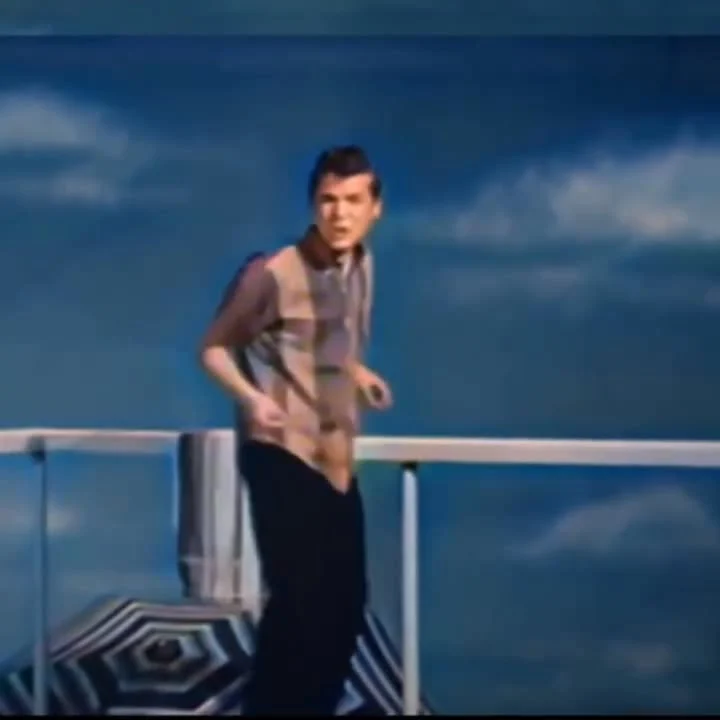
A young woman has just purchased a daring new swimsuit. She tries it on in the privacy of her bath, rehearsing the moment. But when she steps out of the cabana, panic strikes. She rushes back inside, covering herself with a blanket, resigned to stay there until summer ends. This tiny vignette, set to a bouncy melody, became a phenomenon. It is the summer of 1960, and the world is introduced to a two-minute nineteen-second piece of music that is less a song and more a cultural flashpoint: Itsy Bitsy Teenie Weenie Yellow Polkadot Bikini.
The track serves as the career comet for Brian Hyland, a sixteen-year-old from Queens, New York. It rockets to the top of the Billboard Hot 100, selling over a million copies in the United States alone. It gives a measurable boost to bikini sales worldwide. The genius of the song lies in its framing. Instead of defiance, songwriters Paul Vance and Lee Pockriss tell a story of extreme, relatable modesty. The bikini was still controversial in 1960, seen as too scandalous for mainstream beaches. But by making the protagonist so shy she cannot leave the cabana, the garment’s threat is defused. The controversy becomes a matter of charming adolescent shyness rather than moral degeneracy.
Released on the Leader/Kapp label, the single is swiftly included on Hyland’s debut album The Bashful Blond. His professional arc at this moment is defined by youthful charm and a keen ear for commercial hooks. He embodies the quintessential teen idol of the pre-Beatles era, his voice possessing a clear, delicate timbre that perfectly suits the boy-next-door persona required for this lyric.
Listen closely to the recording and its masterful arrangement reveals itself. An almost militaristic snare drum hits a stiff bright beat, a subtle nod to marching rhythmic structures often favored in period novelty songs. A sparkling, arpeggiated figure from the piano joins immediately, playing with a slightly brittle, high-end register suggesting sunlight glinting off water. The core of the sound is built on a compact, efficient rhythm section anchored by an upright bass with a rich thumping attack. The guitar work is minimal, sticking to clean single-chord strums on downbeats for clean bouncy propulsion.
This is the sound of innocence being meticulously, beautifully packaged for mass consumption, a golden ratio of brass youth and pure cornball charm.
But the real flavour comes from unexpected orchestration. The piece opens into a delightful brassy swell punctuated by short cheerful bursts from a muted trumpet and perhaps a trombone. Subtle string runs add a texture of gentle sophistication, mixed low in the arrangement. Hyland’s vocal is doubled, sometimes triple-tracked, giving it a louder, more robust presence than his natural teen tenor might carry alone. It ensures the voice leaps out of any home audio system.
The song unfolds like a short cinematic vignette in three acts. First the scene is set: the girl buys the bikini, a purchase loaded with nervous anticipation, then wears it in the bath, rehearsing. This private intimate moment is contrasted against the enormity of her public debut. It is not about sex appeal but social anxiety, a theme as timeless as adolescence itself. Second the reveal: she steps out of the cabana only to retreat immediately. Hyland’s voice adopts a breathless hurried pace mirroring her panic. Listen for the subtle interjection of a female voice played by Trudy Packer adding a playful high-pitched backing vocal, a voice of commentary on her friend’s plight. Finally the resolution: she is covered with a blanket, resigned to the shade until summer ends. The arrangement swells one last time with a final flourish of brass and cymbals, resolving the drama not with a triumph of fashion but a charming defeat by embarrassment.
This light quick approach is emotionally authentic to the experience of a self-conscious teen, which is why it resonated universally. For any teen who has struggled to make sense of themselves the charm endures. The piano lessons paid off for the session player who crafted such an elegant simple accompaniment track.
Itsy Bitsy Teenie Weenie Yellow Polkadot Bikini is often relegated to the novelty hit bin, but to do so misses its cultural significance. In an era when pop music began its slow crawl toward complexity this song provided a necessary anchor in relatable fun simplicity. It is a snapshot of a moment just before the world got serious, a musical equivalent of a perfectly preserved Kodachrome slide of a 1960 beach day. It set Brian Hyland up for a significant if less flamboyant career including later hits like Sealed with a Kiss. But this simple silly perfectly crafted summer anthem remains the jewel in his crown, proving that sometimes the most enduring art is the one that makes you smile. It is an invitation to suspend cynicism and revel in the sound of an innocent pivotal summer.
For those who want to explore similar sonic landscapes, consider these recordings. Palisades Park by Freddy Cannon shares the frantic energy and carnival atmosphere of a thrilling slightly over-the-top summer scenario. Poetry in Motion by Johnny Tillotson offers a contemporary teen idol hit with clean production and a focus on admiring a girl’s movements. For a contrast in teen melodrama, Tell Laura I Love Her by Ray Peterson provides an emotionally heavy counterpoint from the same year. Speedy Gonzales by Pat Boone is another massive novelty hit with a spoken storytelling style and distinctive backing vocals. Finally, Take Good Care of My Baby by Bobby Vee represents the same era of pristine orchestral-backed pop by a youthful clean-cut male vocalist.