
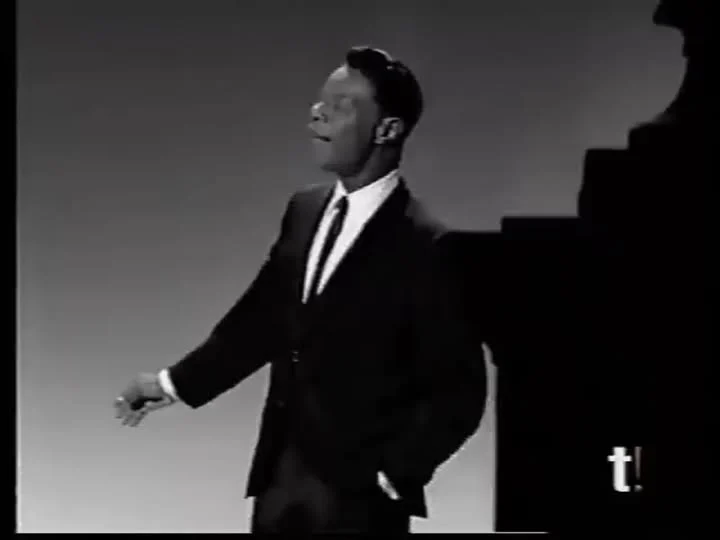
The 1956 recording of Nat King Cole’s When I Fall In Love is less a song and more a sacred trust, a piece of sound so perfectly balanced between vulnerability and absolute confidence that it feels eternal. In a dim late-night diner, seventeen years old and nursing lukewarm coffee, I first heard it drift from a corner radio. The oldies station shifted from sock-hop anthems to something smoother, older, almost courtly. That quiet realization became a revelation. The lush arrangement gave me an anchor point not for a new recording but for a moment when the world paused to understand what it had lost after Cole’s tragic passing in February 1965. That version, a jewel from Capitol Records, cemented his transition from jazz-trio virtuoso to orchestral pop titan.
Nathaniel Adams Coles was a pianist of relentless curiosity. With his trio, he made a name; with a shift to vocal work backed by Hollywood’s most sophisticated arrangers, he broke barriers while smoothing jazz edges. When I Fall In Love, a standard first introduced by Doris Day in 1952, became a high point of this orchestral chapter. The definitive recording was made in late 1956 and released in 1957 on the album Love Is The Thing, helmed by producer Lee Gillette and arranger-conductor Gordon Jenkins. Their team had already created ethereal benchmarks like Stardust and Too Young. The arrangement for this track opens not with a flourish but with a delicate shimmer of upper-register strings, tightly miked to fill the space without becoming shrill. Gordon Jenkins understood that the true instrument was Cole’s voice, and the orchestra acted as a revolving pedestal. The dynamic is hushed, intimate, conspiratorial. Cole’s baritone, warm and meticulously articulated, sits front and center, capturing the slight catch in his breath and the feather-light vibrato on sustained vowels. He sings directly into your ear, not to a hall.
It is a sound so perfectly balanced between vulnerability and absolute confidence that it becomes less a song and more a sacred trust.
The pacing is deliberate, stretched to savor every syllable of the lyric. The rhythm section is almost invisible, maintaining a stately slow-waltz pulse, a heartbeat beneath the romance. There is no featured guitar or ostentatious improvisation. This is pure distilled sentiment. In the middle eight, the strings swell when Cole sings The moment I can feel that you feel that way too building into a shimmering wave of catharsis achieved through polish rather than raw volume. The brass adds a golden hue to the climax, then recedes. The emotional peak is beautifully controlled, never tipping into melodrama. On quality premium audio equipment, you feel the room the depth of reverb on closing chords, the quiet settling of air after the final sustained string note. It is a moment of profound shared silence.
This recording was a career capstone. Cole’s early death in 1965 left an irreplaceable void. The release of the L-O-V-E album that year, a final burst of sophisticated pop, intensified public emotion. Revisitation of his timeless ballads in that moment of grief imbued them with extraordinary poignancy. The vows he sang about love lasting forever or not at all felt like a final testament.
For a generation, this performance became the mental soundtrack for first slow dances, whispered promises, classic movie scenes where a protagonist understands their feelings. I have heard it in dive bars, elegant hotel lobbies, on car radios stuck between cities. Its ubiquity proves its perfection. It transcends its era, immune to shifts in musical fashion. It serves as a fundamental text for aspiring vocalists and instrumentalists. Many young musicians began piano lessons by emulating the clean chord voicings or the impeccable legato phrasing. Cole makes the impossible sound effortless, a hallmark of true genius.
Ultimately, When I Fall In Love is a meditation on risk. The song is predicated on waiting for a love so profound that it is worth devastation if it does not last. Cole delivers this emotional gamble with a voice that sounds utterly secure, a quiet beacon of hope. He reminds us that the greatest acts of vulnerability are often delivered with the greatest poise. A quiet persuasive truth is embedded in that 1956 Capitol tape: the deepest emotional impact resides in the most meticulously controlled sound. It remains as vital today as it was the day it was released.
For listeners seeking adjacent moods and eras explore Stardust by Nat King Cole from the same album Love Is The Thing with Gordon Jenkins sublime strings. Misty by Johnny Mathis from 1959 showcases a velvety tenor wrapped in classic orchestration. The Nearness of You by Frank Sinatra with Nelson Riddle’s elegant arrangement follows a similar blueprint of restraint. Moon River by Andy Williams offers understated elegance with gentle orchestra. Unforgettable by Nat King Cole from 1951 demonstrates his earlier vocal control with minimal jazz inflected instrumentation. What Are You Doing The Rest Of Your Life by Barbra Streisand from 1969 matches the cinematic arrangement and emotional commitment of Cole’s track.