
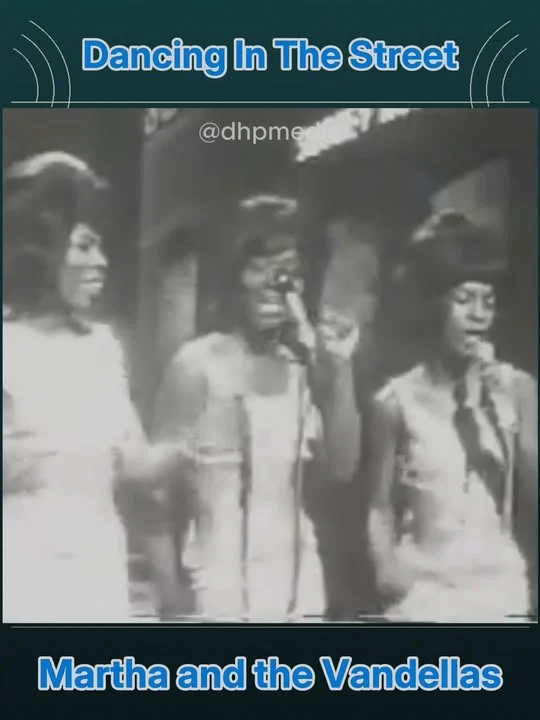
It begins with a blast of brass, a call to arms that is less about war and more about joyful revolution. The opening notes of Dancing in the Street by Martha and the Vandellas are not just music; they are an invitation, a siren song that has echoed through decades. More than sixty years after its 1964 release, this track still commands feet to move and hearts to open. Yet beneath its irresistible groove lies a quiet depth—a whispered rallying cry that captured the spirit of a nation in flux.
The song first appeared on the album Dance Party, a collection that embodied the vibrant, hopeful energy of the 1960s. This was not merely a set of songs but a cultural milestone, a sonic snapshot of Motown’s golden era. Produced under the legendary label, Dance Party brought together the finest songwriters and musicians of the time, most notably the Funk Brothers, Motown’s in-house band. Their irresistible rhythms and melodies fueled every track, creating a record that was both a dance-floor staple and a reflection of a turbulent yet optimistic America.
The instrumentation of Dancing in the Street is a masterclass in meticulous construction. From the very first bar, a triumphant brass section—baritone saxophones, trombones, and trumpets—sets a tone that is both grand and approachable. Below it, Benny Benjamin lays down a persistent drum pattern, a heartbeat that drives the song forward. Meanwhile, James Jamerson weaves a fluid, funky bassline that grooves beneath the surface, never overpowering but always present. Piano elements, played with an energetic bounce, fill out the sound, giving the track a buoyant, full-bodied feel. The production, overseen by William “Mickey” Stevenson and Marvin Gaye (who co-wrote the song with Stevenson and Ivy Jo Hunter), was recorded at Hitsville U.S.A. in Detroit. It blends raw energy with polished precision, a hallmark of Motown’s innovative studio techniques.
Callin’ out around the world, are you ready for a brand new beat?
On the surface, those lyrics are a simple call to dance. But in the context of 1964, with civil rights marches and protests filling the streets, the song carried an unspoken weight. The streets were where real change was happening, and Martha and the Vandellas managed to craft a track that resonated deeply with the societal undercurrents of the era. It became both a pop success and a historical touchstone, a subtle anthem for unity and collective action disguised as a party tune.
What makes Dancing in the Street endure is not just its message but its sheer musicality. Martha Reeves delivers a vocal performance that is commanding yet inviting, pure excitement channeled through a voice filled with emotional authenticity. Her spirited delivery makes every listener feel as if they must immediately join the celebration. The song’s vibrant blend of guitar, piano, and brass creates an infectious atmosphere that transcends generations. It works at weddings, street festivals, and historical retrospectives alike, always inspiring movement and smiles.
For those captivated by this track, the Motown catalog offers other gems that echo its magic. Heat Wave by the same group pulses with fiery vocals and rhythms. Rescue Me by Fontella Bass stands as a powerful anthem of strength. Uptight (Everything’s Alright) by Stevie Wonder brims with youthful energy. Nowhere to Run, again by Martha and the Vandellas, carries a darker tone but the same irresistible groove. And Dancing in the Moonlight by King Harvest offers a carefree pop-rock twist on the same theme. Exploring these tracks deepens appreciation for the Motown sound and its profound cultural impact.
Over six decades since its release, Dancing in the Street remains a phenomenon. It is more than a party anthem; it is a living testament to music’s power to bring people together, inspire action, and lift spirits. Its masterful blend of horns, rhythm, and voice stands as a high watermark in American popular music. Whether heard as a joyful invitation to dance or as a subtle historical document, it continues to resonate deeply. In the ever-changing landscape of music, this brilliant piece reminds us that sometimes the simple act of dancing in the street can symbolize something far greater—a shared humanity, a call for unity, and the enduring hope that better days are ahead.