
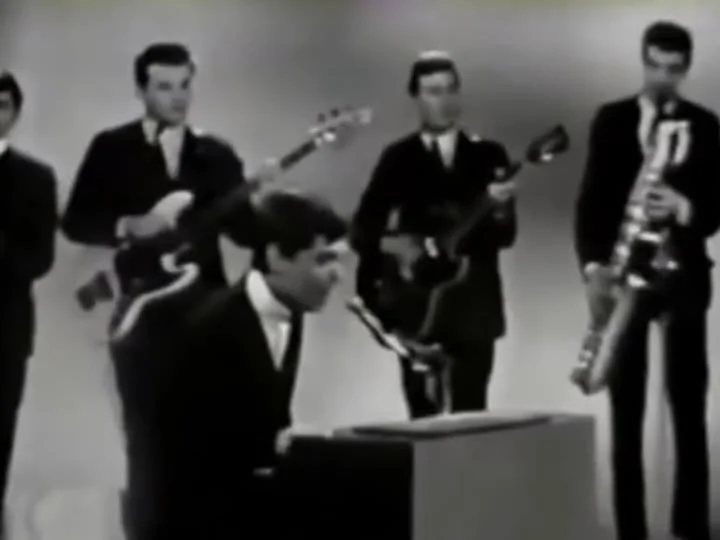
In early 1965, a single stormed the British charts and ended The Beatles five week reign at number one. That track was Yeh Yeh by Georgie Fame and The Blue Flames. It was more than a hit it was a declaration that British pop could be sophisticated, jazz inflected, and irresistibly danceable.
Picture a London club in 1965, the Flamingo in Soho. The air is thick with smoke and the sound of a band that straddles the line between rhythm and blues and modern jazz. The audience is a mix of mods in sharp suits and purists in leather, all united by the groove that pours from the stage. Georgie Fame, a former child prodigy named Clive Powell, leads his band through a set that feels both raw and polished.
By the time Yeh Yeh was released, Fame and the Blue Flames were veterans of the London club circuit. Their debut album Rhythm and Blues at the Flamingo captured their live energy, but it was their second effort Fame at Last that gave them a chart foothold. The song itself began as an instrumental by Mongo Santamaria band, written by Rodgers Grant and Pat Patrick. Jon Hendricks added the syncopated lyrics, and Fame adopted them for his version produced by Tony Palmer and released on the Columbia label.
The magic of Yeh Yeh lies in its arrangement. The Latin soul foundation is driven by a tight rhythm section with a prominent cowbell. Georgie Fame piano playing is central, percussive and bluesy, providing both melody and texture. The Blue Flames horn section, particularly Peter Coe tenor saxophone solo, adds a brassy punch. Notably, there is little guitar on the track, the sound is built around piano, bass, drums, and horns, giving it a warmth distinct from the garage rock of the British Invasion. Fame vocal delivery is cool and conversational, gliding over the complex rhythm with wry charisma.
The recording captures the immediacy of a live performance. The dynamics swell and recede, and the call and response in the chorus and that is what I say becomes an irresistible hook. It sounds like a night at the Flamingo, sweat and energy preserved in wax.
This track is a sonic snapshot of a moment when jazz and pop collided, and the result was pure joy.
Decades later, Yeh Yeh remains a testament to the fusion of genres. It influenced countless musicians and stands as a cultural marker of the mid 1960s diversification of British youth music. For those who want to explore further, consider Booker T and the MGs Green Onions, Ray Charles Whatd I Say, The Spencer Davis Group Keep On Running, Matt Bianco 1985 cover of Yeh Yeh, Doris Troy Just One Look, and Willie Bobo Bossa Nova USA. Each shares the same blend of rhythm and blues, jazz, and Latin rhythms that made Georgie Fame and The Blue Flames a classic.