
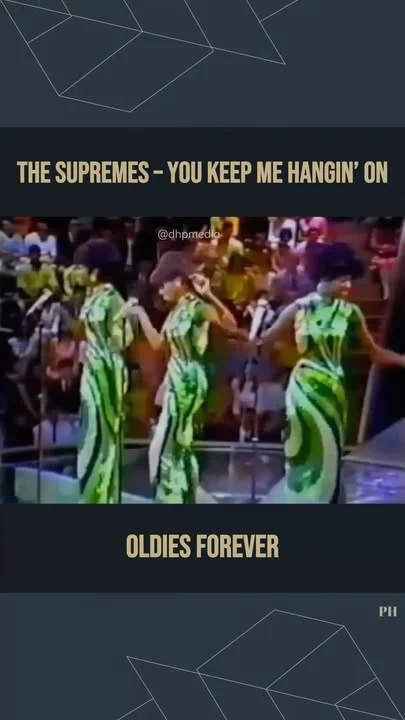
There is a moment in You Keep Me Hangin’ On when Diana Ross pleads, “Set me free, why don’t you, baby?” and the world stops. That raw, desperate cry is not just a lyric it is the sound of a generation discovering its own emotional independence. More than five decades later, that same plea still echoes through headphones, playlists, and quiet moments of reflection. This is the story of a song that refused to fade, a testament to the pain of one sided love and the strength it takes to walk away.
Released in 1966, the track was a departure for Motown. The production team Holland Dozier Holland stripped away the polished gloss and built something grittier. A staccato guitar riff opens the song like a door slamming shut, setting a tone of urgent desperation. The beat drives forward as if the singer is trying to outrun her own heart. Ross delivers the lyrics with a trembling power, her voice hovering between fragility and fury. This was not the sweet pop of earlier Supremes hits this was a storm.
The heart of the song lies in its words. Lines like “Why don’t you be a man about it and set me free?” and “You don’t really love me, you just keep me hangin’ on” are not just clever songwriting they are a mirror held up to anyone who has ever felt trapped in a relationship that no longer serves them. The lyrics speak a universal language of frustration and longing, and that is why they have crossed generational lines. Young listeners today discover this track on breakup playlists and hear the same truth their parents and grandparents heard half a century ago.
The Supremes were never just a singing group. They were pioneers. Florence Ballard, Mary Wilson, and Diana Ross broke racial and social barriers at a time when America was deeply divided. Topping the Billboard Hot 100 with this song was more than a chart victory it was a cultural statement. They gave a voice to women who had been taught to stay silent about their emotional struggles. You Keep Me Hangin’ On became an anthem for personal agency, a rallying cry that still resonates in an era of empowerment anthems and self care playlists.
The song’s influence did not stop in the 1960s. In 1986, Kim Wilde reimagined it with a rock infused beat and synthesizers, taking it to number one again. That cover introduced the track to a new generation and proved its versatility. Other artists from soul singers to rock bands have reinterpreted the song, each adding their own flavor while preserving the core emotion. The song has appeared in movies, television shows, and commercials, embedding itself into the cultural fabric. It remains a staple on streaming platforms, generating royalties and new fans with each passing year.
The legacy of The Supremes continues to shape modern music. Artists like Beyoncé, Adele, and Rihanna walk the path these women carved. The themes of heartbreak, resilience, and independence that You Keep Me Hangin’ On explored are now central to pop music. The group set a standard for performance, harmony, and style that still influences today’s biggest stars.
There is a reason why this song never grows old. It captures a feeling that is both personal and universal the ache of loving someone who does not truly love you back. The Supremes, with the genius of Holland Dozier Holland, turned that ache into art. They gave us a song that is at once a cry for help and a declaration of strength. It is a reminder that some emotions are timeless, and that a great song can be a lifeline.
For anyone exploring the depths of Motown or building a collection of classic heartbreak anthems, You Keep Me Hangin’ On remains essential listening. It is a masterclass in turning pain into poetry and a testament to the enduring power of three women who refused to be held back.
Set me free, why don’t you, baby?
Get out my life, why don’t you, baby?
‘Cause you don’t really love me
You just keep me hangin’ on