
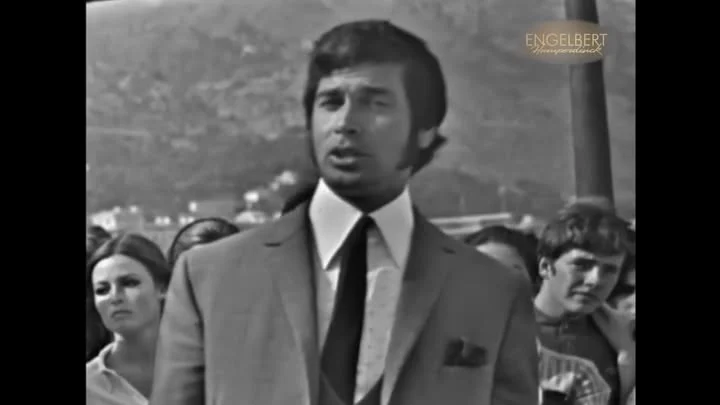
There is a moment in Engelbert Humperdinck’s A Man Without Love where the listener is no longer an observer but a participant in the ache. The opening confession—
I can’t face this world that’s fallen down on me
—arrives like a door swinging open into a room of solitary grief. It is a line so raw and unguarded that it has stopped hearts across five decades, proving that the truest ballads never age. What makes this track a perennial companion, though, is not merely the weight of its words but the man who carried them.
Born as an Italian melody titled Quando m’innamoro, the song was reborn in 1968 under the English adaptation of lyricist Barry Mason. At that time, Humperdinck was already a commanding voice in the romantic ballad renaissance, his velvet baritone and magnetic stage presence setting him apart from the pack. Yet with A Man Without Love, he reached a new emotional altitude. The track became an instant classic, cementing his name alongside other giants of the golden era and giving the world a song that feels less like a performance and more like a confession whispered into the dark.
The heart of the song beats in its unflinching imagery. Lines such as
Every day I wake up, then I start to break up
are not just poetic devices but daily rituals of sorrow, a man trapped in the cycle of waking only to remember what he has lost. The lyrics map the geography of longing with remarkable detail—moonlight promising a future, a kiss that changed everything, and the slow erosion of hope. It is this specific vulnerability that transforms universal heartbreak into something singularly personal for each listener.
Musically, the arrangement acts as a rich emotional amplifier. The orchestration swells with lush strings and a steady, poignant rhythm that mirrors a pulse in distress. This late-1960s production style—grand, theatrical, yet deeply intimate—elevates the ballad beyond typical pop fare. The brass and strings do not simply accompany; they answer the voice, creating a dialogue between despair and hope. It is a textbook example of how classic instrumental texture can make a heartache feel cinematic.
Humperdinck himself, often hailed as a kingdom of romance alongside hits like Release Me and The Last Waltz, brings a singular blend of passion and tenderness to every note. His voice here is not just smooth but layered with an almost theatrical sincerity. He does not sing the lyrics; he inhabits them. That is why even in an era of algorithmic playlists and fast-changing tastes, this song refuses to fade. Streaming platforms like Spotify and Apple Music have breathed new life into these vintage ballads, placing them side by side with contemporary tracks and introducing Humperdinck’s artistry to younger ears discovering retro romance for the first time.
The cultural footprint of A Man Without Love extends well beyond the turntable. It has found a home in films, television shows, and advertisements—underscoring moments of solitude, reflection, or emotional turning points. Each new context gives the song another layer of meaning, proving that its core themes of yearning and emptiness transcend generational boundaries. In a digital age where music can feel disposable, this track stands as a monument to the power of well-crafted, heartfelt songwriting.
Ultimately, what keeps A Man Without Love alive is not nostalgia alone. It is the truth embedded in its melody and lyrics—the acknowledgment that love, when lost, leaves a shape that nothing else can fill. Whether you are hearing it for the first time or the hundredth, Humperdinck’s voice still finds the crack in your armor. It is a song that remains, like all great art, both a mirror and a refuge.