
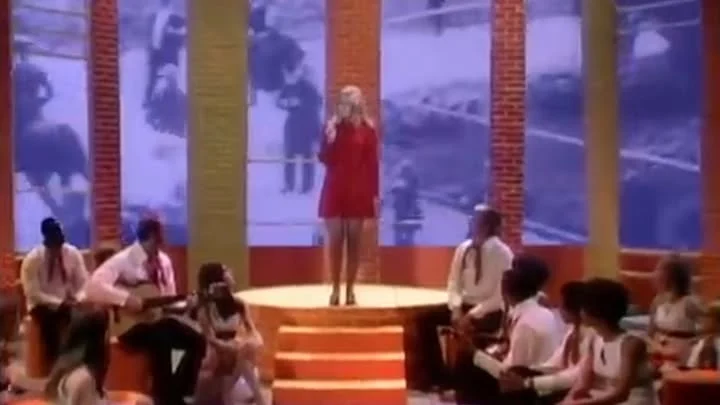
Those Were the Days begins not with a note but with a ghost. A lone figure stands before a tavern, her reflection caught in the glass like a stranger she barely recognizes. The laughter inside is familiar but distant, a sound from another lifetime. This is the quiet ache that opens Mary Hopkin s 1968 masterpiece a song that became an anthem for an entire generation yearning for the innocence they left behind.
Released when Hopkin was barely out of her teens, her voice carried a crystalline purity that made every word feel like a confession. The ballad swept across continents, a cultural phenomenon that captured the bittersweet truth of growing up. It was never just a song about nostalgia it was a song about the fragments we carry forward from our youth, the laughter, the dreams, the impossible belief that the world would always bend to our will.
Those were the days my friend We thought they d never end We d sing and dance forever and a day We d live the life we choose We d fight and never lose For we were young and sure to have our way
The chorus erupts like a sunbeam through a dusty window, both painful and beautiful. It is a celebration of what was lost and what remains. The tavern itself becomes a symbol of memory a place where glasses were raised and hours melted away. Yet the narrator returns alone, the laughter now a echo, the faces replaced by shadows. The reflection in the glass asks a question that lingers long after the final note fades.
But this song refuses to be merely a lament. It is a quiet defiance. The second verse confesses that the busy years have stolen our starry notions, yet when old friends meet by chance, the smiles say everything. There is a warmth in the recognition that we have all survived the same passage of time. And in that shared survival there is hope. The dreams, the narrator realizes, are still alive inside the heart, unchanged and undimmed.
Just tonight I stood before the tavern Nothing seemed the way it used to be In the glass I saw a strange reflection Was that lonely woman really me Through the door there came familiar laughter I saw your face and heard you call my name Oh my friend we re older but no wiser For in our hearts the dreams are still the same
Mary Hopkin delivered these words with a tenderness that made them universal. Every listener could see their own youth reflected in hers. The song became a time capsule for the late 1960s, a moment when the world seemed to be turning upside down but the simple act of remembering kept people grounded. It is a reminder that the carefree days are never truly gone they are stored inside us, waiting to be unlocked by a familiar tune or the sound of a friend s voice.
So next time you hear those opening notes, let yourself be transported. Stand before your own tavern, raise your glass to the laughter that shaped you, and know that some things never end. Those days live on in every heartbeat, every shared smile, every dream that refuses to fade.