
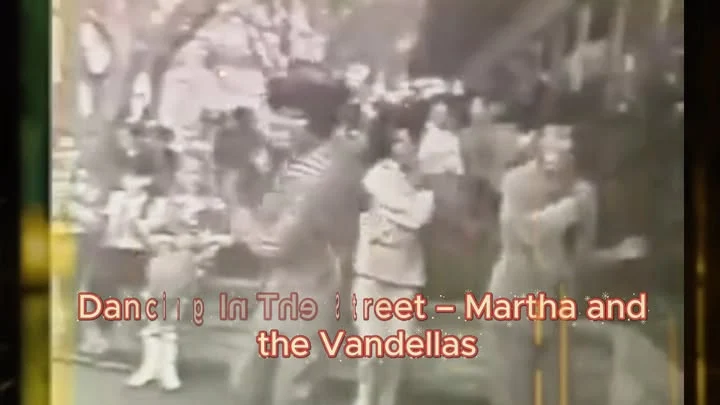
Picture a summer afternoon in 1964. The first blast of a horn section cuts through the air like lightning, and within seconds, a rhythm takes hold that refuses to let go. That is the power of “Dancing in the Street” by Martha and the Vandellas. More than six decades later, that opening still feels like an invitation, a call to something bigger than yourself. It is a song that does not just ask you to listen. It dares you to move, to smile, to join a moment that has never really ended.
The magic began on an album called Dance Party, released in 1964 under the legendary Motown umbrella. At first glance, it seemed like a simple collection of lively tracks designed to fill dance floors. But the record became something far greater. It captured a world in motion, a country changing by the day, and a sound that would define generations. The album was a cultural marker, a snapshot of hope and restlessness wrapped in melody. Behind the scenes, the brilliant Funk Brothers, Motown’s in-house band, laid down rhythms that felt both effortless and electric. Their instruments became the heartbeat of every track, and on “Dancing in the Street,” they created something timeless.
The song’s opening brass riff is instantly recognizable. Baritone saxophones, trombones, and trumpets combine into a triumphant fanfare that sets the stage for everything to come. The drums, anchored by the steady hand of Benny Benjamin, drive the track forward with a pulse that is impossible to ignore. Meanwhile, James Jamerson’s bass guitar weaves through the song with fluid precision, adding a funky undercurrent that never overwhelms. The piano, subtle yet persistent, bounces along with an energy that mirrors the lyrics’ forward motion. Together, these elements create a rich tapestry of sound that feels both raw and polished, a hallmark of the best Motown recordings.
The genius behind the production came from William “Mickey” Stevenson and Marvin Gaye, who co-wrote the song with Ivy Jo Hunter. Recorded at the legendary Hitsville U.S.A. in Detroit, the track benefited from studio techniques that were ahead of their time. The result was a sound that was clean, punchy, and alive. Every instrument had its place, every vocal shine. It was a masterclass in production, and it still sounds fresh today.
Lyrically, “Dancing in the Street” works on multiple levels. On the surface, it is a joyful call to communal celebration. The opening line, “Callin’ out around the world, are you ready for a brand new beat?”, speaks to a universal desire for connection. But beneath the surface lies a deeper resonance. In an era defined by the Civil Rights Movement, the streets were where change happened. Marches, rallies, and demonstrations filled those same streets. Whether intentional or not, the song captured that energy, turning a dance tune into a subtle anthem of unity and resilience. It became a soundtrack for a generation that believed in the possibility of transformation.
The voice at the center of it all belongs to Martha Reeves. Her performance is nothing short of electrifying. She commands attention with every note, her voice filled with a mixture of power and warmth that feels both commanding and welcoming. It is the kind of vocal delivery that elevates a great song into an unforgettable one. When she sings, you believe every word. You feel the joy, the hope, and the unshakable spirit of a moment in history that refused to be silenced.
What makes “Dancing in the Street” truly iconic is its ability to transcend time. It works at a wedding, a block party, or a quiet evening at home when you need a spark of energy. It has been covered by countless artists, from the Mamas and the Papas to Bruce Springsteen and Mick Jagger. But no version quite matches the original. The combination of brass, bass, piano, and drums, paired with Reeves’ magnetic presence, creates an atmosphere that is impossible to replicate. It is a song that invites you to be part of something, if only for three minutes at a time.
If you find yourself wanting more after listening to this classic, there are plenty of similar gems worth exploring. “Heat Wave” by Martha and the Vandellas brings the same fiery energy and unrelenting rhythm. “Rescue Me” by Fontella Bass offers a powerful blend of strength and soul. “Uptight (Everything’s Alright)” by Stevie Wonder bursts with youthful exuberance. “Nowhere to Run” by Martha and the Vandellas takes a slightly darker turn while keeping the groove intact. And for a feel-good vibe, “Dancing in the Moonlight” by King Harvest captures that same carefree spirit with a pop-rock twist. Each of these songs shares a piece of the magic that defines Motown’s golden era.
Looking back, “Dancing in the Street” is more than just a party anthem. It is a living, breathing piece of history. It reminds us that music has the power to bring people together, to inspire action, and to uplift the human spirit. The song’s blend of guitar, piano, horns, and unstoppable rhythm stands as a high watermark in American popular music. It is a testament to what happens when incredible talent meets a moment that needs a voice.
So the next time you hear that opening brass riff, let yourself be transported. Feel the pulse of the 1960s, the hope and the fire. Let the music remind you that even the simplest act, like dancing in the street, can carry the weight of something truly profound. Sixty years on, that invitation still stands. Are you ready for a brand new beat?