
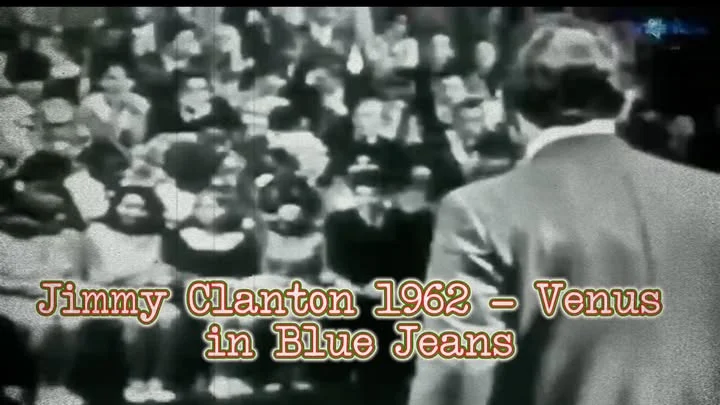
American pop music held its breath in the early 1960s. It was a delicate polished era. The raw energy of early rock and roll had been refined into something elegant. The craft of the songwriter and arranger became paramount in the halls of the Brill Building. Into this world of tailored pop stepped Jimmy Clanton. His song Venus in Blue Jeans became a defining artifact. The title itself is a work of commercial poetry. It places a mythological goddess in the everyday fabric of denim. This contrast was the song secret weapon. It captured a generation tired of formality. They wanted glamour in a casual package.
The arrangement frames this casual goddess in a majestic sound. The brass and strings dress her up sonically. The lyric dresses her down. The result is a beautiful synergy. This is the heart of the song. It promises the high wattage glamour of golden age cinema. It keeps its feet planted in the language of teenage desire.
The magic of this song is that it promises the high wattage glamour of the golden age of cinema while keeping its feet firmly planted in the everyday language of teenage desire.
Jimmy Clanton emerged from Baton Rouge, Louisiana. He was a swamp pop R&B teen idol. His 1958 hit Just a Dream put him on the map. A two year hiatus followed for service in the U.S. National Guard. When he returned to the studio he needed a comeback. He found Venus in Blue Jeans on Ace Records. The songwriters Howard Greenfield and Jack Keller had their doubts. The public answered with a definitive yes. The song became one of Clanton biggest hits. It kept him relevant just before the British Invasion reshaped the entire musical landscape.
The shift in Clanton sound was significant. It moved from regional swamp pop grit to New York sophistication. The arrangement is a study in baroque pop restraint. The opening is a punchy brass fanfare. The rhythm section provides a mid tempo shuffle. The bass is light and bouncing. The snare drum strikes crisp on the two and four. An acoustic guitar plays a delicate arpeggio. The piano drives the melody. Carole King helped arrange the distinctive brass and strings. Jimmy Clanton delivers the vocal with a smooth earnest tone. He sells the fantasy without falling into theatrics. The production places his voice front and center. The layered instrumentation reveals itself on close listening.
The brilliance of the lyric lies in its central idea. The protagonist is not defined by diamonds and satin but by the choice of denim. I used to think that a girl should be dressed like a Queen the singer admits. The image of a goddess in denim represents a changing world. Authenticity begins to supplant stiff formality. The music dresses the subject in majesty while the lyrics render her approachable. This tension forms the backbone of the song.
The song might not have the riff of a Chuck Berry classic. Its influence on sophisticated pop is undeniable. It defines the sound of a perfect three minute single. The melody is economical. The arrangement is sharp. The delivery is confident. It remains a testament to the power of the pop single format.
Listeners drawn to this world of orchestrated teen tenderness have many paths to explore. Bobby Vee delivered pop perfection with Take Good Care of My Baby. Frankie Avalon shared the mythological title with his own Venus. Neil Sedaka featured clean piano work on Calendar Girl. Mark Wynter released a UK cover of Venus in Blue Jeans that became a major hit. Dion adopted lush string arrangements on Where or When. The Rays captured a similar innocent observation with a distinctly R&B vocal texture on Silhouettes. Each of these tracks is a gateway into this shimmering moment in music history.