
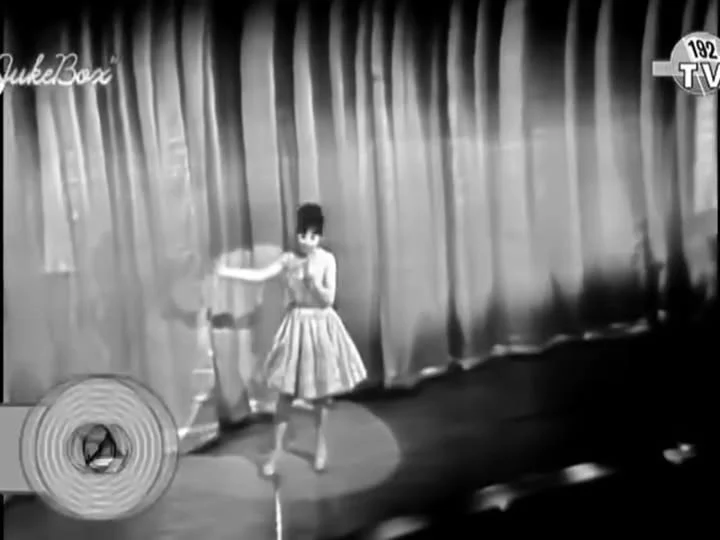
The moment arrives without warning. A shimmer of violins, a swell of brass, and then the voice. It hits somewhere between memory and heartbeat, carrying the longing of an entire generation in a few simple words. The year was 1963. Britain stood at the cusp of a cultural revolution, and a young singer from the dance halls stepped forward to claim her place in pop history. Susan Maughan, barely out of her teens, possessed something her peers lacked. Not just a voice, but a presence, a way of wrapping a lyric in both polish and raw feeling, holding onto the emotion just long enough for it to land.
Her version of Bobby’s Girl did more than climb charts. It announced a shift. In the smoky rooms where she once performed with Ronnie Hancox and the Ray Ellington Quartet, she had learned the discipline of live performance, of moving a crowd with nothing but a microphone and phrasing. That background became the foundation of a record that would define her, a single released on the Philips label in late 1962, peaking at No. 3 in Britain as the new year dawned. The success anchored her debut album, I Wanna Be Bobby’s Girl But…, a collection that paired the hit with standards bearing male names, each one delivered with a sincerity that set her apart.
And yet, the story behind the song is about more than a young woman’s chart conquest. It’s about the making of a sound, one that carried the sophisticated sheen of studio craft while tapping straight into the teenage heart, a bridge between the big-band tradition and the bright, unpolished energy of early pop.
The orchestration on “Bobby’s Girl” is less about accompaniment and more about embodying the hopeful, soaring feeling of the unrequited crush.
A Symphony of Yearning
Compare the versions. Marcie Blane’s original carried a raw, almost amateur charm, a girl whispering secrets into a telephone receiver. Maughan dropped that spoken intro. Instead, her vocal arrives with the full-throated confidence of someone declaring an anthem, not confessing a secret. The emotional center shifts. What was once a private ache becomes an open celebration.
Credit Wally Stott for the arrangement that made this transformation possible. The strings move in wide, dramatic arcs, carrying the melody like a film score. There is no hesitation. Every note feels destined. Beneath them, the rhythm section works with restraint, brushes on the snare, a subtle pulse, never rushing. The piano adds harmonic grounding and the occasional glint of upper-register sparkle, a bright punctuation against the dark warmth of the orchestra. If you listen with quality premium audio gear, the textural separation becomes a revelation, each section emerging from its own space, the production breathing around Maughan’s voice.
The dynamics are layered with intention. The verses draw inward, Maughan’s vibrato a controlled shimmer, almost vulnerable, building anticipation. Then the line hits: “I wanna be Bobby’s girl.” The orchestra releases a sudden, glorious flood of sound. The ecstasy is unmistakable. A clean, understated guitar line threads through the arrangement, nodding to country-pop influences without ever stealing the spotlight. Nothing overpowers. Everything complements.
Six Decades of Stillness and Sound
There’s a reason this piece of music refuses to fade. It doesn’t simply invoke memory; it manufactures it. I recall an afternoon in a small café, the kind with mismatched chairs and a jukebox frozen in the 1970s. The opening bars of “Bobby’s Girl” cut through the clatter of espresso cups. A woman at the counter, silver-haired and thoughtful, stopped speaking. Her gaze drifted somewhere unseen, a half-smile crossing her face as she mouthed, “He wears his class ring.” For her, the track wasn’t vintage kitsch. It was the scent of borrowed perfume, the static of a telephone cord, the ache of a Friday night dance floor.
That connection remains. A teenager scrolling through playlists on a tablet, maybe taking guitar lessons online, might stumble onto Maughan’s voice and find something familiar. The language has changed. The courting rituals have mutated. But the core emotion—that impossible wish to be noticed by someone who holds your heart—hasn’t aged a day. The desire to be the chosen one, the envy of every other girl, the fantasy of acceptance, all still pulse beneath the surface of modern life.
What Maughan accomplished with John Franz producing and Wally Stott arranging was the elevation of a simple pop song into an shared experience. Her vocal delivery, sophisticated yet sincere, gave the lyrics an authority they might otherwise have lacked. She wasn’t just singing about a crush. She was rendering it sacred. Her later recordings never repeated the scale of this success, but they showcased a depth of range, moving between standards and contemporary pop with an ease that spoke to genuine musicianship.
In the end, “Bobby’s Girl” stands as more than a nostalgic artifact. It is a perfectly constructed dream, a promise of glamour and belonging that still glimmers in the distance, accessible with the drop of a needle or the tap of a screen. The context shifts but the heartbeat remains constant, proof that some feelings are immune to time.
If This Song Speaks to You, Explore These
Helen Shapiro – “Walkin’ Back to Happiness” (1961) carries the same mature vocal control over a swinging orchestral sweep, a defining moment of early ’60s British pop. Petula Clark – “Sailor” (1961) offers the dramatic, cinematic strings and an equally dedicated narrator. Billie Davis – “Tell Him” (1963) pairs a Brit Girl’s enthusiasm with professional studio polish. Connie Francis – “Where the Boys Are” (1960) captures that glow of vulnerable romantic optimism. And Lesley Gore – “It’s My Party” (1963), while leaning toward American teen tragedy, uses production to intensify its emotional narrative in ways Maughan fans will recognize.
For the best experience, listen on home audio systems that honor the mix, letting the strings break free from the rhythm section, and the voice rise above it all, as clear and assured as the day it first entered Britain’s living rooms. The song waits in the speakers, ready to transport anyone willing to feel its pull.