
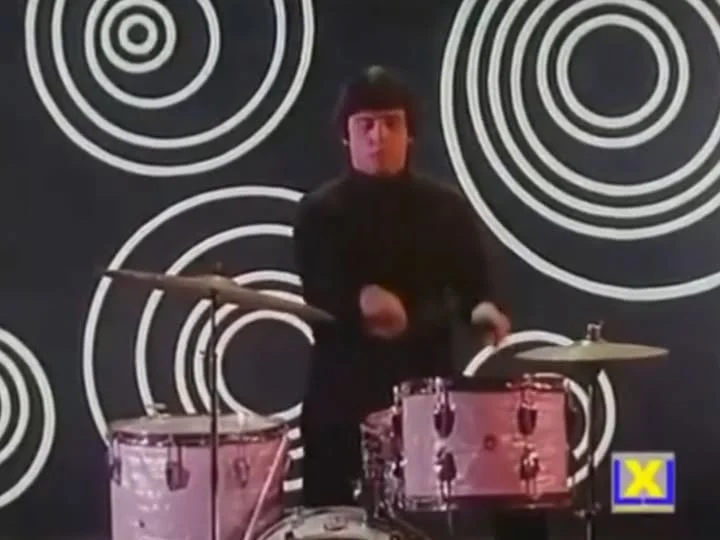
The bassline drops like a pendulum swinging into action, and within seconds, a voice cuts through the air, urgent and theatrical, pulling you into the world of 1966 London. That is the magic of “Black Is Black,” the international breakthrough by Los Bravos. Recorded under the steady hand of producer Ivor Raymonde, this track became the calling card for a Spanish band that shattered borders and rewrote the rules of pop geography.
The single landed in the summer of 1966 and traveled at lightning speed. It climbed the charts in the United Kingdom, cracked the top five in the United States, and soared to number one in Canada. For a group whose roots were planted deep in the Iberian Peninsula, this was an improbable triumph. Music historians point to it as the first truly international rock hit by a Spanish band. The song’s success became the axis around which Los Bravos’ brief, bright career turned. By the end of the year, the debut album bearing the same name had appeared on Columbia in Spain, Decca in the United Kingdom, and Press Records in the United States.
Behind the boards, Raymonde’s production is sleek without ever feeling sterile. The rhythm section holds a tight grid: the bassline renders the minor key hook in bold, unblinking strokes while the drums count off with a crisp, dry snare and a hi‑hat that opens only when the chorus demands room. A rhythm guitar slashes against the downbeat, a tambourine slices through the upper mids like a shard of light, and somewhere in the midrange an electric organ glues everything together. The arrangement refuses to balloon into orchestral excess. This is a lean machine that understands restraint is its own form of bravado.
The vocal performance by Mike Kogel, later known as Mike Kennedy, is the record’s defining element. He sings with a high, almost keening intensity that drew comparisons to Gene Pitney at the time. His phrasing lengthens on the vowels, building tension, then snaps back on the consonants, puncturing the groove. That elastic push and pull is the song’s heartbeat.
The voice sits close to the microphone, with almost no air between Kogel and the listener, while the band drops half a step back. A pocket of room reverb outlines the kit without sending it into cavern territory.
Much of the song’s cosmopolitan character stems from the writing team. British songwriters Michelle Grainger, Tony Hayes, and Steve Wadey penned the lyrics and melody. This curious nexus gave the single a shape that traveled easily across markets. From pirate‑radio spins in the United Kingdom to stateside playlists, the English‑language hit written by British composers and produced by an English arranger – producer found a home far beyond Madrid.
The band itself coalesced from members of Madrid’s Los Sonor and the Mallorca scene. They signed with Raymonde, recorded “Black Is Black,” and watched it carry them onto international stages in a flash. For many listeners, the song remains the definitive Los Bravos message. The debut album turned the single into a banner, and the title became the nameplate of the LP across multiple territories. Track listings varied by market, but the hit anchored every version.
Two small stories capture the song’s life beyond the charts. A friend once recalled driving pre‑dawn to a bakery job, letting the bassline play through before clocking in. Twenty years later, he says the bass still smells like yeast and cold air. Another memory comes from a café DJ in Barcelona who segued from a modern synth track directly into Los Bravos. As Kogel’s voice started, heads rose. The minor‑key mood sharpened the room. Pairs leaned closer. Vintage, yes, but not embalmed.
What makes the record endure is its geometry. Each element slots into a repeating pattern without feeling repetitive. The bass takes measured steps down the minor path. The guitar throws percussive chords like sparks on steel. The organ sustains harmony like a long shadow cast down a city street. And when Kogel climbs at the end of a phrase, a window flies open. The two‑minute‑fifty‑nine‑second runtime is exactly right for a groove that locks early and refuses to wobble.
Close listening reveals a producer’s philosophy. Raymonde favored tasteful arrangements that favored contour over clutter. In a season when studio pop often grew ornate, “Black Is Black” values muscular minimalism. No ornamental strings, no extended middle eight, no gratuitous solo. The restraint feels grown‑up, especially for a group newly arrived on the international stage. It trusts the listener to meet it halfway.
The B‑side, “I Want a Name,” reminds us of the single’s role as a portable billboard. Even without the LP, the single alone delivered a fully formed identity: European beat with a noir tint. And the vocal timbre keeps drawing you back. There is a gleam to Kogel’s upper register that cuts cleanly through the band without sheer volume. The vibrato is narrow, controlled. The sustained notes hover like a blade held steady above the groove. On the final chorus, the phrasing stretches the meter just enough to tease a breakdown that never comes. Restraint wins the day.
Set against other hits of 1966, the track feels both of its era and slightly askew. No psychedelic freak‑outs, though some sources tag it “psychedelic rock” for its minor palette. No jangle of Merseybeat. No bluesier swagger of American garage. Instead, a cosmopolitan beat group working with precision, trimmed to radio length, packed for export. The song’s compact dynamic range means it punches cleanly through everyday noise. On modern home audio, it fills space without bloat. On portable speakers, the bassline still defines the room.
The song’s melody cycles so efficiently that it nearly becomes a mantra. You think you have had enough, and then you let it roll again. That repeatability, more than any studio trick, gave the single its longevity across countries and formats. It is the rare hit that sounds finished, not polished within an inch of its life, but complete. Nothing to add, nothing to subtract.
For those exploring further, Los Bravos released additional singles and a compact discography filled with bright moments. But if you have time for only one cut, this is where to start. It is the keystone, the door they walked through into the broader pop world. And on each re‑listen, the voice’s slightly metallic edge tells you something new about the lyric. The organ’s glide reveals how the harmony is stitched. The guitar’s clipped strums remind you that a small gesture, placed exactly, can define an entire record.
Listen again. Let the bass count your steps. Let the voice open a window. The song knows exactly how much to give.
Listening Recommendations
1. The Walker Brothers — “The Sun Ain’t Gonna Shine (Anymore)”
A similarly dramatic 1966 production where baritone vocals and orchestral pop meet a moody European sense of scale.
2. The Zombies — “She’s Not There”
Minor‑key cool with electric piano and sly rhythmic turns, a blueprint for economy and atmosphere in British beat.
3. The Righteous Brothers — “You’ve Lost That Lovin’ Feelin’”
A lesson in restraint and swell, balancing studio grandeur with emotional directness.
4. The Easybeats — “Friday on My Mind”
Beat‑group urgency channeled into disciplined hooks and big‑room energy.
5. The Left Banke — “Walk Away Renée”
Baroque pop elegance that complements Los Bravos’ sleek minimalism with strings and sighing melody.
6. Belle Epoque — “Black Is Black” (1977)
A disco‑era reimagining of the same song that shows how the core hook thrives in a different decade’s dancefloor grammar.