
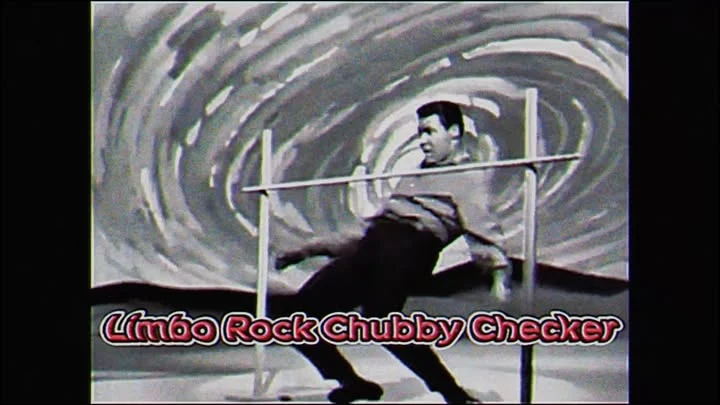
Last month at a wedding reception, the DJ slid a familiar groove into the mix right after a Motown medley. Within seconds, grandparents and grandchildren alike pushed aside their table settings, formed a wobbly human chain, and started bending their spines beneath an invisible barrier. The song was “Limbo Rock,” and it proved once again that Chubby Checker’s most famous command still carries the power to turn any room into a kinetic carnival.
That moment of collective joy was the final flourish of a remarkable reign. By the time this single arrived in late 1962, Checker had already become the undisputed master of the American dance floor. He had taught the world the Twist, championed the Pony, and pushed the Fly into mainstream living rooms. But “Limbo Rock” represented something deeper. It was a challenge wrapped in a pop melody, an invitation to measure how far you could bend before toppling over.
The song’s roots were surprisingly accidental. A session guitarist and songwriter named Billy Strange, who would later gain fame alongside Nancy Sinatra as one of the Wrecking Crew, reportedly wrote the tune for a $100 wager. He wanted to prove he could craft something better than the radio’s current pop offerings, and he jokingly titled it “Monotonous Melody.” The instrumental version landed with The Champs in 1961, and the infectious ba-dum-bum pulse was in place from the start.
What transformed the song into a phenomenon was Checker’s vocal magic and the storytelling lyrics from his manager Kal Mann, writing under the pen name Jon Sheldon. Mann crafted the vivid image of Jack being quick and going under the limbo stick, giving the dance a playful narrative. Parkway Records released the track, and it served as the cornerstone of the Limbo Party album. Label lore often leaves production credits murky, but the house team led by figures like Mann and Bernie Lowe gave the record its signature bright and unvarnished AM radio punch.
On a purely sonic level, the record is a masterclass in percussive clarity. The drums snap with a dry, aggressive backbeat that never lets up, while the bass holds a steady low-end anchor beneath the cacophony. A reedy saxophone riff cycles endlessly, and the piano runs a bright, staccato rhythm that keeps the whole arrangement airborne. This is not music designed for passive listening. It is a physical command, a demand to move.
The relentless, driving rhythm of “Limbo Rock” demands not passive listening, but active, joyful compliance.
Checker’s theatrical voice adds the final coat of charm. He delivers the famous “How low can you go” with playful authority, scatters shouts and monologues across the arrangement, and punctuates the chorus with that distinctive high-pitched laugh. Without those flourishes, the song might have been just another dance instruction manual. With them, it became a piece of pure showmanship.
The cultural timing could not have been more perfect. The Twist had already rewritten dance etiquette by making partners unnecessary and freeing individuals to express themselves. The Limbo worked differently. It demanded a group, a makeshift pole, and a collective spirit of shared risk. Checker took a Caribbean tradition and repackaged it for American teenagers, riding the single to number two on the Billboard Hot 100 and earning respectable attention overseas in the United Kingdom during early 1963.
That chart run places “Limbo Rock” at a curious crossroads. It was among the last great American dance singles before the Beatles crashed into the scene and rewired popular tastes. The song represented a final exuberant exhale from an era that prized uncomplicated physical joy over lyrical introspection. Checker’s follow-up, “Let’s Limbo Some More,” reached the American Top 20 in 1963, but the cultural winds were already shifting. The focus was moving away from dance steps and toward the band on stage wielding guitars and writing songs about something more than bending backward.
Decades later, the song’s long life is a testament to its sturdy construction. It remains a fixture at beach parties, a shorthand for early sixties silliness in films and commercials, and a reliable needle drop for nostalgic events. At that wedding, the track bridged an age gap that modern playlists often fail to cross. Young children followed their great-grandparents, laughing as they dipped underneath an imaginary bar.
There is also the garage sale find waiting to happen. An old Parkway 45 with a slightly scuffed label can transport a collector straight back to the pre-Beatles expanse when a song and a simple drum kit could start a national phenomenon. And at summer cookouts, the moment that familiar rhythm emerges from a speaker, conversations pause and someone inevitably grabs a broomstick to recreate the challenge between two chairs. The song does not age. It just finds new ways to make people smile.
For listeners who want to follow the thread of this era, a handful of tracks paint the full picture. The calypso-infused “Banana Boat Song (Day O)” from Harry Belafonte in 1956 shares a rhythmic foundation with limbo’s rise. Checker’s own “Let’s Limbo Some More” catches the immediate sequel attempt. The Champs delivered the original instrumental blueprint with their famous take on the tune before Checker got to it. Little Eva’s “The Loco-Motion” from 1962 is another prime example of a pop song as a direct dance manual. Elvis Presley tried to extend the formula with “Do the Clam” in 1965, well after the peak. And of course, Checker’s own “The Twist” from 1960 remains the career-defining record that made him the era’s ultimate master of movement.
“Limbo Rock” is not a lifeless artifact. It is a blueprint for joy, a perfect two-minute structure of sound and motion that still knows exactly how to reach us. Turn up the volume and give yourself the test. The beat is waiting to see if you can still go low enough.