
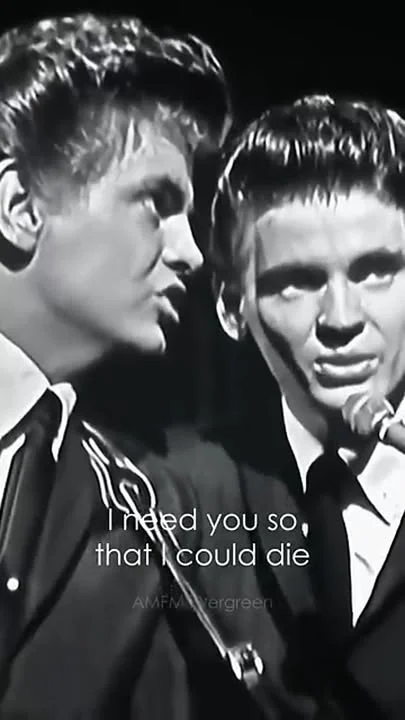
In the annals of popular music, few voices have cut through the noise quite like the celestial harmonies of the Everly Brothers. Yet, buried within their 1960 masterpiece, The Fabulous Style of the Everly Brothers, lies a song that aches with a raw, universal longing. “When Will I Be Loved” is not just a tune; it is a perfectly distilled moment of vulnerability, a question every heart has asked in the quiet of the night.
“The Everly Brothers understood the art of creating timeless music. This track is a perfect example of how they combined lyrical simplicity with complex musical arrangements.”
This song stands as a powerful artifact from a pivotal era. Released as the world spun between the innocence of the 1950s and the turbulence of the 1960s, the album The Fabulous Style of the Everly Brothers served as a masterclass in genre fluidity. It was a showcase where the twang of rockabilly met the sentimental ache of country, all wrapped in pop melodies that felt both fresh and eternal. While other tracks like “Bye Bye Love” and “All I Have to Do Is Dream” further cemented their genius, it is “When Will I Be Loved” that perfectly captures a soul in waiting.
The Anatomy of a Heartfelt Masterpiece
To understand why this song remains a cultural touchstone, one must look under the hood at its remarkable musical construction. The Everly Brothers were masters of sonic architecture, and every element in this track was meticulously placed.
Vocal Alchemy
Don and Phil Everly did not just sing together; they breathed as one. Their harmonies in “When Will I Be Loved” are not merely background support; they are the emotional core. They trade the lead and harmony lines with a natural, unforced grace, creating a layered conversation between two voices that sounds like one unified instrument. This interplay is what transforms a simple query about love into a profound emotional plea.
The Rhythmic Heartbeat
The song is driven by a guitar riff that is as bright as it is relentless. It is a crisp, rhythmic pulse that anchors the track to its rock and roll roots while the acoustic strumming whispers of a country campfire. This guitar work is not flashy, but it is perfectly effective, acting as the narrator that keeps the story moving forward. Beneath it, a steady bassline and a restrained, almost apologetic drumbeat provide a grounding rhythm. The percussion never overpowers the vulnerability; instead, it holds the song upright, allowing the vocal ache to take center stage.
A Touch of Elegance
While the Everly Brothers were rarely known as a piano act, the subtle use of light piano accents in this recording is a stroke of genius. These delicate keyboard touches act like a gentle breeze, adding a layer of texture and emotional depth without ever stealing the spotlight. It is a reminder that in great music, the best notes are often the ones you almost don’t hear.
A Legacy That Refuses to Fade
First pressed onto vinyl in 1960, “When Will I Be Loved” has proven to be a song that refuses to gather dust. Its theme of searching for love in the aftermath of heartbreak is a narrative that never goes out of style. The track’s power was amplified a decade and a half later when Linda Ronstadt took it to the top of the charts in 1975. Her country-rock rendition was a revelation, introducing the song to a generation who might have missed the original and proving that a great song is simply a great song, regardless of the decade.
“The Everly Brothers had a gift for crafting songs that were both lyrically poignant and musically sophisticated.”
This ability to transcend time is the hallmark of true artistry. Songs like this resonate not because of a trend, but because they tap into a universal emotion. The blend of acoustic guitar, a simple bassline, and light piano remains fresh precisely because it is honest. It is a simplicity born of mastery.
Discovering the Echoes
If the ache of “When Will I Be Loved” has captured your heart, there is a rich tapestry of sound waiting for you. The Everly Brothers’ own “Cathy’s Clown” offers a similar blend of harmony and heartache, while “All I Have to Do Is Dream” showcases their softer, more dreamlike side. For those fascinated by the melancholy of love, “Love Hurts” is a painful masterpiece. To follow the trail left by Linda Ronstadt, her rendition of “You’re No Good” is an essential listen, as is the haunting beauty of Roy Orbison’s “Blue Bayou.” And for a reminder of the duo’s infectious energy, “Wake Up Little Susie” remains a perfect piece of rock and roll poetry.
“When Will I Be Loved” is more than a song; it is a moment of shared human experience. It is a testament to how two brothers from a small town could turn a simple question into a universal anthem. Whether you are hearing it for the first time or the hundredth, the magic remains, proving that the best music speaks directly to the part of us that is always waiting, always hoping, and always listening.