
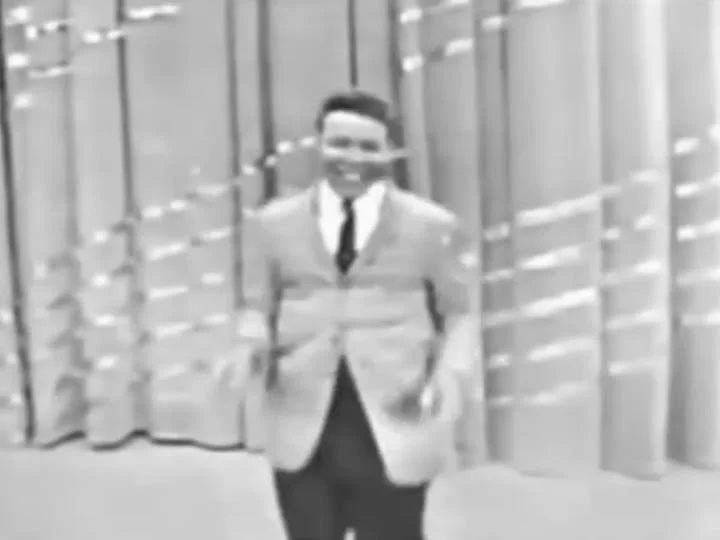
Imagine a wedding reception where the DJ drops the needle on a familiar groove. Before the first line is sung, half the room is already pivoting on their feet, swiveling hips, miming the motion of grinding out a cigarette with their toes. That reflex lives because of Chubby Checker’s “The Twist,” a recording that became the most democratizing dance single of the twentieth century. Sixty-plus years later, its power remains intact: you hear it, you move, no lessons or partners required. Beneath that breezy universality lies an astute piece of studio craft, a strategic album release, and a performance that taught pop music how to speak to teenagers and their parents without condescension.
The song first exploded as a 1960 single on Parkway Records, a label under the Cameo-Parkway umbrella in Philadelphia. It was quickly folded into the album Twist With Chubby Checker, an archetype of the concept-as-marketing LP. This record is less a narrative journey than a themed showcase designed to capitalize on a runaway hit and seed a full-blown social phenomenon. From its title onward, the album packages the single with other twist-ready tracks, instrumentals, and covers that sustain a uniform tempo and rhythmic profile. Think of it as an early-1960s proto-playlist, sequenced to keep a party in motion. The producers, notably Kal Mann and Dave Appell, favored clean, upfront rhythm tracks and dry, intelligible vocals—the better to broadcast the dance instructions encoded in the music and in Checker’s prompts. The album serves as both a document and a device: a record to listen to and a tool to use, like a dance class pressed into lacquer.
On paper, “The Twist” is disarmingly straightforward. Harmonically, it lives within the I–IV–V progression that undergirds blues, hillbilly boogie, early R&B, and rockabilly. This simplicity is not a limitation but an advantage. By clearing away harmonic clutter, the recording allows rhythm and timbre to steer the experience. The drum part is a masterpiece of restraint—a firm 4/4 pulse with snare on two and four, a bright clipped crack that invites the body to mark the backbeat. The hi-hat works in tight eighths, energizing the groove without calling attention to itself. The electric bass walks in big buoyant steps, sticking close to root–fifth figures and nudging chord changes forward like a friendly usher. That straight-ahead foundation is the hook behind the hook; it makes the song feel like it could loop forever.
The electric guitar favors percussive, lightly muted strums—bar-chord “chucks” on offbeats that function like a second snare drum. No showy bends or surfy tremolo here. Instead, the guitarist acts as a timekeeper and shade painter, making the groove feel both punchy and polite. A barroom piano comps in the middle register with dotted-eighth nudges and occasional triplet figures that imply boogie-woogie ancestry. Tenor and baritone saxophones arrive in short riffs and staccato stabs, punctuating the chorus and taking a quick rasp-toned break that feels like a party trick. Handclaps add a communal gloss, as if you’ve stepped into a TV studio surrounded by dancers who learned the steps twenty minutes ago and are now teaching you by example. Checker’s delivery is easygoing and precise. He enunciates every syllable of the imperative “Come on baby, let’s do the Twist” with the energy of an encouraging coach. No blues growl or gospel melisma—this is clarity, not catharsis. What he sells is inclusivity: anyone can join, and by the second chorus, most listeners already have.
It is worth remembering that “The Twist” began life with Hank Ballard and the Midnighters, whose 1958 original carried more R&B grit and a looser rhythm. Checker’s cover tightens the tempo and brightens the articulation. That shift from R&B club to bright-lit TV living room proved decisive. When Dick Clark’s American Bandstand exposed the song to national audiences, it became a rare cross-generational hit. Teenagers heard permission to move; their parents saw a dance without the pelvic threat of Elvis or the raw shout of Little Richard. Smart label merchandising, television appearances, and dance guides transformed a regional style into a national pastime. The song endures because it compresses a human ritual into repeatable form. The Twist is not just a dance but a tactic for dissolving self-consciousness. Even a listener who prefers Chopin nocturnes or Buck Owens honky-tonk can feel the appeal—a simple groove, an open invitation, a room of strangers who become less strange.
Listen closely on a good hi-fi or through the best headphones you own, and you will notice the recording’s aesthetics are more refined than their reputation. The vocal carries a hint of natural room echo. Guitars are mic’d to capture pick attack rather than amp bloom, preserving that percussive “chuck” that keeps dancers upright. Horns have just enough reverb to prevent honkiness but remain dry enough to pop out of AM radio. Tape saturation rounds off transients, adding a soft edge that makes the track fatigue-free even after multiple spins. Mastering choices prioritize midrange presence—where the human voice, sax, and snare live—and where small radios of the era excelled. Today, music streaming services offer several transfers and remasters. Some are louder and brighter; others preserve more low-end warmth. The right version is the one that makes your shoulders turn without conscious effort.
From a country perspective, the song shares DNA with the driving two-step and the easy swing of western dance halls. Strip out the saxophones, add a little Telecaster twang, and you would have a track at home on a Texas dance floor. The chordal simplicity that some critics treat as a liability is, for country and hillbilly boogie, a cherished feature that allows the room to breathe. From a classical perspective, minimalism is the right analogy—repetition as transcendence. Like a Ravel bolero that builds by orchestration more than melody, “The Twist” uses arrangement to escalate energy. Each chorus accrues weight through reiteration and light timbral shifts until the whole feels larger than its parts.
Consider a moment-by-moment journey through the track. The intro locks immediately—no vamp, no prelude, just guitar and rhythm section opening a door. In the first verse, Checker establishes the imperative mood; the bass is buoyant, with slight slides into certain notes that add human shape. The first chorus brings handclaps mixed so you feel them more than hear them, like a tap on the shoulder signaling “join in.” The horn riff does not try to outshine the voice; it functions as a dance-floor cheer. Unlike later rock records that pursue a towering ending, “The Twist” opts for gentle fade-out—a social cue that the dance can continue even after the record ends. It anticipates the DJ’s logic years before the discotheque.
Twist With Chubby Checker did not set out to reveal a new songwriter or a boundary-pushing studio. It set out to codify a feeling. In doing so, it gave Checker a platform to become a dance ambassador, a role he doubled down on with follow-ups like “Let’s Twist Again” and “Slow Twistin’.” Those later hits confirmed the viability of single-driven albums in the early 1960s: you build around the hit, curate the surrounding tracks to the same use-case, and deliver a uniform, utilitarian listening experience that doubles as social technology.
Why does “The Twist” still matter beyond nostalgia? It is an instruction manual for pop efficiency. It proves that access is an artistic virtue. The arrangement says to the casual listener that there is nothing to “get” before you can participate. At the same time, it rewards the attentive ear with small pleasures—the hi-hat’s tightness, the horn voicings’ economy, the guitarist’s palm-mute discipline. That dual address—to the body first, to the brain second—is one reason the record continues to appear on lists of enduring chart phenomena and all-time singles. Its populism is not pandering; it is design.
If your taste veers toward roots music, you will recognize your priorities here: time feel over texture, groove over gloss. If you are a classical listener allergic to bombast, you might be surprised by how elegantly proportioned the form is—introduction, exposition, minimal development, recapitulation, coda by fade. And if you are an audio hobbyist, you will delight in the track’s mono punch and how different playback systems change the dancer it invites you to become: shoulders on earbuds, hips on speakers.
If “The Twist” lights up your room, try these historically adjacent cuts. Hank Ballard and the Midnighters – “The Twist” offers the original, earthier and looser. Chubby Checker – “Let’s Twist Again” refines the formula with added bounce. Joey Dee and the Starliters – “Peppermint Twist” brings a clubby sheen. The Isley Brothers – “Twist and Shout” pushes toward soul fervor. Dee Dee Sharp – “Mashed Potato Time” is another TV-powered Philadelphia dance hit. The Contours – “Do You Love Me” belongs to the same family of communal motion. Gary U.S. Bonds – “Quarter to Three” is sloppier in the best way, perfect to follow “The Twist” when you want to loosen the edges.
Pop history often celebrates complexity—virtuoso solos, studio innovations, harmonic breakthroughs. “The Twist” argues for the opposite: a disciplined simplicity that understands how people actually use music. It transforms the space you are standing in. It democratizes the dance floor. It compresses the promises of early-1960s America—youthful optimism, televised community, regional styles turning national—into two minutes and forty seconds that refuse to age. Spin it on Twist With Chubby Checker and you will hear an LP smart enough to stay out of the song’s way, consistent enough to make a living room into a club, and warm enough to include every guest.
And if you are listening as a musician, there is plenty to learn. How the drummer’s quiet consistency lets the rest of the arrangement speak. How the bass carries momentum without busywork. How a guitarist can be a metronome with strings. How horns decorate rather than dominate. It is the practical craft behind the cultural flash. Chubby Checker may not have invented the twist, but he delivered the definitive take—and he did it by making a track that any body could understand in one bar.
So cue it up, push back the furniture, and try not to analyze the groove for a minute. Just twist. Then, if you must, come back to the details. That is the enduring magic here: an old record that still teaches you something about arranging, about audiences, about joyful design—every time it gets your feet moving.