
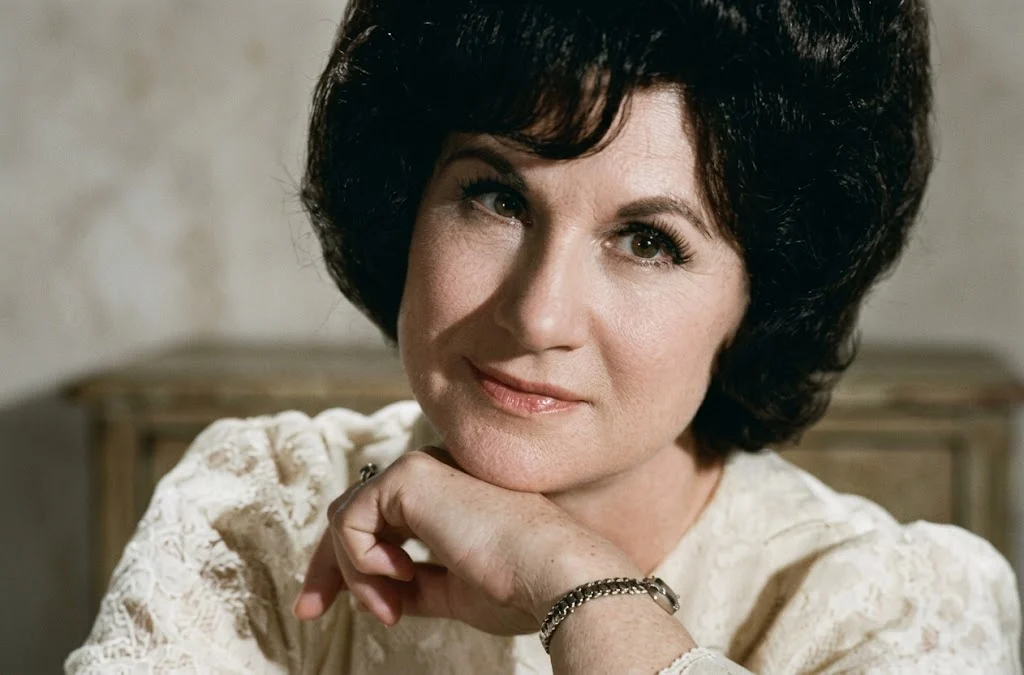
The voice that would one day change American music was not forged in a recording studio 🎤 It was forged in the suffocating heat of a steam iron inside the Washington Manufacturing Company.
She didn’t learn sorrow from a vocal coach. She learned it standing on aching feet while pressing shirts for nine dollars a week in 1934. The Great Depression was hollowing out the American South. Childhood was not a guarantee for the girl who would eventually become the Queen of Country Music.
“A childhood wasn’t a guarantee. It was a luxury her family simply couldn’t afford.”
Long before Nashville laid red carpets at her feet, a young Kitty Wells quietly walked away from her school desk. She took her place on the unforgiving factory floor. She was not chasing the blinding lights of the Grand Ole Opry. She was just trying to help keep the lights on at home and fight away the hunger that lingered at so many doors during those desperate years.
Yet she carried a powerful inheritance deep inside her. Her father and uncle picked country tunes on their guitars. Her mother sang soul-stirring gospel hymns. For their family, music wasn’t a distant dream of stardom.
“Music wasn’t a distant dream. It was simply the only shelter they had.”
When she bravely laid down the monumental song “It Wasn’t God Who Made Honky Tonk Angels”, she wasn’t just performing. She was speaking for every woman who had ever been unfairly judged. The song was a direct response to a hit that blamed women for men’s wandering eyes. Kitty sang it without anger. She sang it with an unwavering mournful truth.
“She didn’t sing with the polished perfection of someone handed an easy privileged life. She sang with the quiet unbreakable dignity of every woman who had ever worked her fingers to the bone expecting nothing but another hard tomorrow.”
The Nashville establishment did not fully understand what they were capturing. They thought they were just recording another female singer. They did not realize they were documenting the survival of the American working woman. The industry back then was a tough male-dominated frontier that believed women couldn’t sell records or carry a headlining tour. They expected her to sing softly and stay in the background.
But Kitty changed the game. She proved that a woman could stand at the absolute center of the stage. She never flaunted her crown because she knew exactly how fragile success could be. She knew how quickly the music could fade. She remained deeply tethered to the reality of where she started.
Kitty left us in 2012. She took her earthly bow after a lifetime of quiet grace. But the voice she left behind still echoes with the exact same weight and comfort it carried all those decades ago.
What remains most profound is not the staggering number of records she sold. It is not the shining awards she gathered in her twilight years. It is the enduring comfort she gave to the unseen, the unheard, and the overlooked.
“She proved that you don’t need to be born into royalty to wear a crown. Sometimes you just have to be willing to stand in the heat, do the hard work, and let your heart speak for those who cannot find the words.”
And that is why, long after the radio is turned off and the factory machines have gone quiet, the Queen still reigns.