
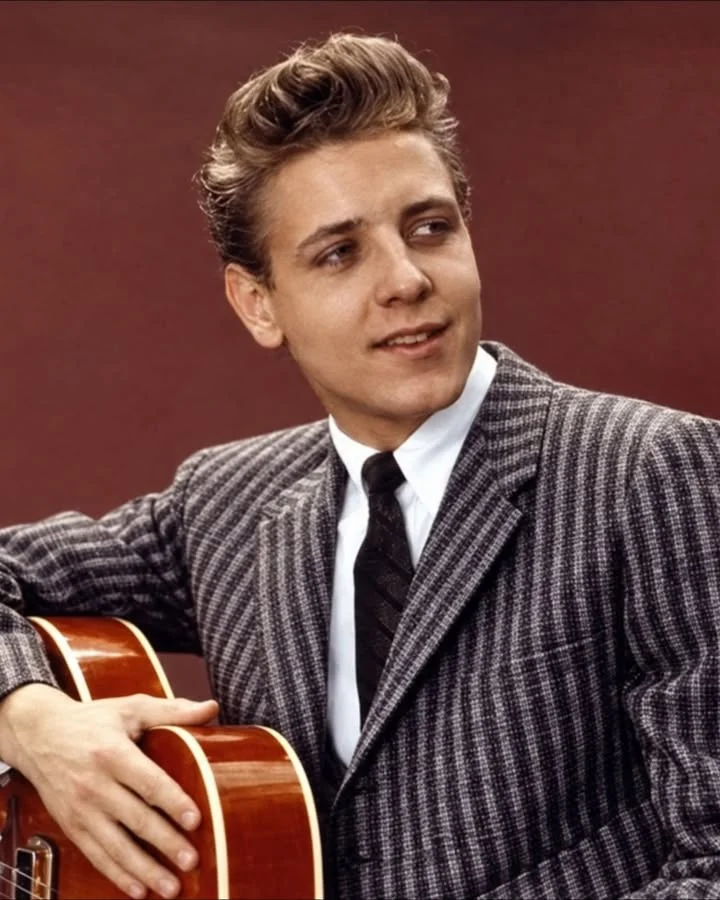
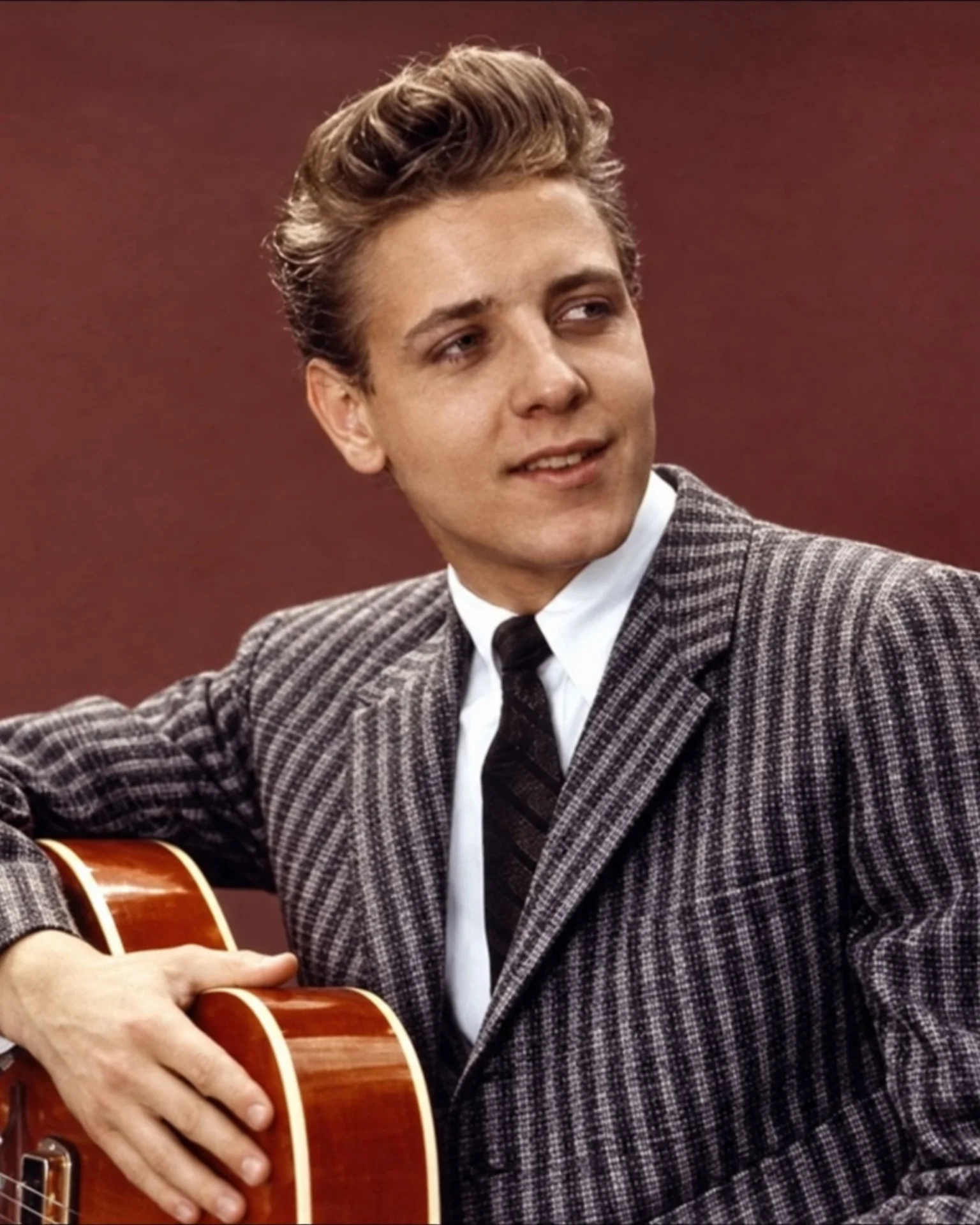
The taxi never reached London. On the A4 near Chippenham, a crash threw Eddie Cochran from the vehicle and into a ditch that would become the final note of his career. He died in a hospital in Bath at age 21.
That was April 17, 1960. Cochran had just finished a British tour with Gene Vincent. Hours earlier, he had played shows that left young audiences stunned. Hours later, he was gone.
But even at 21, Cochran had already carved his name into rock history. Songs like “Summertime Blues,” “C’mon Everybody,” and “Twenty Flight Rock” gave teenage frustration a hard, guitar-driven edge. They were short, sharp bursts of rebellion that would become blueprints for the Who, the Sex Pistols, and generations of rockers.
A Voice That Crossed the Atlantic
Born in Southern California, Cochran first played with Hank Cochran as the Cochran Brothers before going solo on Liberty Records. His records didn’t sound like polished pop. They sounded like a kid pushing back against the world.
That sound found a home in Britain. Paul McCartney once recalled using “Twenty Flight Rock” to impress John Lennon at their first meeting. That one song became a password between two future legends.
Before the Beatles belonged to the world, one Eddie Cochran song was already sitting between two young musicians trying to measure each other.
Cochran’s influence spread even further. The Who turned “Summertime Blues” into a heavier anthem. Punk bands heard his impatience and attack. He was not just a hitmaker. He was a source of raw material for the next wave.
The Last Ride
In early 1960, Cochran toured Britain with Gene Vincent. The shows electrified audiences who saw American rock ‘n’ roll as a blueprint for their own future. After a final performance in Bristol, Cochran, Vincent, songwriter Sharon Sheeley, and tour manager Patrick Thompkins climbed into a taxi for London.
Near Chippenham, the car crashed. Cochran was thrown from the vehicle and suffered severe head injuries. Vincent survived with broken bones. Cochran died hours later.
He was 21. His career felt unfinished. Only one album had been released in his lifetime. His single “Three Steps to Heaven” was still in circulation.
The Sound That Outran His Years
The strange part is how much Cochran’s music outlived him. Other bands carried his guitar language into the 1960s and beyond. The Beatles, the Who, the punk generation—all of them found something in his records that still sounded fresh and urgent.
He did not get to grow old with rock music. But rock music kept growing through him. The taxi ride to London ended in a ditch, but the sound kept going.
That is the legacy of Eddie Cochran – a young man with a guitar, moving fast, making teenage frustration sound like the beginning of something bigger.