
A decorated Marine general walked up to Toby Keith after a raw acoustic performance and placed a firm hand on his shoulder.
The song no longer belongs just to you. It is a moral duty to the men and women heading into harm’s way.
That moment transformed a private lament scribbled on a grocery sack into an anthem that would echo across forward operating bases and country radio stations alike.
Six months before the towers fell in September 2001, Keith’s world had already shattered. His father, Hubert K. Covel Jr., an Army veteran who lost an eye during military service, died in a two-car crash on Interstate 35 near Oklahoma City. Hubert was the kind of patriot who raised the flag every morning before breakfast, teaching his son that service to country trumped personal comfort. The loss left an aching silence that touring could not fill.
Then came that Tuesday morning in September. Sitting alone with compounding grief, Keith grabbed a brown paper sack and a pen. In roughly twenty minutes, he poured out his raw reaction under the working title “The Angry American.” He never intended for the rest of the world to hear it. The verses were a private conversation between a son and his late father, a way to translate Hubert’s fierce protective spirit into plain spoken verse. He tucked the notes into his guitar case and left them there.
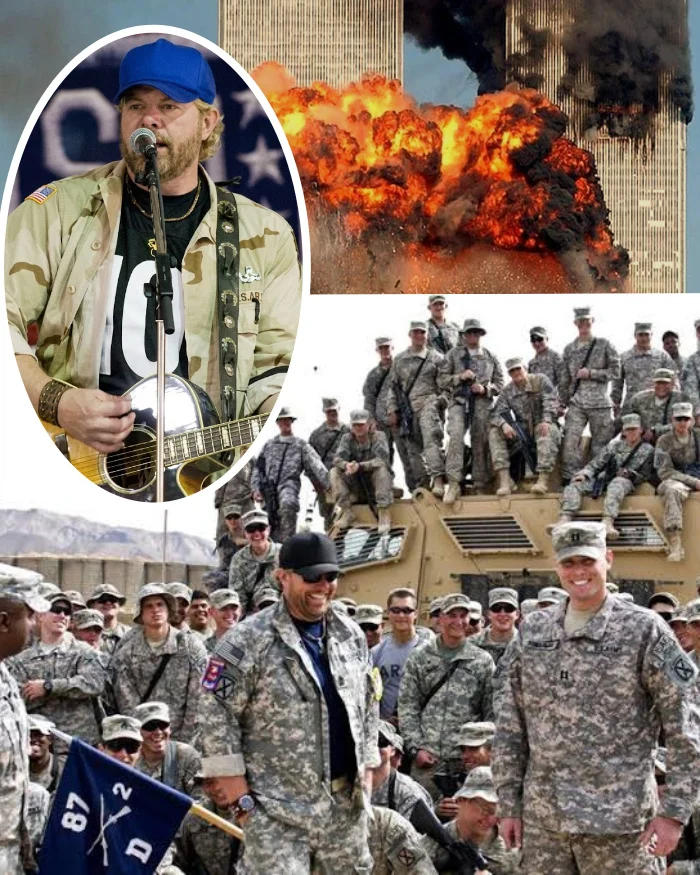
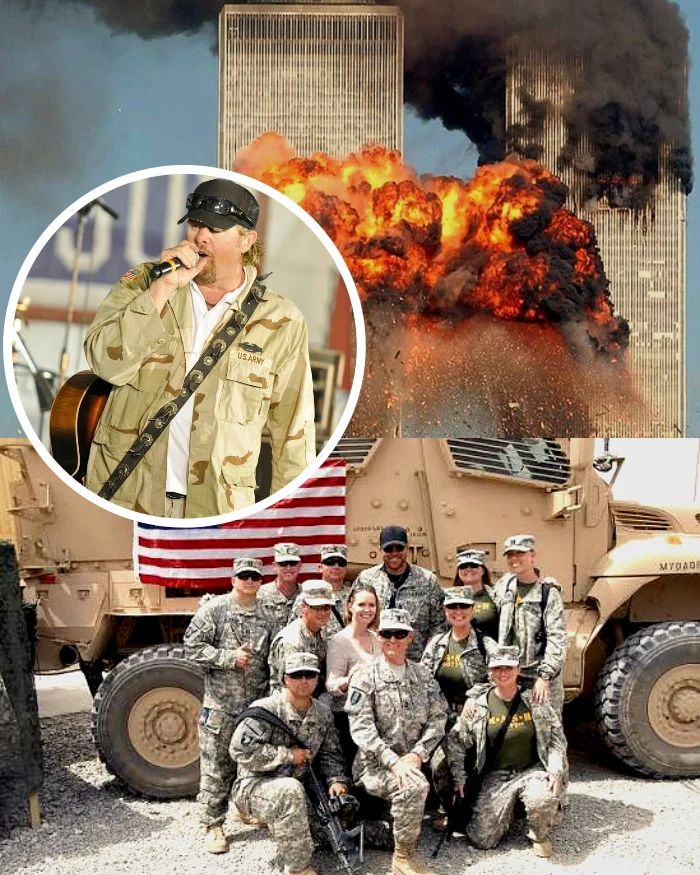
Everything changed when Keith agreed to play an unannounced set for young Marines preparing for deployment to Afghanistan. In a bare room with no stage lighting, amplifiers, or production crews, he sat down with his acoustic guitar. Without introduction, he performed the unreleased song. The room fell into heavy silence. Several young men in uniform openly wept as the plain chords acknowledged the raw fear and resolve waiting across the ocean.
General James L. Jones, then Commandant of the Marine Corps, was standing in the back. After the final chord faded, he approached Keith directly and delivered that stern directive. The general called the track a moral duty to the troops crossing into harm’s way, urging him to record and release it so those soldiers could carry that fire with them.
When Keith brought the song to Nashville ahead of his 2002 album Unleashed, label executives pushed back hard. They warned him that releasing such an aggressive, unapologetic statement would alienate pop radio listeners, jeopardize corporate sponsorships, and ignite a media firestorm. Keith refused to soften a single line or polish the delivery. He informed the label that either the track went out untouched or he would pull the entire record.
Renamed “Courtesy of the Red, White and Blue,” the track hit country radio in May 2002. It shot straight to number one, polarizing commentators overnight while troops on the ground embraced it as armor plate. But the real weight of that conviction showed far from recording studios. In the years that followed, Keith dedicated weeks to grueling USO tours across remote bases in Iraq and Afghanistan. Away from cameras, he quietly walked through military hospital wards, spending hours by the bedsides of wounded service members, shaking hands, listening to stories, signing casts. The anthem had carried his father’s name all the way to the front lines, and he carried the responsibility of that legacy with every visit.